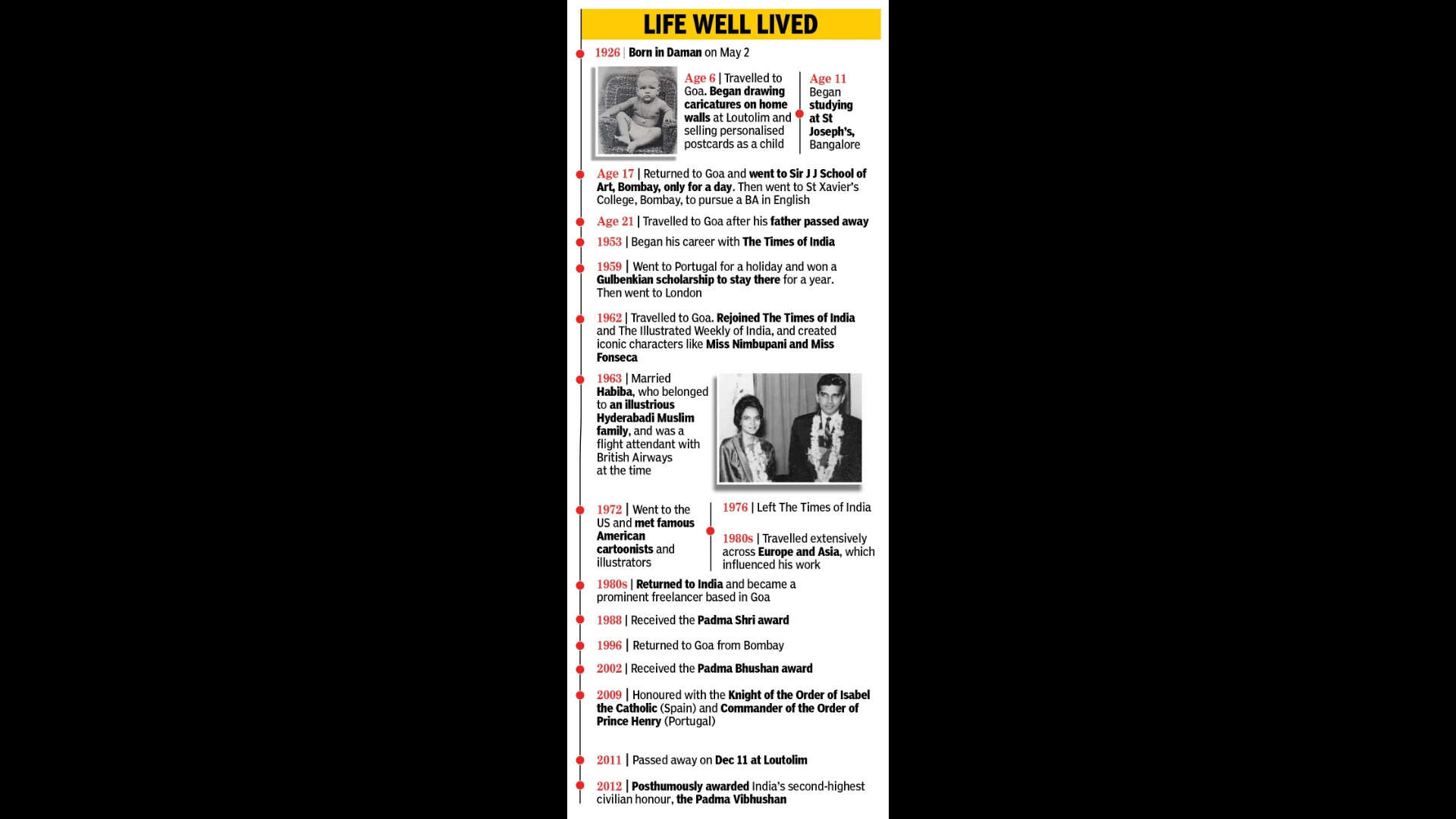



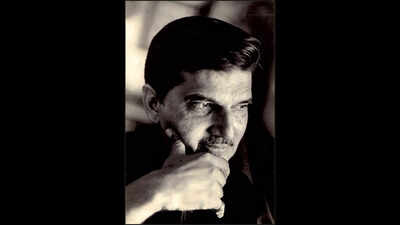
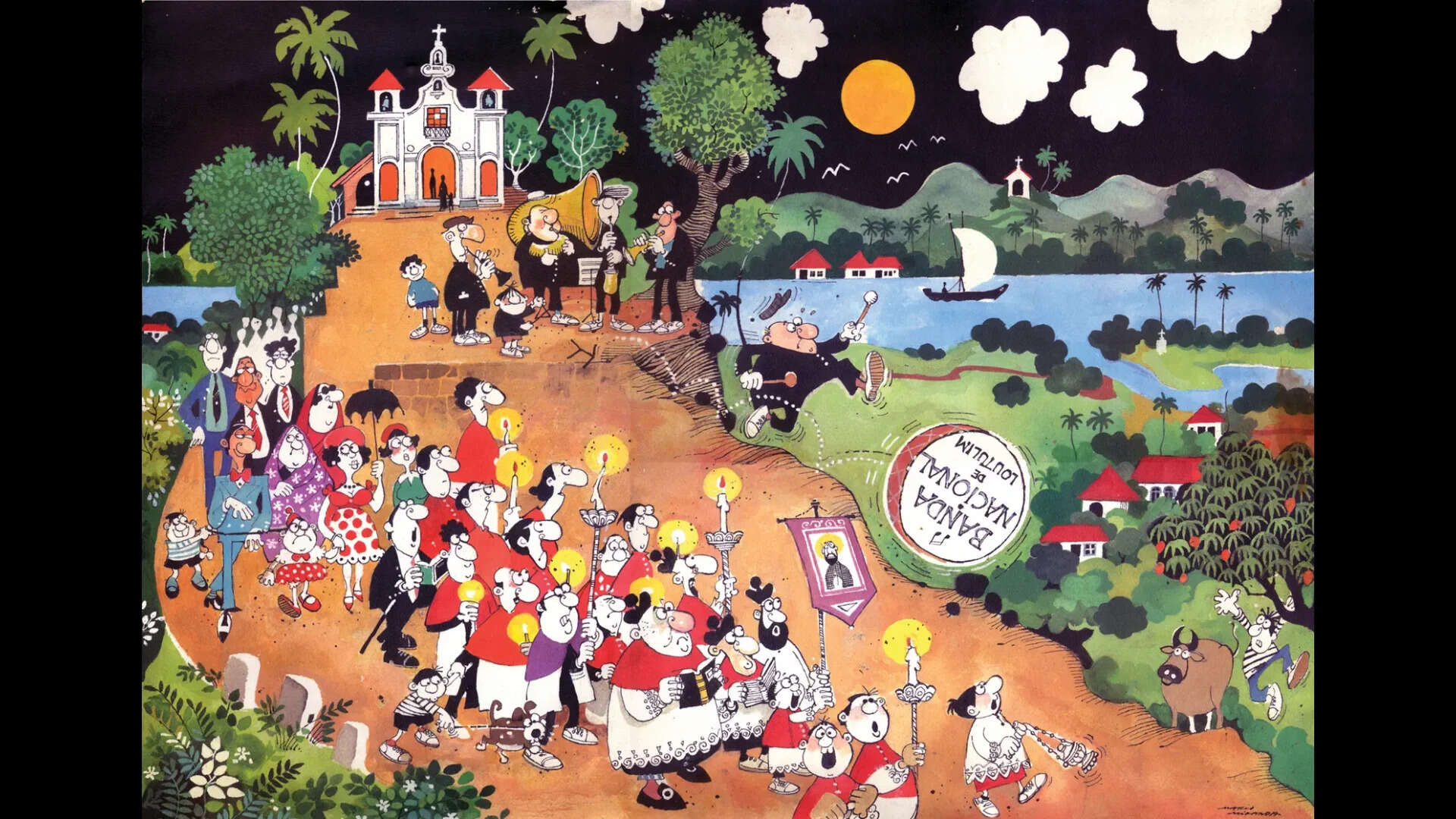
A pot-bellied man buried in his newspaper. A young woman leaning over her balcony. A musician in full swing at a Goan wedding. A village funeral moving in a quiet rhythm. Mario Miranda had a rare gift: He could turn everyday life into vivid theater with a few brushstrokes.He was born in Daman on May 2, 1926, but it was Goa that shaped how he saw the world. This was a place of afternoon siestas, balcao banter, and unhurried village life. The ‘poder’ knew exactly how many people lived in a house. A neighbor could recall the name of a distant cousin. The pace of village life was acres away from the pull of capitalism.Later, Mario moved to then-Bombay, won a scholarship to Portugal, and traveled through London and Macau. But wherever he went, his fascination with people and places only deepened.
His sister Fatima Figueredo perhaps describes him best: An artist who created without malice or greed, like nature itself, asking for nothing in return. “Just as birds do not sing for an audience, nor roses and lavender seek copyrights for their aroma, nor the sun seeks compensation for its light and warmth, and just as the moon keeps shining whether we look at it or not, so was my brother’s art,” she says.Those who knew him remember a man who rarely imposed himself, but noticed everything. Shaun Lobo, whose father Ronnie was a close friend of the artist for over 30 years and owned the largest collection of his paintings, recalls long visits to Goa where conversation flowed easily. Meals cooked by Mario’s wife, Habiba, extended that warmth with Goan and Hyderabadi dishes. Lobo also remembers an evening in Delhi. When others performed music, Mario sat quietly beside a piano, content to listen and observe. Later, such moments would find their way into his sketches.Despite international acclaim, Mario remained largely indifferent to money. Habiba, Lobo said, was the steady force who helped bring Mario’s work to the world and pushed him towards his full potential.Mario also shared a long association with The Times of India. His work appeared prominently in The Illustrated Weekly of India, too.
One of Mario’s closest friends, Gerard da Cunha, who continues his legacy through Mario Galleries across Goa, remembers a mind constantly alive with stories. Da Cunha had asked Mario to release his first book, Houses of Goa, in 1999. Impressed by its quality, Mario suggested a book on himself. But for the next five years, he kept putting it off, saying it was “not good enough”. In 2005, Habiba told da Cunha to “do the bloody book”. That was how the collaboration began.Traveling with Mario and Habiba to book launches in Mumbai, Delhi, and Bengaluru, da Cunha saw another side of him. As they waited in airport lounges, the normally reluctant Mario would scan the crowd and suddenly come alive. He would wonder aloud: “What do you think that couple is arguing about?” or “I’m sure that group is flying for the first time,” or “Those guys look like diamond merchants.” He was always observing, always collecting material for his next cartoon.Mario’s grandchildren — Raphael and Samuel in Austria, and Gayle Zulema in the US — remember a man who worked quietly at his desk, often surrounded by family and dogs.To the world, he was Mario Miranda. To them, he was avo — a man with “a gigantic, beautiful, generous, empathetic heart”. Publicly, he championed artists,

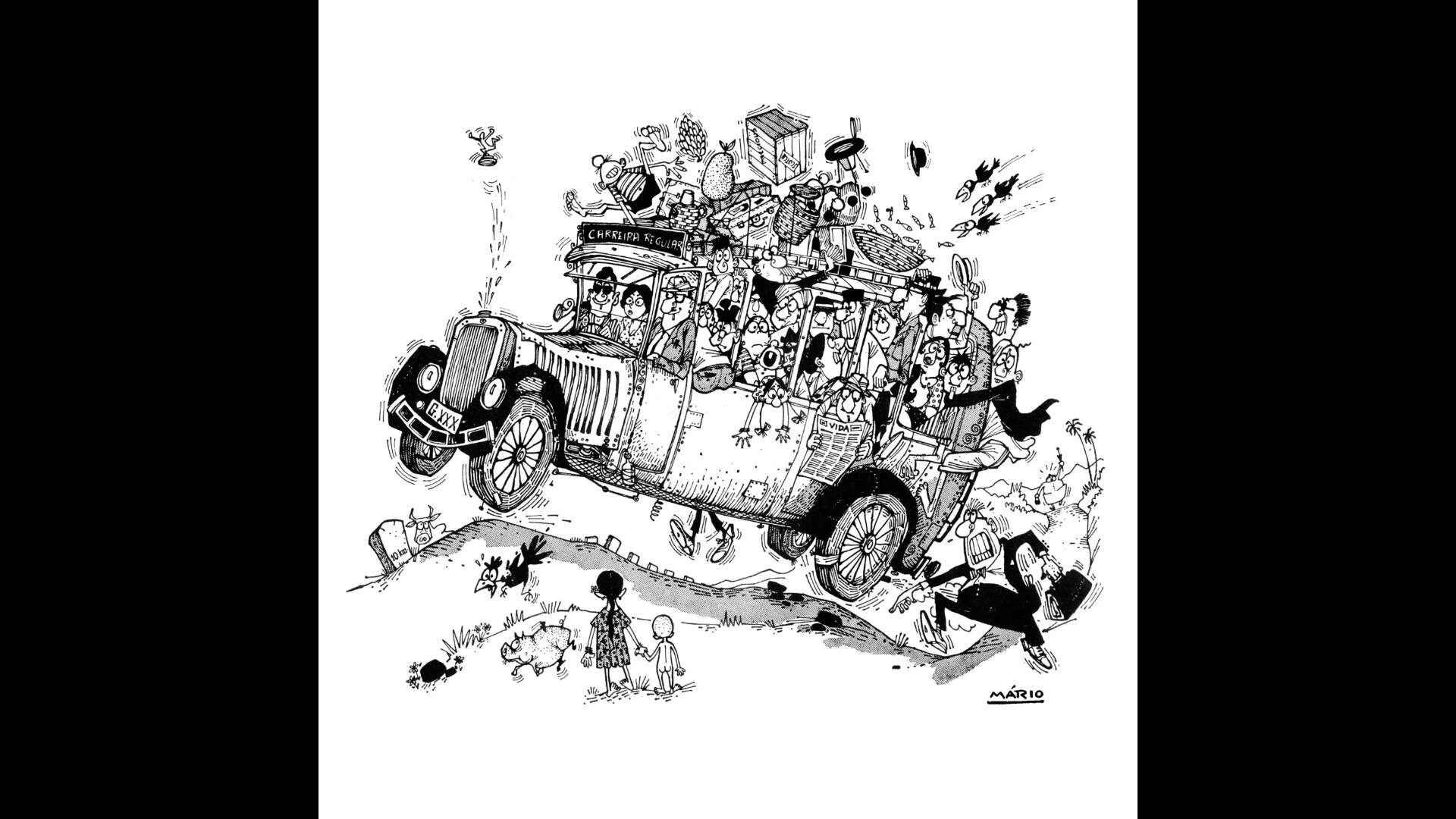
cultural institutions, LGBTQ+ rights, the environment, children, animals, and Goa. At home, he shared simple family stories. One grandchild recalled being told that Mario would leave his chappals at the end of the driveway as a child and go barefoot like his village friends.Gayle says that if Mario were here, he would credit Habiba — his beloved ‘Charlie’ — for his success. He would reserve special love for his sons: Rishaad, who died too young, and Raul, who continues to uphold the family legacy and home with pride.When his loved ones imagine him now, they still see him at his Loutolim home, relaxed in his cadeira, or tucked into a corner of a busy street, pen in hand, watching life unfold: a man running for a bus, a street vendor calling out, a brief quarrel dissolving into laughter.
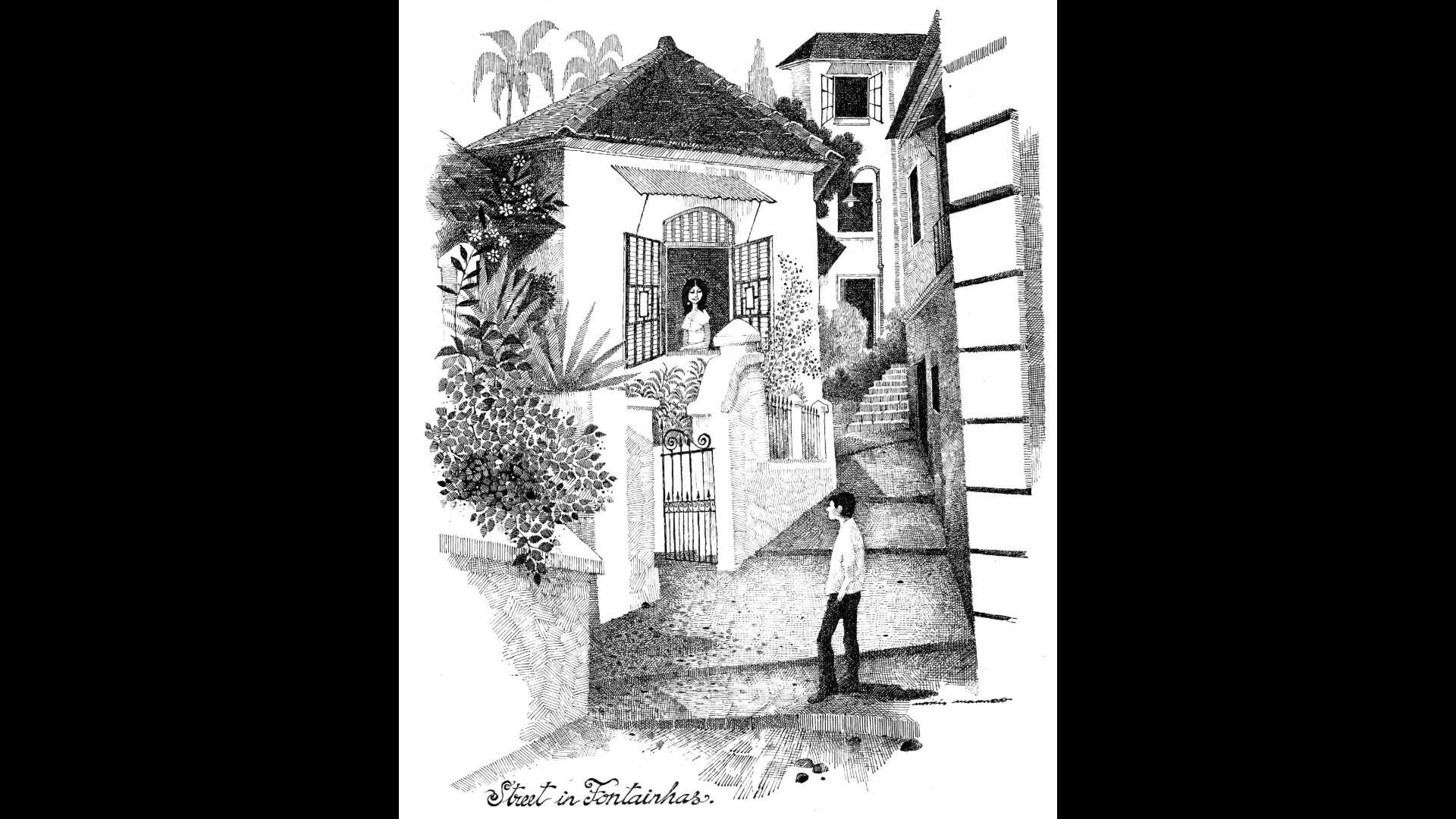
The world around him was crowded with stories. He simply knew how to see them.