


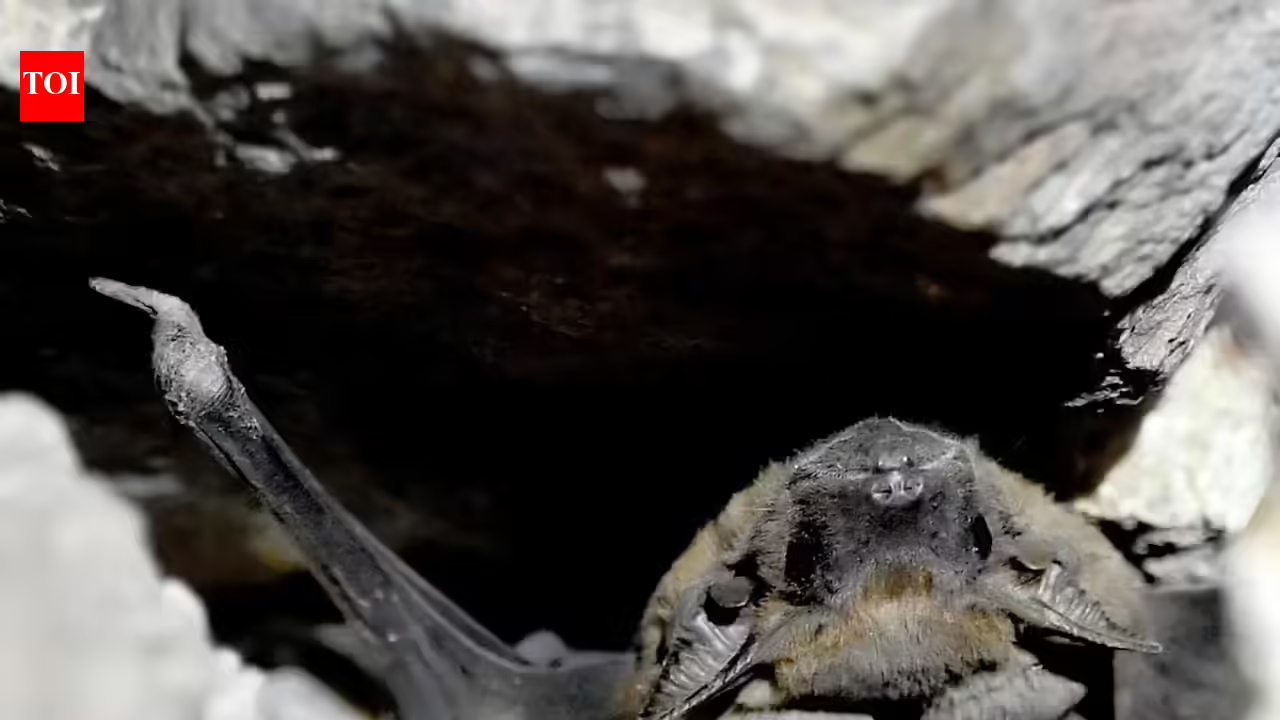
New Delhi: On World Heritage Day, the silent, timeworn walls of Tughlaqabad Fort came alive in an unusual way — not just with stories of a powerful dynasty, but with the flutter of wings hidden within its dark, cavernous chambers.In a rare collaboration, wildlife researchers and historians came together for a heritage walk that blended medieval architecture with the lesser-known world of urban wildlife, offering participants a glimpse into the hidden lives of bats that inhabit the centuries-old monument.The walk was organized by WWF-India, the Nature Conservation Foundation (NCF), the Center for Wildlife Studies (CWS) and Bat Conservation International, and was led by bat researcher Rohit Chakravarty, heritage activist Vikramjit Singh Rooprai and naturalist Nikhil John.As visitors moved through crumbling gateways and bastions, they heard accounts of the rise and fall of the Tughlaq dynasty. Inside the fort’s cool, dimly lit chambers, however, they encountered species rarely seen in the city. Mouse-tailed bats — one of the 15 bat species found in Delhi — were spotted clinging to ceilings, while a lone naked-rumped tomb bat added to the sense of discovery.Participants were guided in small groups, with ecologists using red-filtered torches to minimize disturbance, allowing them to observe a fragile ecosystem thriving in overlooked urban spaces.For Chakravarty, the walk was aimed at both awareness and conservation. He highlighted bats as vital contributors to the ecosystem, serving as natural pest controllers and reducing dependence on chemical pesticides. “It is a unique amalgamation of heritage and ecology. These protected monuments are also important habitats, and people need to observe wildlife with care and sensitivity,” he said.Rooprai, meanwhile, drew attention to the fort’s network of underground drains and tunnels — many sealed during the British era, suggesting that these forgotten spaces may hold even more ecological secrets.The event followed International Bat Appreciation Day, marked a day earlier with the release of a fold-out publication on bat species in Delhi-NCR. A subsequent walk at Sunder Nursery introduced participants to bat detectors, allowing them to hear the otherwise inaudible sounds of nocturnal life.