


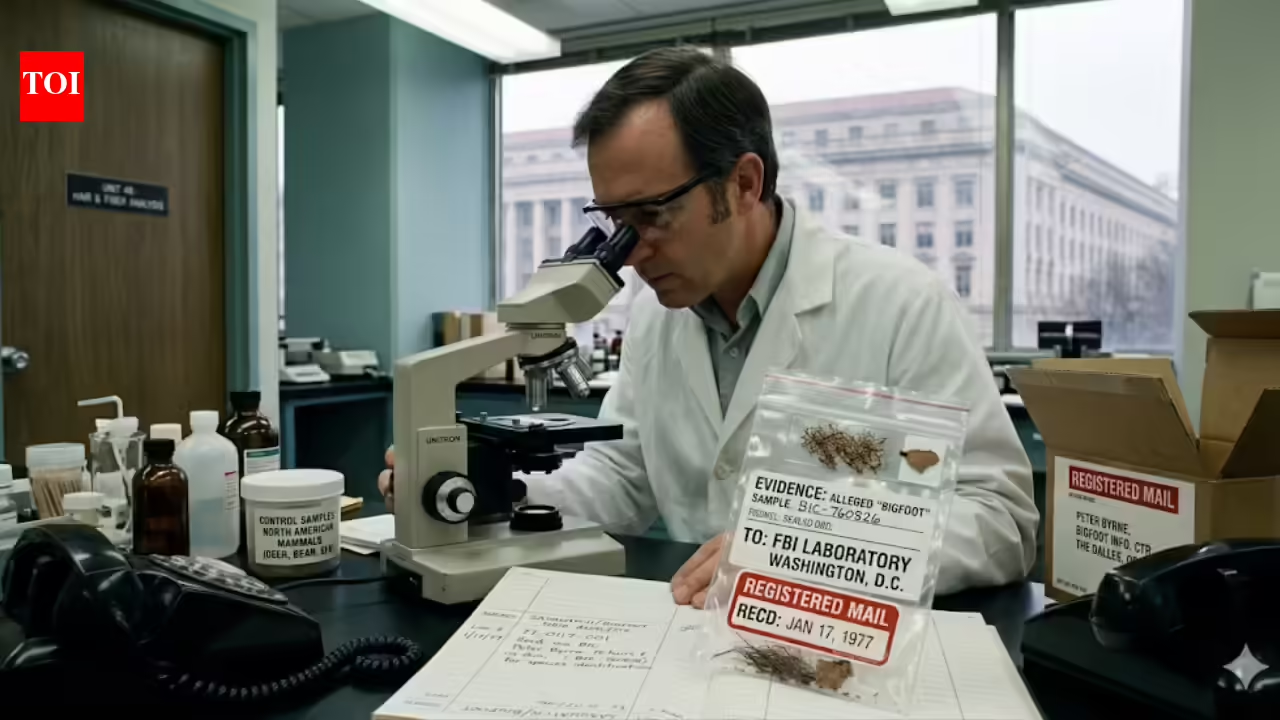
The story of 1977 is one where something that could have been considered folklore became unexpectedly legitimate when hair samples purportedly taken from the elusive Bigfoot were sent to the Federal Bureau of Investigation (FBI) for testing. The inquiry originated from a Bigfoot expert at the time, who had spent years trying to prove the authenticity of the legend. Instead of automatically ruling out the possibility of such an occurrence, the FBI decided to run tests on the material at their facility. This rare partnership between the private sector and a government entity raised questions that remain unanswered to this day. However, the findings obtained by the FBI were much more mundane than many believers would like to think.
1977 bigfoot investigation and FBI analysis
In fact, according to records from the Bureau itself, released many years later in the FBI archives, hair samples were examined using microscopy. The findings were straightforward and definite. As reported in a 1977 letter by the FBI lab:“Based on our analysis, it was determined that the hairs belong to the deer family.”These findings served to discount any notion that the hair samples could be identified as belonging to a mystery primate or cryptid species. The test involved comparing the physical structure, medulla patterns, and other biological characteristics of the hair against those found in known deer.These documents, now freely available in the online FBI Archivesindicate that the Bureau took the unusual request seriously and handled it just like any other scientific examination.
Why the bigfoot mystery persists
However, despite the results of the investigation by the FBI, the legend about Bigfoot remains relevant. In other words, it continues to live on through popular culture, eyewitness accounts, and amateur research. First of all, it is necessary to say that the example described above refers to one specific case only. In other words, it is possible to assume that such an outcome does not necessarily mean the end of the myth.At the same time, one should not forget that in some cases science may come into conflict with cultural traditions and personal beliefs. Although the results of the analysis of the hair samples were quite unambiguous, they did not take eyewitnesses’ testimonies into account.
Scientific evidence vs folklore
The 1977 investigation by the FBI is one such example of how science approaches fantastic claims. Instead of speculation, the results produced by the Bureau relied on empirical data and methodology. In other words, the conclusion that the hair belonged to a deer highlights the importance of empiricism in distinguishing myths from the truth.Those interested in learning about this case firsthand can find all of the relevant materials published online at FBI Records: The Vault – Bigfoot FilesDespite being a popular legend of our times, the story of Bigfoot teaches us that sometimes science proves that there was something very prosaic behind the mystery. Even though the thought of an unknown beast lurking somewhere in the forests of North America is certainly intriguing, there is nothing supernatural about this case.