

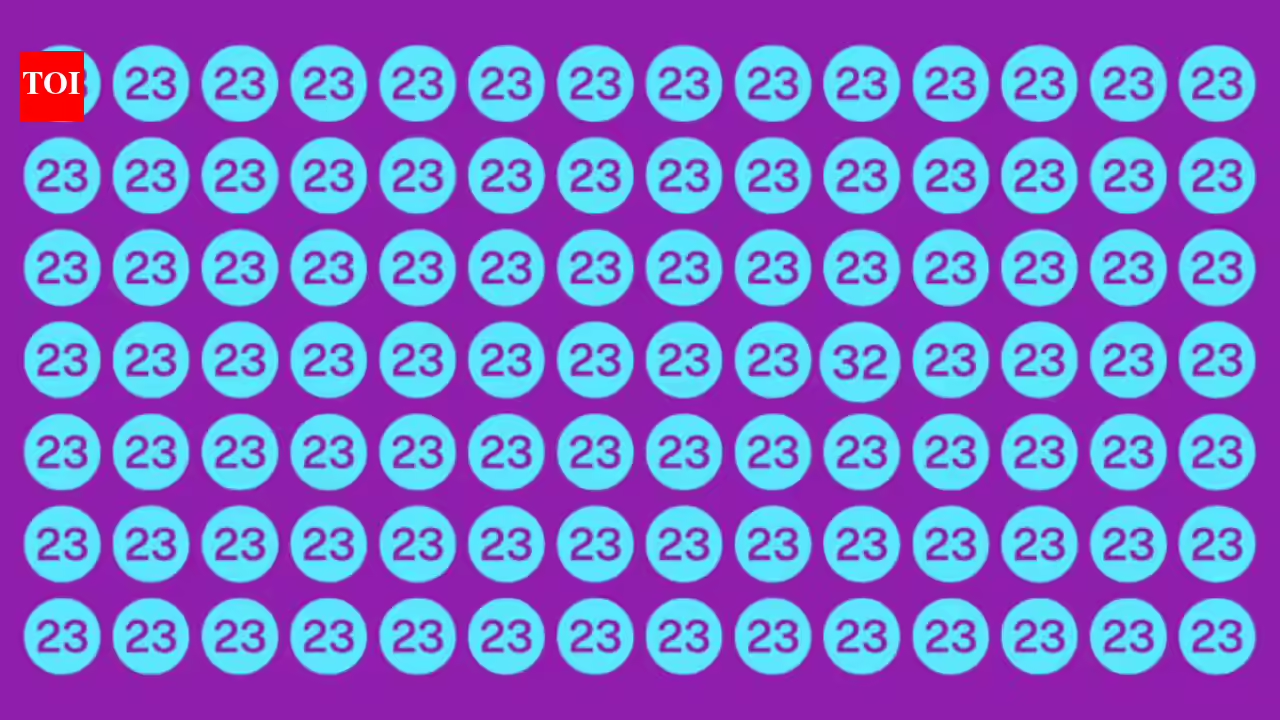
Go on, take a look. At first glance it’s just a sea of blue circles on a purple background, every single one of them showing the number 23. Neat, uniform, repeating. Your brain registers the pattern almost instantly and then, here’s the thing, it stops looking. That’s not laziness. That’s just how your mind works. Once it decides it knows what it’s seeing, it files the image away and moves on. Which is exactly why this puzzle is harder than it has any right to be.
Your brain is working against you here
There’s a real psychological reason this kind of puzzle trips people up, and it’s got nothing to do with eyesight or intelligence. It’s called pattern recognition, and it’s one of the brain’s most efficient tricks. When you see a repeated visual, same shape, same colour, same number, your brain essentially goes on autopilot. It stops reading each individual element and starts assuming they’re all identical. So when one circle quietly swaps its digits and shows a 32 instead of a 23, your brain just...skips it. It fills in what it expects to see rather than what’s actually there.Your mind is editing in real time, smoothing things over, keeping things efficient. Brilliant for survival. Terrible for spot-the-difference puzzles.
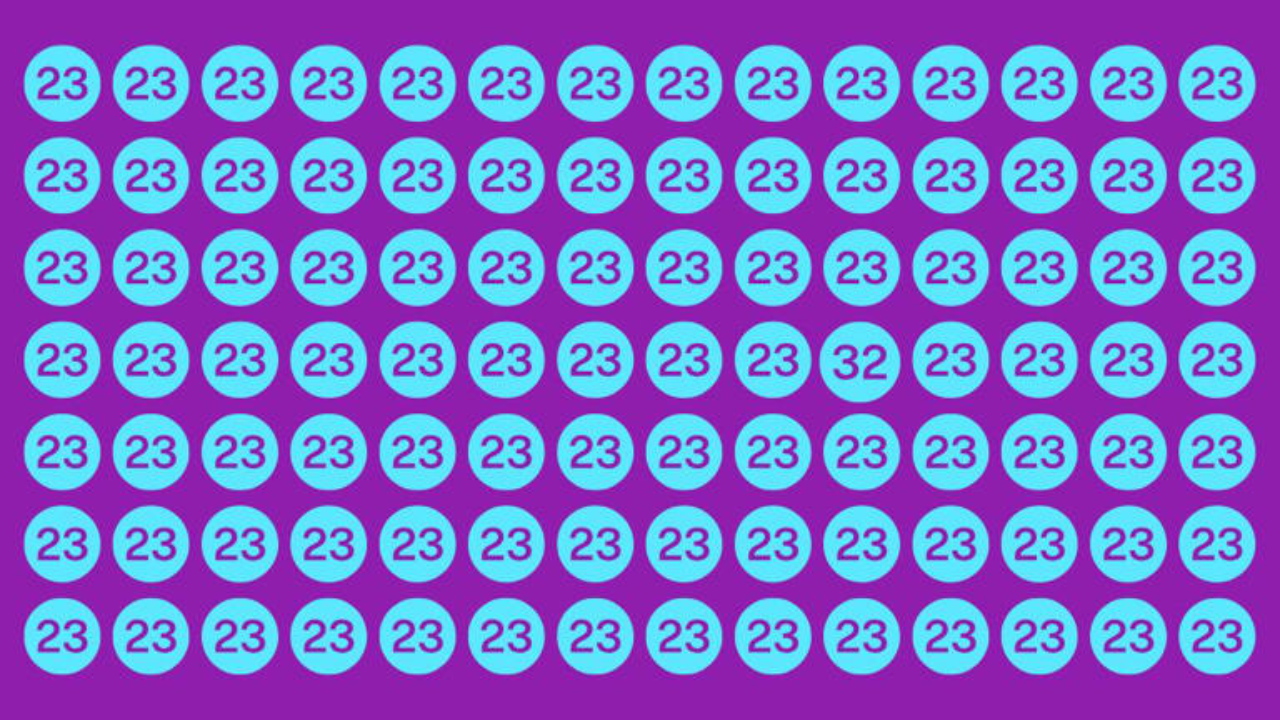
So where is it?
The 32 is sitting in the tenth row, from the right. Not in a corner where you might think to look, and not dead center either. It’s just… slightly off-middle, tucked into the crowd like it belongs there. And that placement is deliberate. Puzzle designers know that people tend to scan from the top-left and work across in rough sweeping motions. They also know that the eye naturally gravitates toward edges and corners when something feels “off.”” So they hide the odd one out in the middle-ish zone, where your gaze tends to drift past without settling.
Why these puzzles are actually good for you
There’s a reason brain teasers like this have been popular for decades, and it’s not just entertainment. Regularly challenging your visual attention, actually forcing your brain to slow down and look properly, is genuinely useful. And honestly, there’s something deeply satisfying about finally spotting it. That little jolt when your eyes land on the 32, slightly different, slightly wrong, feels disproportionately good for such a small thing. That’s your brain rewarding itself for breaking out of autopilot.So next time someone sends you one of these, don’t rush. Slow down. Look at every single row. The answer’s always there. It just needs you to actually look.