




Luxury’s fortunes in the Middle East have flipped almost overnight, turning what was once the industry’s most dependable growth story into a source of anxiety for brands and investors alike. The US-Iran war has not only emptied airport concourses and softened the sheen of malls, but it has also shaken the belief that the Gulf could cushion luxury’s slowdown in China and Europe.Accounting for roughly 5-6% of global luxury sales, the Middle East consistently punched above its weight with double-digit growth. “It was definitely a strategic region. Everything was okay,” Reuters quoted Carole Madjo, Barclays’ head of luxury research, as saying.Brands expanded aggressively here, opening flagships even as they grew cautious elsewhere.The Gulf-as-insurance narrative is under strain, with Bernstein, a global research and brokerage firm, warning luxury sales may have fallen up to 50% in March as tourism slowed and spending turned cautious, turning a growth engine into a potential drag.The sudden stillness of Dubai mallsThe shift is most evident in Dubai, a global showroom for luxury. At the Mall of the Emirates – one of the Emirate’s key retail hubs – European brands saw sales drop 30–50% in March year-on-year, while footfall declined 15%, according to Reuters.At the larger Dubai Mall, which leans even more heavily on tourists, visitor numbers were down about 50 per cent over the same period, pointing to an even steeper sales decline. Abu Dhabi, usually more insulated, has not escaped either. In the capital’s The Galleria Al Maryah Island mall, sales still fell around 10 per cent in March, an unusually sharp reversal for a city that prides itself on steady, high-spending locals. These are not marginal boutiques but stores for Louis Vuitton, Dior, Gucci, Cartier, Chanel and Rolex – the very brands that once treated the Gulf as the safest of safe bets.
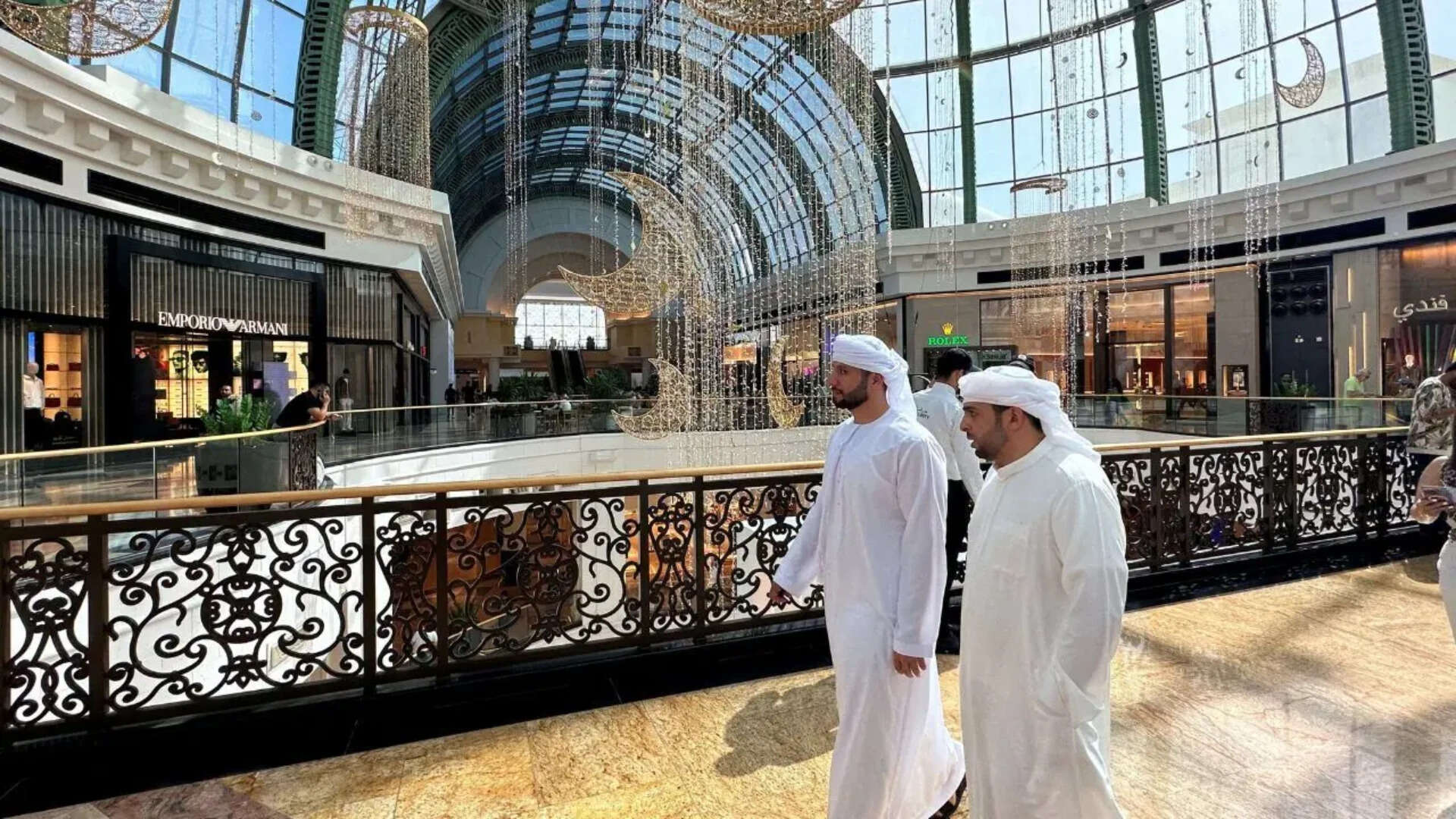
Retailers at Dubai’s airport are moving their products from one store or location to another to match where customers actually are.
65% flight cancellations dent duty-free sales, drag LVMH retail growthIf malls tell one part of the story, airports tell another. From DFS to Avolta, duty-free stores selling premium perfumes and spirits to high-spending travelers are feeling the pinch as conflict disrupts air travel across the region. International flight cancellations peaked at 65 percent in early March, according to Cirium data cited by Reuters. Although some routes have since resumed, overall traffic remains well below normal levels.Dubai International Airport, home to retail outlets such as Aesop, Gucci and Jo Malone, is operating with fewer terminals after a drone attack forced a temporary shutdown. Kuwait International Airport has been closed due to repeated strikes, halting sales for airport retailers including Avolta and Boots. For brands, this is more than an inconvenience. It disrupts a high-margin business built on impulse and transit. At LVMH, the duty-free arm DFS is “costing two percentage points of growth” in its retail division, chief financial officer Cécile Cabanis said, adding, “What we see today is still that demand is very much down.”The Gulf’s outsized role in luxury profitsOn paper, the Middle East remains a relatively small contributor to global sales. Yet its importance lies in profitability. With low taxes, high pricing power, and a steady stream of international shoppers, cities like Dubai have long delivered exceptional returns. For brands such as Louis Vuitton or Chanel, sales per square meter here can far exceed global averages.That is why even modest disruptions matter. LVMH reported that the conflict shaved about one percentage point off its quarterly growth. Its fashion and leather goods division fell 2 per cent, missing expectations. Kering flagged weaker tourism-driven demand, while Hermès pointed to a “significant impact from March onwards” across the UAE, Kuwait, Qatar and Bahrain, even as it maintained cautious optimism.The message is consistent. The hit may look small in percentages, but it cuts into one of luxury’s most lucrative pockets. Across the region, designers and retailers speak of a reality shaped by uncertainty. Shorter store hours. Delayed shipments. Contingency plans replacing ambition. “Shopping has slowed, but the intention is still there,” said Shahd AlShehail, founder of luxury label Abadia told Business Of Fashion. It is a telling distinction. Desire has not vanished. It is simply more cautious now.