


Eversince childhood, we have been taught about the unique nature of eels, as those fish that produce electricity.But have you ever wondered how this fish doesn’t get an electric shock itself?Nature is endowed with innumerable creatures that have special adaptations, some of which might not have been discovered to date.The electric eel is one of those marvels of evolution, with capabilities that sound more like science fiction than natural history.Surprisingly, this power is not merely a party trick but an actual tool for survival, used to threaten prey and keep away the threats in environments where vision is less capable.While their name is familiar from childhood books and documentaries, the reality of how they operate is far more complex yet elegant than most realize.
How do eels produce electricity? ?
Electric eels, despite their name, are not actually eels but are more closely related to knifefish. They produce electricity using special cells called electrocytes, which are essentially modified muscle cells, arranged in a systematic manner.According to a 2020 study published in the Journal of Theoretical Biology, it is demonstrated that electric eels function much like a biological battery by arranging thousands of specially modified cells, known as electrocytes, into series and parallel stacks.
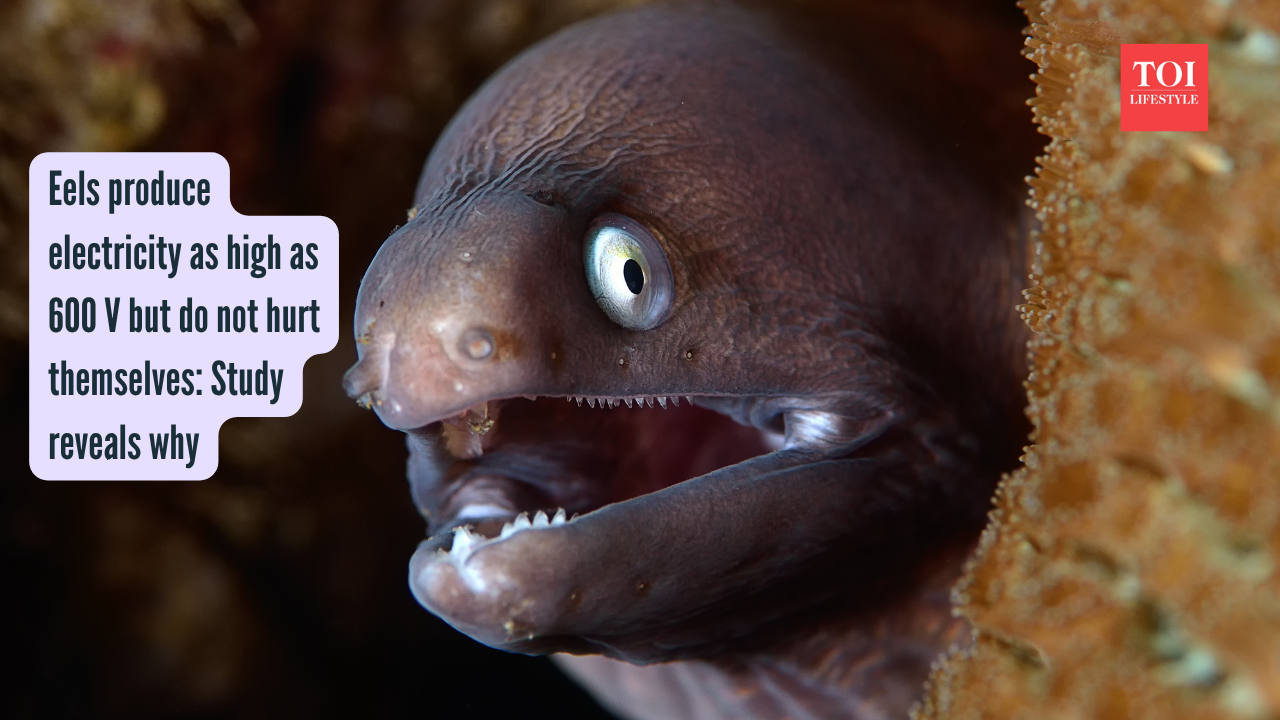
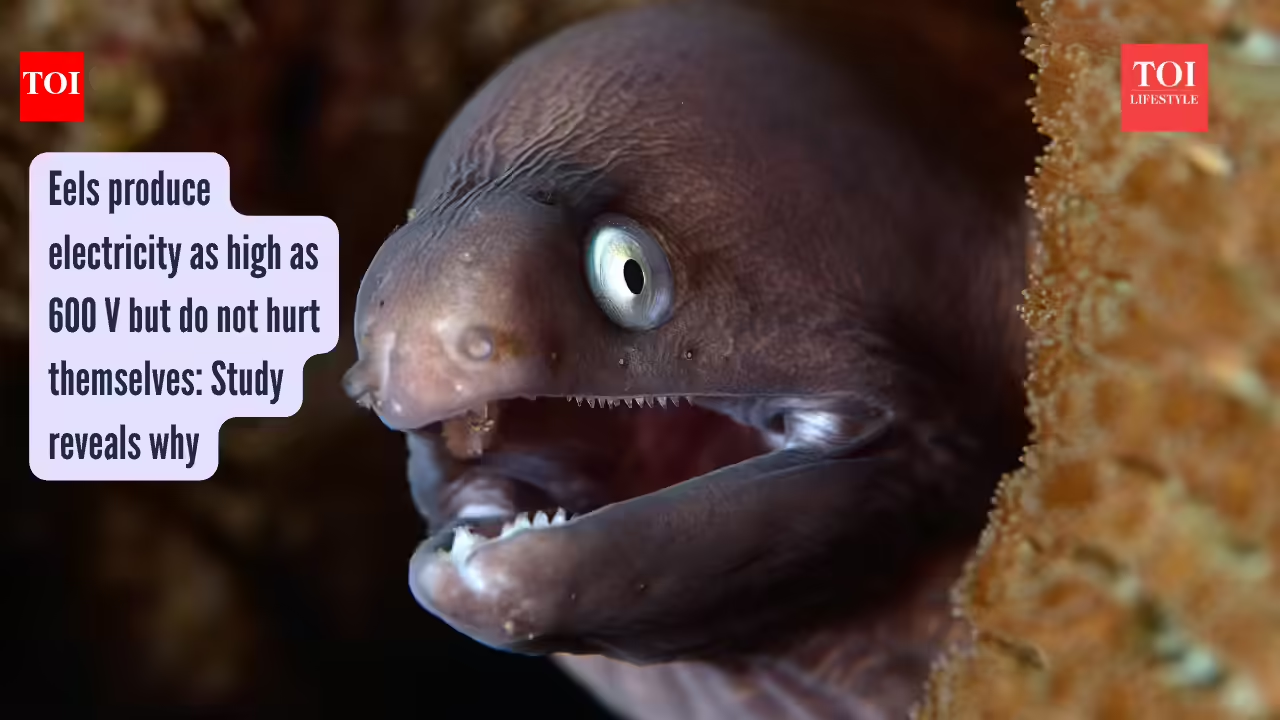
Eel (Photo via Canva)
This unique arrangement allows the eel to combine the voltage of each cell to create a powerful overall charge, while the parallel arrangement ensures a high current output.Further more, the study states that since the 1950s, many experiments have been conducted to investigate the electrogenic mechanisms and the functions of electric discharge with different intensity or frequency. It was reported that high-voltage discharge produced by eels can reach 600 V. The system is quite precise, and when the eel needs to discharge, its nervous system sends a signal that triggers these thousands of cells to activate almost simultaneously. This causes their stored electrochemical energy to be released at once in one coordinated and powerful pulse.
Why eels don’t shock themselves
The most common question regarding these creatures is how they avoid electrocuting themselves. It is a logical question, as humans would certainly be injured by such a high-voltage shock. According to a 2026 review in Trends in Ecology & Evolution, these eels have evolved specific physical bodily arrangements that allow them to generate high-voltage shocks while protecting themselves from harm.One of the major reasons protecting them from electric shock is their anatomy, as their electric organs are located mostly in the tail. By keeping their power source physically distant from key organs like the heart and brain, they significantly lower the risk of dangerous current passing through sensitive areas.Apart from this, the eel’s body acts as a natural insulator, creating high internal resistance that discourages electricity from flowing through its own tissues. Because electricity naturally follows the path of least resistance, it flows outward into the surrounding water, which, especially in freshwater environments, acts as an easier conduit, directly toward its target.
But why do eels produce electricity?
The answer is evolution.research published in Nature Communications* explains that electric eels use weak electric fields to navigate and sense their environment, that helps them to effectively “see” in total darkness. While these low-level signals help with daily navigation, the eel’s stronger electrical discharges act as useful tools for hunting and self-defense.