


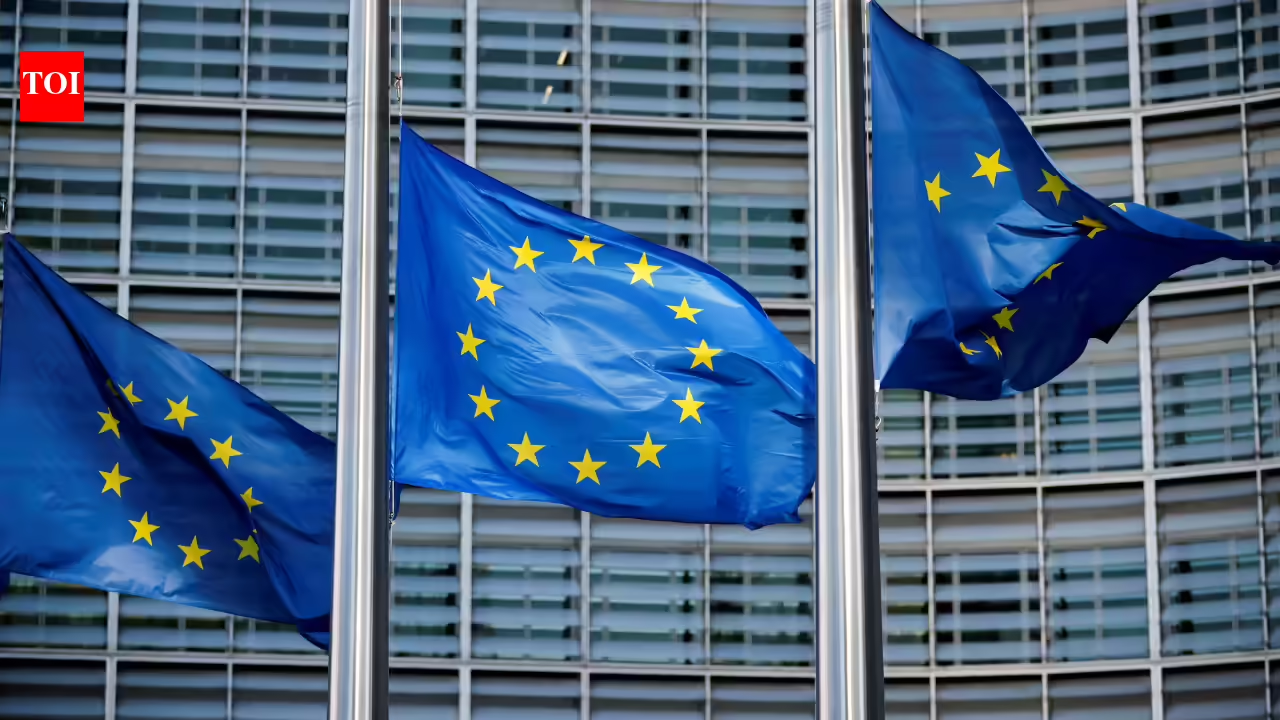
The European Union has a VPN problem—and it knows it. The European Parliamentary Research Service, a research arm of the European Parliament, published a briefing this week describing VPNs as “a loophole in the legislation that needs closing.“The trigger: millions of people are using the privacy tools to bypass new age-verification systems designed to keep children off adult websites.The timing is pointed. EU Executive Vice-President Henna Virkkunen had just told a press conference that circumventing the bloc’s newly launched age-verification app through a VPN should not be possible, calling it part of the “next steps” policymakers need to examine. She stopped short of saying “ban,” but not by much.
The more countries enforce age checks, the more people download VPNs
The pattern is almost comically consistent. After the UK’s Online Safety Act kicked in, one app developer reported an 1,800% jump in downloads in a single month, per Tom’s Hardware. Proton VPN saw 1,400% more signups. Florida saw a 1,150% VPN surge within hours of Pornhub blocking access there. The EPRS paper acknowledges this openly—it just doesn’t have a clean answer for it.Adding to the EU’s embarrassment: its own age-verification app was found storing facial scan data in unencrypted files, with its biometric check bypassed in under two minutes by a security researcher flipping a single setting. CyberInsider first reported the EPRS briefing that followed.
Privacy groups say this path leads somewhere dangerous
Mozilla, Mullvad, and Proton fired back with a joint letter to UK officials last week, warning against moves that would “undermine the open internet.” The VPN Trust Initiative put it bluntly: treating VPNs as a loophole is “a complete misunderstanding of their role.”Across the Atlantic, Utah became the first US state to legally define a user’s location by physical presence—not IP address—effectively calling VPN use irrelevant. Digital rights groups called it unenforceable. Experts point to Russia’s years-long, expensive, and largely failed attempt to block VPNs as a cautionary tale.No concrete EU legislation is on the table yet. But the direction is getting harder to misread.