




Heatwaves are usually judged by how harsh the day feels. The blazing sun, the rising mercury, the fatigue that follows. But something quieter, and often more dangerous, unfolds after sunset. Nights are meant to help the body reset. They are when the heart rate slows, the skin cools, and the system repairs itself.When nights stay warm and sticky, that reset never really happens. The body carries the day’s heat into the next morning. Over a few days, this builds into a silent strain that many people fail to recognize.
Why the body struggles more at night
The human body depends on a drop in temperature to rest properly. But during heatwaves, especially in humid conditions, that drop is minimal.Dr H Guru Prasad explains it simply: “The body actually relies on the night to cool down and recover from the heat it has been dealing with all day. When nights remain warm and humid, that recovery simply doesn’t happen.”Sweating continues, but it is less noticeable. So, people rarely replace fluids lost overnight. That is where the problem begins.
Warm nights push the body towards dehydration and electrolyte imbalance. Fatigue builds up, even without visible exertion. For people living with heart disease or diabetes, the risk rises faster because their bodies already struggle to adjust to heat stress.According to the India Meteorological Department, minimum temperatures during heatwaves are rising steadily across Indian cities, making nights less effective for recovery.
Humidity: the invisible trap
Heat alone is tough. But humidity changes how the body handles that heat.Sweat cools the body only when it evaporates. In humid air, that evaporation slows down. The skin stays damp, but the body remains hot inside.Dr Prasad notes, “What makes humidity especially problematic is that it interferes with the body’s cooling mechanism—sweat doesn’t evaporate efficiently, so heat gets trapped.”This is why even a fan may not help much on sticky nights. The air moves, but the cooling doesn’t happen. People may wake up with headaches, dizziness, or a heavy, sluggish feeling. Many don’t link it back to poor night-time cooling.
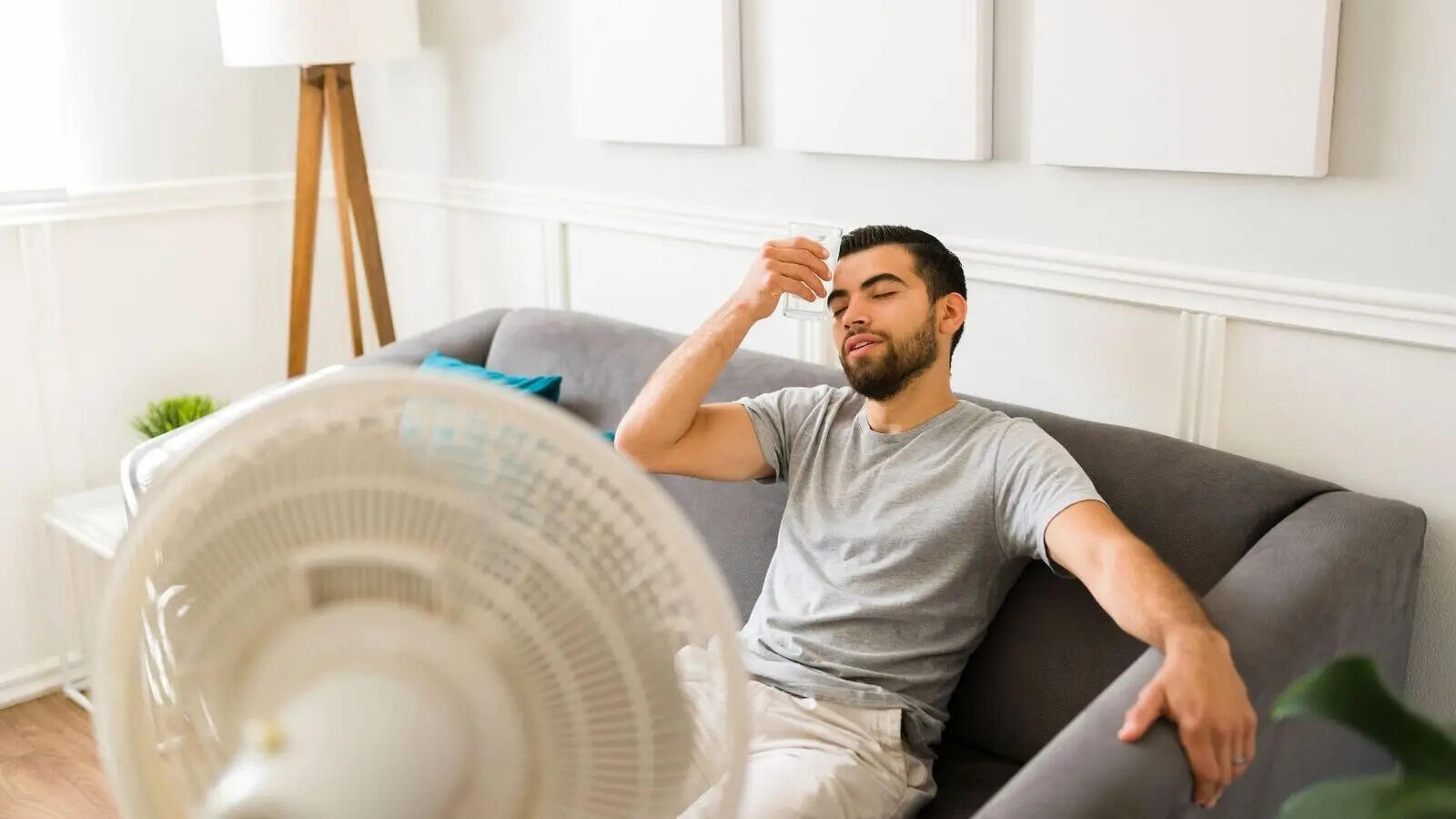
Warm, humid nights prevent the body from cooling down, leading to dehydration, poor sleep, and ongoing stress on the system. Urban environments worsen this effect.
Cities that don’t cool down anymore
Urban living has made this problem sharper. Concrete buildings, narrow spaces, and limited greenery hold heat long after sunset.Dr Sandeep Reddy Koppula points out, “There’s a growing pattern in cities where nights are no longer offering any real relief from the heat… The body remains in a mildly stressed state through the night.”This constant stress shows up in small ways. Heart rate stays slightly high. Sleep becomes fragmented. Mornings feel heavier than they should.Over time, it starts affecting blood pressure, mood, and focus.A research published in Science Direct highlights the “urban heat island” effect, where city temperatures remain significantly higher than nearby rural areas, especially at night.
The quiet toll on sleep and recovery
Sleep is not just rest. It is repair.But when the body cannot cool down, sleep becomes shallow and broken. Dr Balakrishna GK explains, “If the body doesn’t cool down properly, sleep becomes lighter and broken, and the next day feels harder to cope with in the heat.”There is another subtle mistake people make. Many reduce water intake in the evening to avoid waking up at night.That decision often backfires.Dr Balakrishna adds, “The body continues to lose fluids, and without enough intake, it can lead to symptoms like cramps, weakness, or a general sense of discomfort by morning.”Over a stretch of hot nights, this turns into a cycle. Poor sleep leads to lower tolerance for heat the next day, which then worsens the following night.
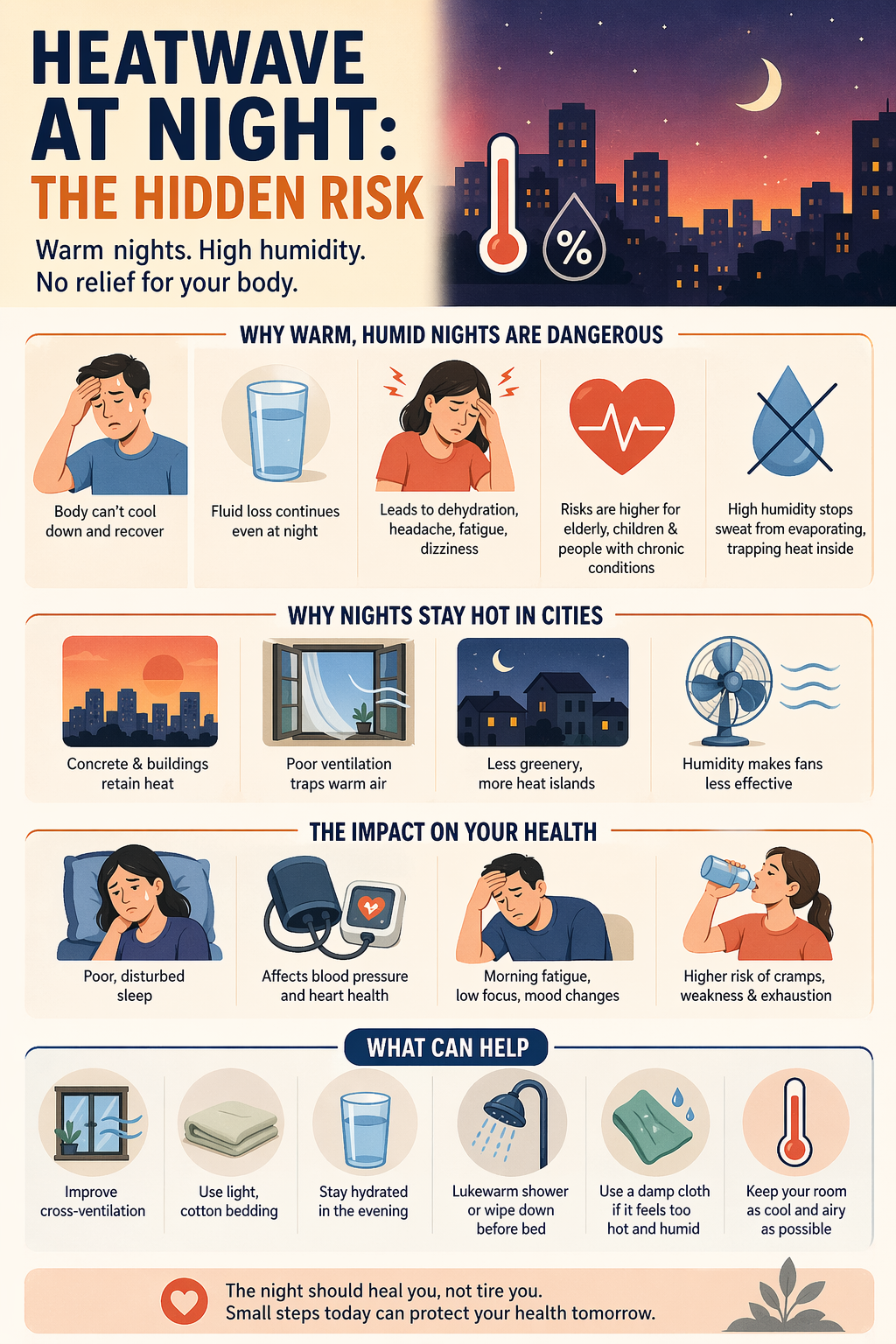
Simple steps like hydration, airflow, and cooling routines can reduce the risk, but awareness remains low.
What actually helps on hot, humid nights
Small changes can ease the stress on the body. Not perfectly, but enough to make a difference.Doctors suggest simple steps that work over time:
- Keep air moving across the room, not just within one corner
- Use light cotton bedding that does not trap heat
- Stay hydrated through the evening, even if intake is spaced out
- Take a quick lukewarm shower before bed to bring body temperature down
- Wipe the skin with a damp cloth if the heat feels overwhelming.
Dr Koppula sums it up well: “Simple steps like improving cross-ventilation, using lighter bedding, and staying hydrated through the evening can make a meaningful difference.”These steps may seem minor. But across several nights, they reduce the body’s stress load.
A pattern worth paying attention to
Warm nights are no longer rare events. They are becoming a pattern. And the risk lies in how easily they are ignored.The discomfort may feel temporary, but the impact builds quietly. Fatigue that lingers, headaches that return, sleep that never feels enough.The night is supposed to heal. When it stops doing that, the body starts carrying yesterday into tomorrow.Medical experts consultedThis article includes expert inputs shared with TOI Health by:Dr H Guru Prasad, Clinical Director and HOD – General Medicine, CARE Hospitals, Banjara Hills, Hyderabad.Dr Balakrishna GK, HOD & Sr Consultant Internal Medicine, Gleneagles BGS Hospital Kengeri, Bengaluru.Dr Sandeep Reddy Koppula, HOD – Internal Medicine, Arete Hospitals.Inputs were used to explain how warm nights and high humidity during heatwaves affect the body, why they can be more dangerous than daytime heat, and the importance of preventive measures to reduce health risks.