

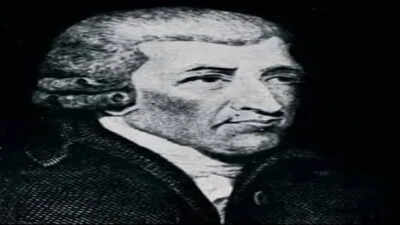
Lighting a match to illuminate a candle or stove may seem like a trivial task to us, but until a few centuries ago, making fire was a tedious process. Prior to the early 19th century, igniting a spark required a tinderbox, flint, a heavy steel rod, and plenty of patience. Should the fire at home die down on a cold and rainy night, there would be little hope of reigniting it unless one obtained a burning coal from a friend living nearby. However, everything changed in 1826 following an unfortunate incident in an apothecary store in Stockton-on-Tees, England.John Walker, a chemist and pharmacist, was mixing a dangerous cocktail of antimony sulfide and potassium chlorate using a wooden splint as a stirrer. While doing so, he realized there was a difficult-to-remove lump of dried chemical residue on the tip of the wooden stick. As he tried to scrape the residue from the stick using a rough stroke on his hearth made of stone, Walker discovered that the friction created a bright flame. Far from merely cleaning his stick, he had invented the very first friction match.From a crude stroke to a useful inventionWalker was a scientist, yet he recognized the commercial potential of his discovery immediately and started experimenting with his creation. Eventually, he decided to coat wooden sticks with the flammable chemicals and sell them in tin tubes. As we read in a research titled The Centenary of the Friction MatchWalker’s business records clearly state the date of his first sale – April 7, 1827.This invention was one of the biggest game-changers when it came to how people lived their lives. People no longer had to “keep the flame alive” or spend all their energy trying to produce a spark between rocks. Instead, they were able to have it in their pockets wherever they went. The invention was so groundbreaking that Walker’s little shop turned into a big hit in the area. Strangely enough, however, Walker did not patent his invention. He felt that it should be accessible to everybody, and his noble choice made sure that the product became widespread despite not making him rich.
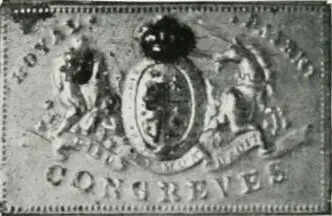
This groundbreaking discovery revolutionized fire-starting, ending the laborious “Age of Flint” and making light and warmth readily accessible. Walker’s decision not to patent his invention ensured its widespread adoption, significantly improving daily life and productivity. Image Credits: Wikimedia Commons
Ending the long fight for ancient fireThe impact of the matchstick is even more profound when you consider how long humans had been searching for this exact solution. According to a research paper titled The Earliest Matcheshumans have experimented with various fire-starting tools for millennia, including Neolithic clay objects that may have served as primitive fire drills. However, none of these ancient methods could match the sheer speed and reliability of Walker’s chemical invention.The invention of the match marked the end of what has been referred to by historians as the “Age of Flint.” It gave everyone access to light and warmth, which made it easier and safer for people to move around in their dwellings after dark and helped workers to maintain productivity in the cold winter period. It was truly an evolution in lifestyle in the nineteenth century, reducing a laborious skill into a mere second affair. It evened out social competition since the means to ignite a flame instantly no longer required expensive devices or knowledge.As one looks back, the tale of John Walker becomes an elegant lesson that shows how many things can begin with such small, seemingly unremarkable instances. It was a small piece of hardened residue stuck to a stick and some frustration while sitting next to a fire that gave rise to something that greatly aided in illuminating the path to modern times. Indeed, in a time when electrical lighters and smart homes have replaced lighter sticks, the humble wooden match still serves as company.