

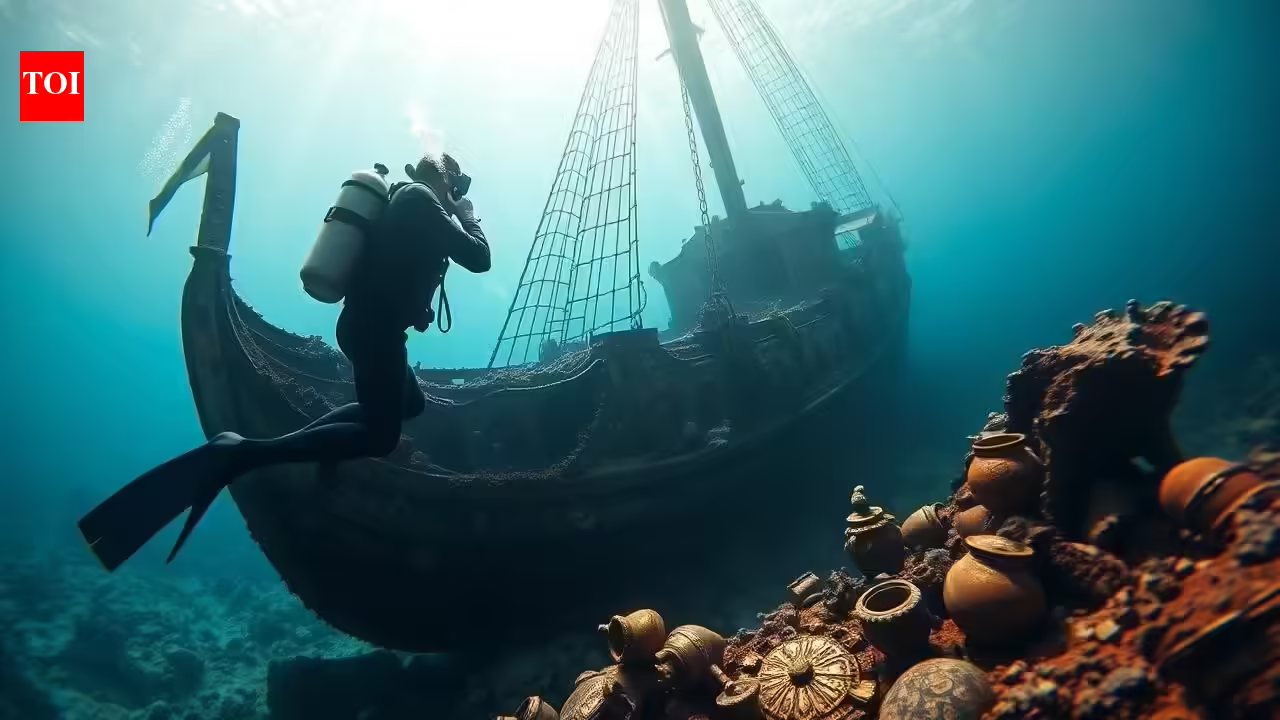
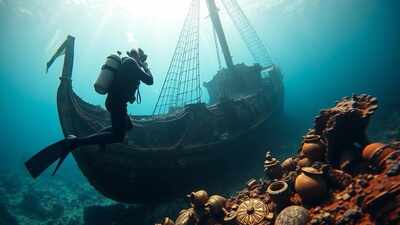
The azure passages around Kaš have always been celebrated for their clear water, which is vital to those whose livelihoods depend on the sea. On July 5, 1982, Turkish sponge diver Mehmet Çakir was swimming along as he usually did, trying to interpret the seabed. He had no interest in myths or treasures; all he wanted was to carry out his profession. Suddenly, at about forty meters deep, something strange appeared in front of him, embedded in the sand.It was curiosity that compelled him to take out one of the cumbersome things and bring it up to the surface to show it to the captain. As luck would have it, it turned out to be a piece of oxhide-shaped copper ingot, which was made thousands of years ago when such shapes were used as trademarks by traders and was lying carelessly waiting for discovery at the place where Cakir happened to dive. And that discovery was soon to turn out to be one of the biggest archaeological discoveries of its time.A floating warehouse of ancient luxuryHowever, upon investigation of the wreck, it was determined that the vessel was not just a fishing vessel but was, in fact, a giant merchant ship loaded with goods that represented luxury items of the times. In the words of the Uluburun Late Bronze Age Shipwreck Excavation research paper published by the Institute of Nautical Archaeology, the cargo consisted of “10 metric tons of copper from Cyprus, tin from central Asia and blue glass ingots from the Levant”.The diversity of artefacts found astonished the researchers. For example, in the paper titled The Uluburun Shipwreck and the Late Bronze Age Tradingamong the cargo items were precious goods such as ivory from a hippo, ostrich eggs, and a gold scarab associated with the legendary Egyptian queen Nefertiti. This suggests that the ship could be part of a royal expedition, possibly bearing gifts for the king. This gives us a glimpse of a world trade system that predates our present-day understanding.
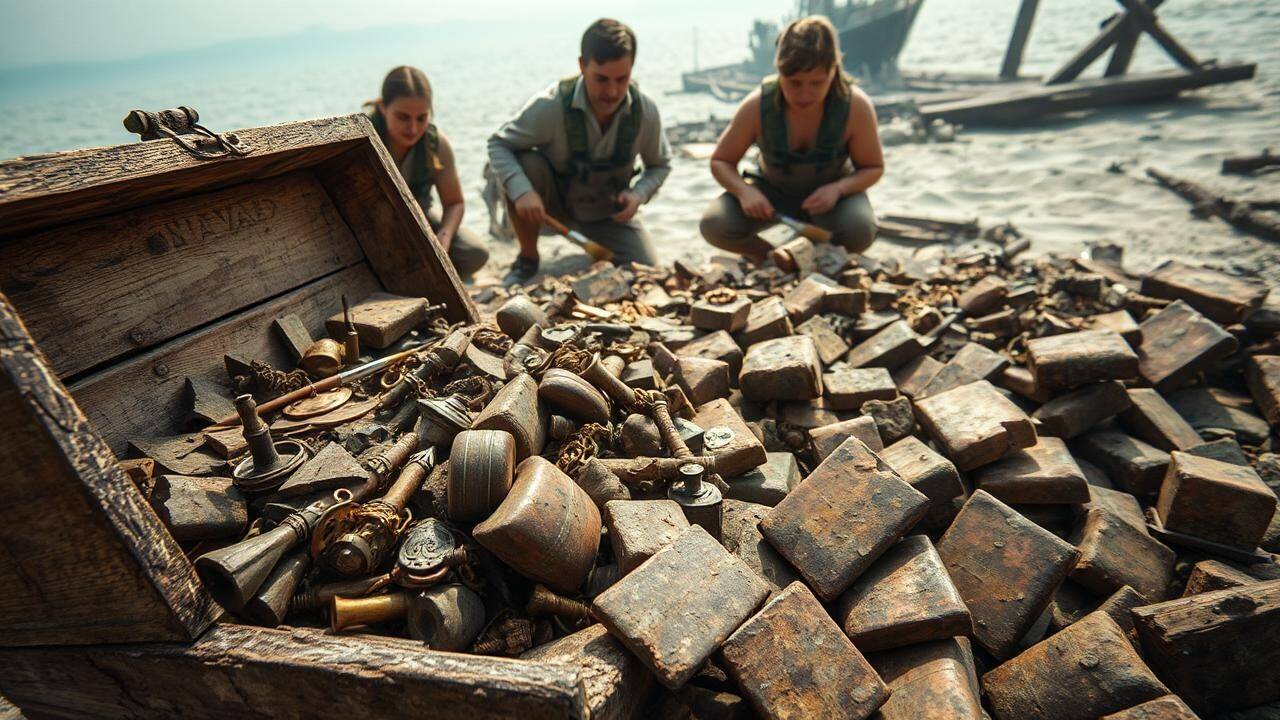
The cargo shows a sophisticated trade system existed thousands of years ago. The ship’s remains are now in a museum.
It was an enormous excavation project, with fragments retrieved from over twenty thousand dives conducted over a decade. All the debris needed to be accurately mapped and brought to the surface with inflatable bags. The preservation was exceptional; even traces of old food such as almonds, figs, and olives were discovered inside pots. This demonstrated just how much we underestimated the importance of the Mediterranean Sea. It soon became clear that the area had served as a vital trading route for many centuries.The impact of one discoveryThe thing about the Uluburun story is that it has a person behind the science. It was all prompted by a local diver feeling that something about the bottom was just not right, and so it led to a massive search around the world. If Çakir had not thought that those “metal biscuits” could be anything special, we would still have one of our most significant links to the past buried in the deep blue Mediterranean water.The site also highlighted the fragility of our underwater heritage. The ship had likely hit a rocky outcrop before plunging down the steep slope of the seabed, which actually helped protect its cargo from being scattered by currents. Today, the remains of the ship and its incredible treasures are housed in the Bodrum Museum of Underwater Archaeology. Visitors can see the very ingots that Çakir first spotted, along with the jewelery and weapons that haven’t been touched since the fourteenth century BCE.The Uluburun discovery serves as a key milestone in the field of history, an unambiguous proof of the interconnectedness of the world during the Bronze Age period. We often think that ancient societies were rather insular, but the discovery shows that they were, in fact, travelers and merchants who covered huge distances to exchange their knowledge and trade goods. It serves as an excellent reminder of the universal drive toward exploration. It doesn’t matter whether you are a sponge diver or a trader; the spirit of discovery drives us all.