

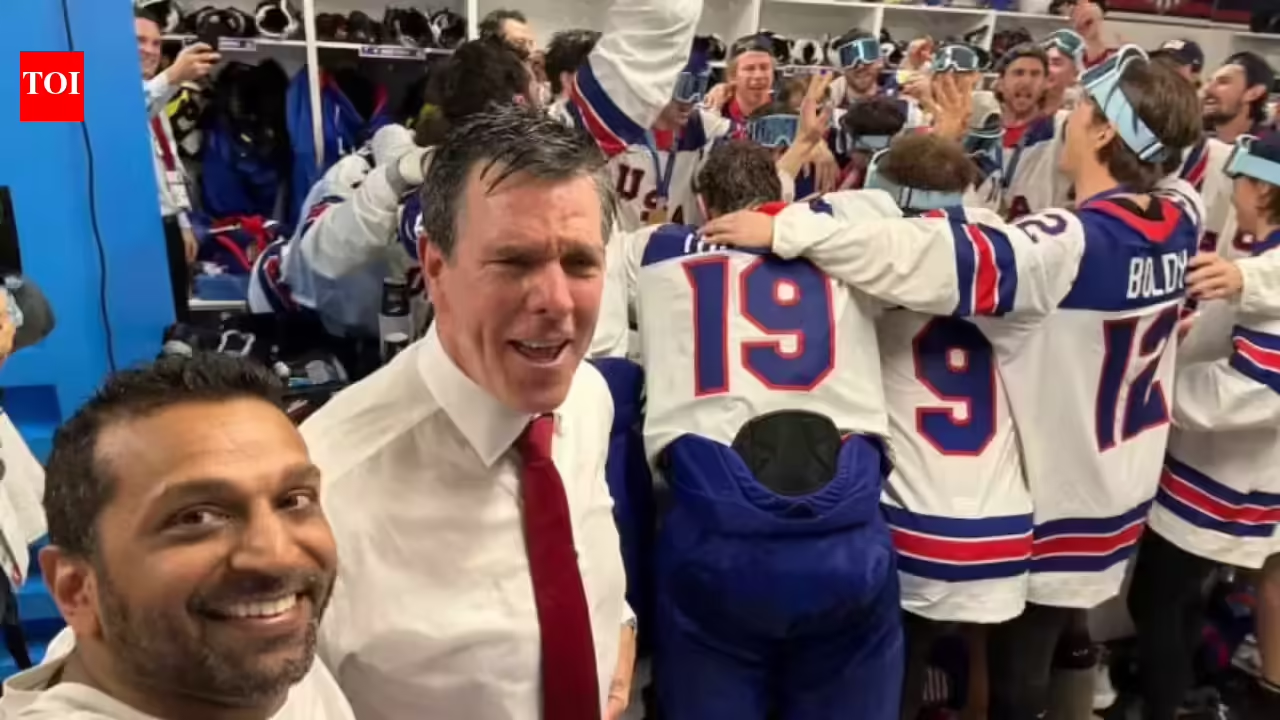
From a gold-medal locker room in Milan to a high-stakes courtroom battle in Washington, Kash Patel has found himself at the center of a growing controversy. The FBI Director has filed a $250 million defamation lawsuit against The Atlantic, pushing back against claims tied to his conduct during the 2026 Winter Olympics trip. At the heart of the dispute is a widely circulated video showing Patel celebrating with Team USA players, including Matthew Tkachuk, after their gold medal win.
Why is Kash Patel defending his locker-room celebration with Matthew Tkachuk?
The legal fight sharpened earlier this week when Patel formally accused the publication of spreading false claims about “excessive drinking” and “unexplained absences.” His legal team insists those assertions were not only inaccurate but published despite prior warnings, framing the lawsuit as a direct challenge to what they call reckless reporting.Still, it is the locker-room footage that has kept the story alive beyond legal filings. The clip shows a jubilant Patel among players, at one point chugging beer as Tkachuk places a medal around his neck. For critics, the optics raised questions about judgment and timing, especially given Patel’s federal responsibilities during the trip.Patel has not backed away from the moment. Addressing the criticism in a recent media appearance, he said, “I’m like an everyday American who loves his country, loves the sport of hockey, and champions my friends when they raise a gold medal and invite me in to celebrate.” He followed that with a sharper rebuttal: “I’ve never been intoxicated on the job, and that’s why we filed a $250 million lawsuit. Any one of you who wants to participate — bring it on. I’ll see you in court.”According to Patel, the Milan visit was not purely ceremonial. He maintains that official duties were part of the schedule, including meetings with international law enforcement tied to Olympic security. That distinction has become central to his defense, drawing a line between personal celebration and professional obligation.The reaction from Washington has added another layer. Reports suggested that Donald Trump was dissatisfied with aspects of the trip, including the celebration and use of government aircraft. Yet the White House has publicly reiterated confidence in Patel, pointing to broader law enforcement outcomes rather than the optics of a single moment.What remains is a complicated overlap of public service, personal conduct, and media scrutiny. The lawsuit may settle questions in court, but the debate around perception and accountability is likely to linger well beyond it.