


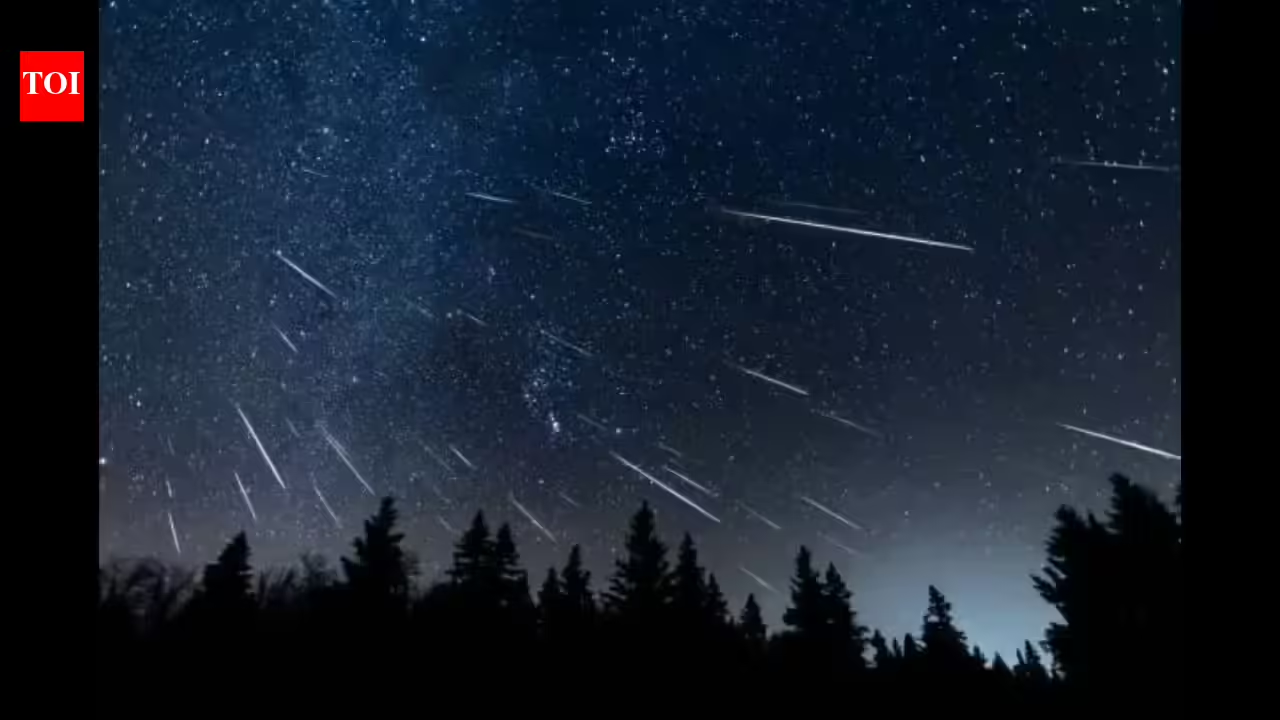
The annual Lyrid meteor shower is set to peak this week with skywatchers across the UK and Northern Hemisphere expected to witness one of the oldest recorded celestial events returning to spring skies.Active since 16 April, the meteor shower will reach its peak during the late hours of 22 April and into the early morning of 23 April offering optimal viewing conditions across regions including the UK, Europe, and parts of North America.
Where and how it will be visible
The meteors will appear to radiate from the constellation Lyra positioned near the bright star Vega and will be visible in the eastern sky after midnight.Observers in the UK are expected to see up to 15–20 meteors per hour under clear, dark conditions, with the best visibility occurring away from city lights and after the eyes adjust to darkness.According to The Guardian, the meteors are known for being fast and bright often leaving brief glowing trails, or “smoky trains”, across the sky.
Ancient origins and cosmic link
The Lyrids are among the oldest recorded meteor showers, with observations dating back to 687 BC.Scientists have traced their origin to Comet Thatcher, discovered in 1861, with the meteoroids being fragments of dust left behind in the comet’s tail.As reported by The Guardian, these particles burn up upon entering Earth’s atmosphere, producing the visible streaks seen during the shower.
Best viewing conditions
Experts say the best time to watch will be after midnight, when the radiant rises higher in the sky, and visibility improves.Clear skies, minimal light pollution, and allowing 20–30 minutes for night vision adjustment will significantly improve viewing chances.While the display will be visible across much of the Northern Hemisphere, viewing in the Southern Hemisphere will be more limited, as the radiant remains low on the northern horizon.
Seasonal skywatching highlights
The Lyrid meteor shower marks one of the key astronomical events of April drawing attention from both casual observers and astronomy enthusiasts.With favorable timing and relatively bright meteors, the event is expected to generate strong public interest across the UK, particularly if weather conditions remain clear during peak nights.