


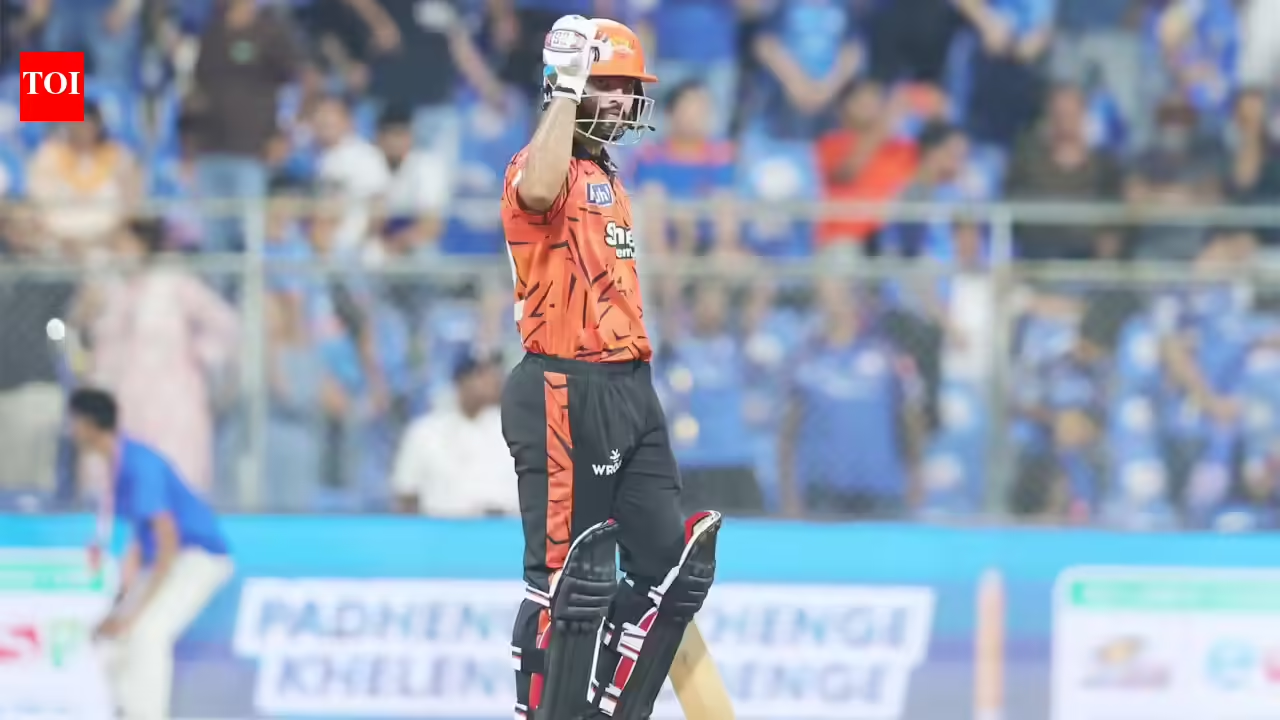

NEW DELHI: A young batsman taking on Jasprit Bumrah for the first time would usually show signs of nerves, tension, or even a bit of fear. But 23-year-old Salil Arora showed none of that during the IPL 2026 fixture between SRH and MI. What stood out instead was his fearless approach, headlined by a stunning no-look six straight over Bumrah’s head.The shot caught everyone’s attention, including his partner at the non-striker’s end, Heinrich Klaasen. After the match, Klaasen revealed during the post-match chat to the broadcasters, “He asked me if he could hit it (when 11 were needed off 12) and I said yes – finish the game.”Salil stayed unbeaten on 30 off just 10 balls, smashing three sixes at a remarkable strike rate of 300. And it wasn’t just Bumrah he took on. He also attacked Hardik Pandya, hitting him for two sixes. One of them stood out – a sharp, short-arm pull. Picking the length early, Salil swiveled into position and sent the ball soaring over mid-wicket, leaving Pandya surprised.The 750-ball practice every dayBehind this fearless knock lies serious preparation. For nearly one-and-a-half years, Salil has trained intensely – facing around 250 deliveries per session, three times a day, often with a Cosco ball. He also worked with side-arm throwers, simulating pace of 140-150 kmphs to get match-ready for the IPL.So when Bumrah pitched it in the slot, Salil was ready. No hesitation, no second thoughts – just pure execution.“Slot mein aayegi toh chakka jaayega,” Arora’s coach Rajan Gill recalled his student’s words from those practice days.
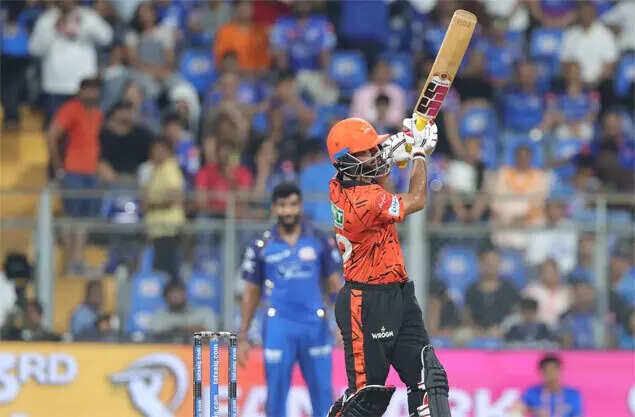
As the coach pointed out, it wasn’t random – it was the result of a clear plan, detailed preparation, and focused training for the IPL.“Usne Bumrah ko bilkul nahi dekha, usne sirf ball ko dekha (he did not look at the bowler, he just looked at the delivery). If it is in the slot, he will not spare it. The ball will go over the fence for sure. It’s the result of one and a half years of hard work. We practiced this with a Cosco (tennis) ball. If you look at his bat speed, it is something to watch. He has worked a lot on this,” Gill told. TimesofIndia.com.“I’ll explain. We decided to have three sessions every day, all with Cosco (tennis) balls. Each session had around 200 to 250 deliveries – so in total, almost 600 to 700 balls in a day. The sessions were divided into three parts: first with regular balls, second with wet balls bowled by fast bowlers, and third with taped balls. Sometimes we also practiced with white and red leather balls, but Cosco-ball preparation was our main focus. And whenever he came to the ground, he never sat idle. He was always doing something – fielding, or even wicketkeeping at times,” he said.“There are people who say they play 1,500 or 2,000 balls in a day. I don’t believe in that formula. Practice needs to be purposeful, with clarity and the right mindset. Playing 2,000 balls a day doesn’t make a player. Even if you face 100 balls with quality, you can still become one,” he said.“He practiced shots while attacking close to his body – what you call the short-arm jab. We used stick bowlers and throwdown specialists for that. Some of them could simulate speeds of 140-150 kmph,” Gill added.How Salil caught Ishan Kishan’s eyesIt was against Ishan Kishan’s Jharkhand side that Salil delivered one of his most memorable knocks before he was scouted to the IPL.In the Syed Mushtaq Ali Trophy last season, he smashed an unbeaten 125 off just 45 balls, tonking 11 sixes in a brute display of power-hitting. And Ishan, leading the opposition, had a front-row seat to the carnage as the youngster cleared the ropes with ease.

Salil finished the tournament with 358 runs from eight innings at an impressive strike rate of 198.88. His tally of 28 sixes was the second-highest in the competition.According to his coach, that standout innings made a strong impact on Ishan and played a key role in earning Salil a Rs 1.50 crore contract with Sunrisers Hyderabad ahead of IPL 2026.“That was the match that changed everything for Salil. He spoke a lot about Ishan Kishan after that game. As a senior player and captain, Ishan spoke to him, praised his knock, and also shared a few tips,” the coach said.Despite being an uncapped domestic player, Sunrisers Hyderabad showed strong intent at the auction, driven largely by Salil’s domestic performances.He made the most of his early opportunities in practice matches, delivering a few eye-catching outings that convinced the team management to back him from the start of the campaign.And as luck would have it, in the absence of regular skipper Pat Cummins, Kishan led SRH initially, and Salil was even promoted up the order ahead of Aniket Verma in the initial games.In his first 7 outings, Salil registered scores of 9 vs RCB, 0 vs KKR, 9 vs Punjab Kings, 24* vs Rajasthan Royals, 13 vs CSK, 8* vs Rajasthan Royals. While the numbers may not stand out, the team continued to show faith in his ability.That belief finally paid off when his explosive 30 off just 10 balls – highlighted by that stunning six off Jasprit Bumrah – proved why the management had persisted with him.“He used to say, ‘Sir, when there are no 6-7 innings, there is no fun in the innings.’ He had a good run in SRH practice matches, and that’s how he earned the captain’s confidence. Salil often says Heinrich Klaasen has taught him a lot and given him plenty of tips. Ishan Kishan also really likes him and backs him. ‘You just play the game as you want, don’t think too much. Tu achha khelta hai,’ (You keep on playing the way you do, do not overthink, you play really well) Ishan keeps telling him,” the coach said.Fulfilling his father’s dreamSalil’s journey has been far from easy. After losing his father two years ago, his elder brother stepped in to handle the family business, making sure Salil could continue chasing their father’s dream – to become a cricketer, play in the IPL, and one day represent India.
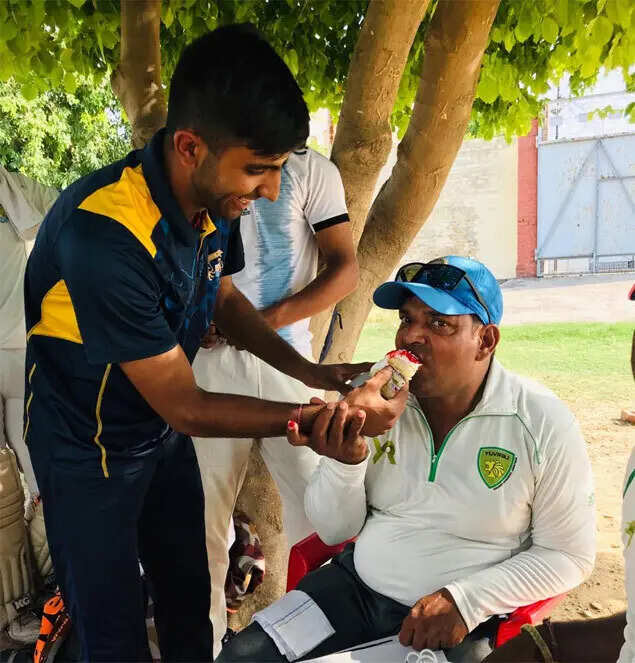
It was a difficult phase, with several challenges that could have easily disrupted his progress.However, his coach insists that Salil was always a special talent who never lost sight of his goal. He kept working on his game, expanding his shot range and staying committed despite setbacks.“He was devastated. It took some time for his family and me to help him come to terms with it. He is still young and was very close to his father. His father had only one dream – to see his son play for India and in the IPL. One has already been fulfilled, and I’m sure he will represent India someday as well,” the coach said.Salil – pooja-paath kind of boyMany cricketers follow their own pre-match rituals, and for Salil, it begins with a visit to the temple. Whether it’s a local tournament, state-level cricket, or the IPL, he makes it a point to find a temple, offer his prayers, and only then step onto the field.“He is a pooja-paath kind of boy. I remember one incident when he had a match – he woke up early in the morning and went looking for a temple to offer prayers,” he said.“In fact, he doesn’t drink. He is a teetotaller. Even at Sunrisers Hyderabad parties, he prefers to sit with a glass of haldi wala doodh (turmeric milk),” the coach added.