



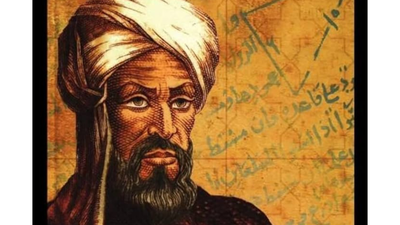
More than 1,200 years ago, in the intellectual heart of Abbasid Baghdad, a Persian scholar quietly reshaped how humans understand numbers, problems and logic. His name was Muhammad ibn Musa al-Khwarizmi, and his work would go on to influence everything from basic arithmetic to modern computing. At a time when mathematics was largely geometric and tied to physical shapes, he introduced systematic methods for solving equations using clear, step-by-step rules. The words “algebra” and “algorithm” that people use every day both trace back to his writings and his name. Though he lived in the 9th century, his ideas continue to underpin the mathematical language of the modern world, shaping how problems are framed, simplified, and solved across disciplines.
The origins of algebra and algorithms
Al-Khwarizmi’s most famous work, The Compendious Book on Calculation by Completion and Balancing, laid the foundation for algebra as a structured discipline. The Arabic term al-jabr, meaning “completion” or “restoration,” referred to one of the operations used to solve equations by eliminating negative terms.His text systematically categorized equations into types such as linear and quadratic and provided standard methods to solve them. Importantly, he expressed these solutions rhetorically, using full sentences rather than symbolic notation. This made the work widely accessible in a pre-symbolic mathematical culture.Beyond technique, the book marked a conceptual shift. Mathematics became something that could be generalized and taught as a method rather than rediscovered for each problem. This standardization allowed knowledge to travel across regions and generations, forming the backbone of later mathematical education.
From a name to a concept: The birth of “algorithm”
The modern word “algorithm” originates from the Latinised form of his name, “Algoritmi,” which appeared in medieval translations of his works. European scholars began using the term “algorism” to describe arithmetic using the new numerical system he promoted. Over time, this evolved linguistically into “algorithm.”What makes this connection significant is not just etymology but method. Al-Khwarizmi’s writings outlined procedures that could be followed step by step to reach a correct result. These were not intuitive leaps but repeatable processes, an early form of computational thinking.While earlier civilizations had procedural knowledge, his work helped formalize and standardize it within mathematics. This emphasis on rule-based problem-solving became a cornerstone for later developments in logic, computation, and eventually programming.
Spreading the Hindu-Arabic numerical system
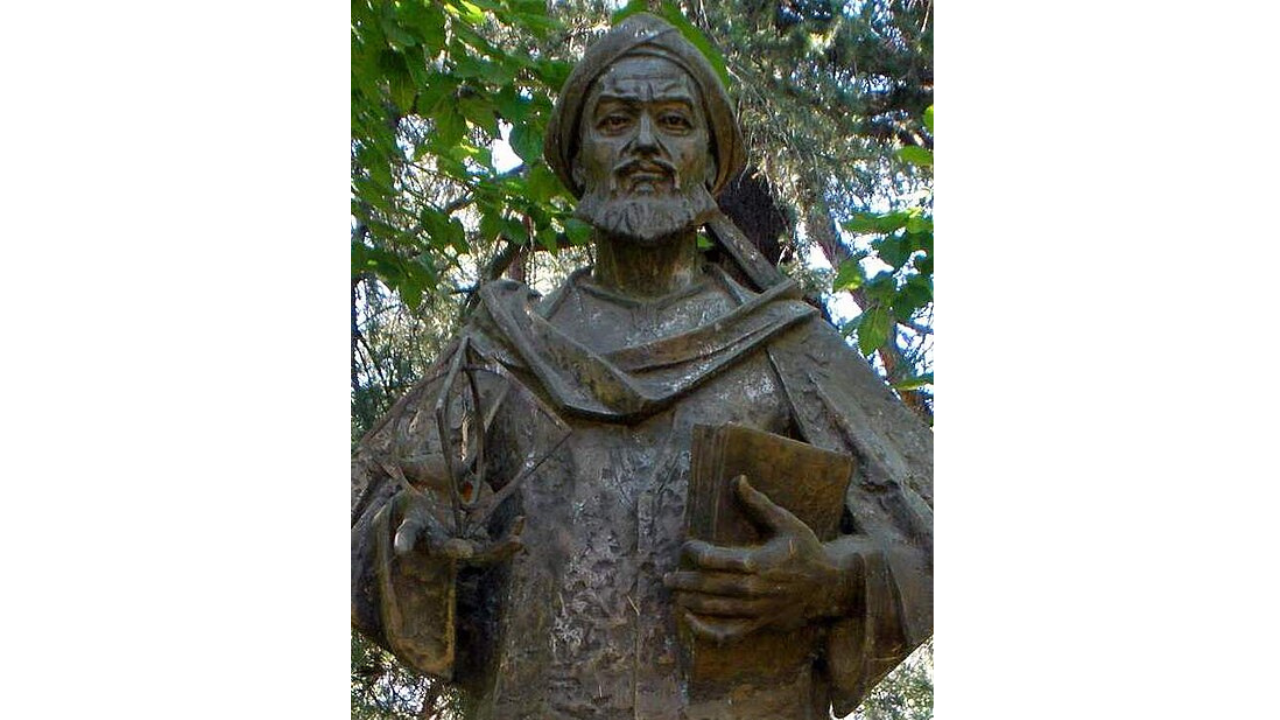
Al-Khwarizmi played a crucial role in transmitting the Hindu numerical system to the wider world. In his work, Algoritmi de numero Indorum, he explained positional notation and the use of zero, concepts that originated in Indian mathematics.This system was revolutionary because it allowed complex calculations to be performed efficiently. Unlike Roman numerals, which lacked place value and made arithmetic cumbersome, the Hindu system enabled scalable computation.Through translations in medieval Europe, particularly in centers like Toledo, this system gradually replaced older numerical systems. Its adoption transformed commerce, science, engineering, and accounting, making it one of the most consequential knowledge transfers in history.
A shift in mathematical thinking
Before al-Khwarizmi, mathematics was dominated by geometric reasoning, shaped by scholars such as Euclid. Problems were visual, tied to shapes and spatial relationships.Al-Khwarizmi’s approach moved mathematics toward abstraction. By demonstrating that equations could be manipulated through general rules, he reduced dependence on diagrams and physical interpretation.This shift was foundational. It enabled later developments such as symbolic algebra in Renaissance Europe, calculus in the 17th century, and linear algebra in modern science. The idea that mathematics is a system of operations on abstract entities remains central to fields ranging from physics to machine learning.
The House of Wisdom
Al-Khwarizmi worked in Baghdad, within the intellectual ecosystem associated with the House of Wisdom under the patronage of Al-Ma’mun.This period, known as the Islamic Golden Age, was marked by large-scale translation movements. Texts from Greek, Sanskrit, and Persian traditions were translated into Arabic, studied, and expanded upon. Scholars did not merely preserve knowledge. They built upon it.Al-Khwarizmi’s work reflects this synthesis. His mathematics combined Greek logical structure with Indian numerical innovation, producing something entirely new. This cross-cultural foundation is often overlooked but is essential to understanding the global nature of mathematical development.
Beyond algebra: Astronomy, geography and practical science
Al-Khwarizmi was not limited to mathematics. He contributed to astronomy through tables that improved planetary calculations and timekeeping. His astronomical work supported religious practices such as determining prayer times and the direction of Mecca.In geography, he revised and corrected earlier works like those of Ptolemy. His book on geography included coordinates for numerous locations, improving the accuracy of maps in the Islamic world.These contributions highlight a broader pattern. His work was deeply practical. It addressed real-world needs in navigation, trade, and daily life, reinforcing the idea that mathematics was not just theoretical but applied.
How his work reached Europe
The transmission of al-Khwarizmi’s ideas to Europe occurred primarily through translations in medieval Spain and Italy. Latin scholars translated his works, introducing algebra and the numerical system to European audiences.By the 12th and 13th centuries, these texts were influencing European education. They gradually replaced older methods, especially in commerce and bookkeeping. Over time, his influence became embedded in the foundations of Western mathematics.This process was not immediate but cumulative. It shows how knowledge moves across cultures, slowly through translation, adaptation, and teaching.Although he lived in the 9th century, al-Khwarizmi’s influence remains deeply embedded in modern systems. Algebra is a core part of education worldwide. Algorithms underpin everything from search engines to artificial intelligence.