

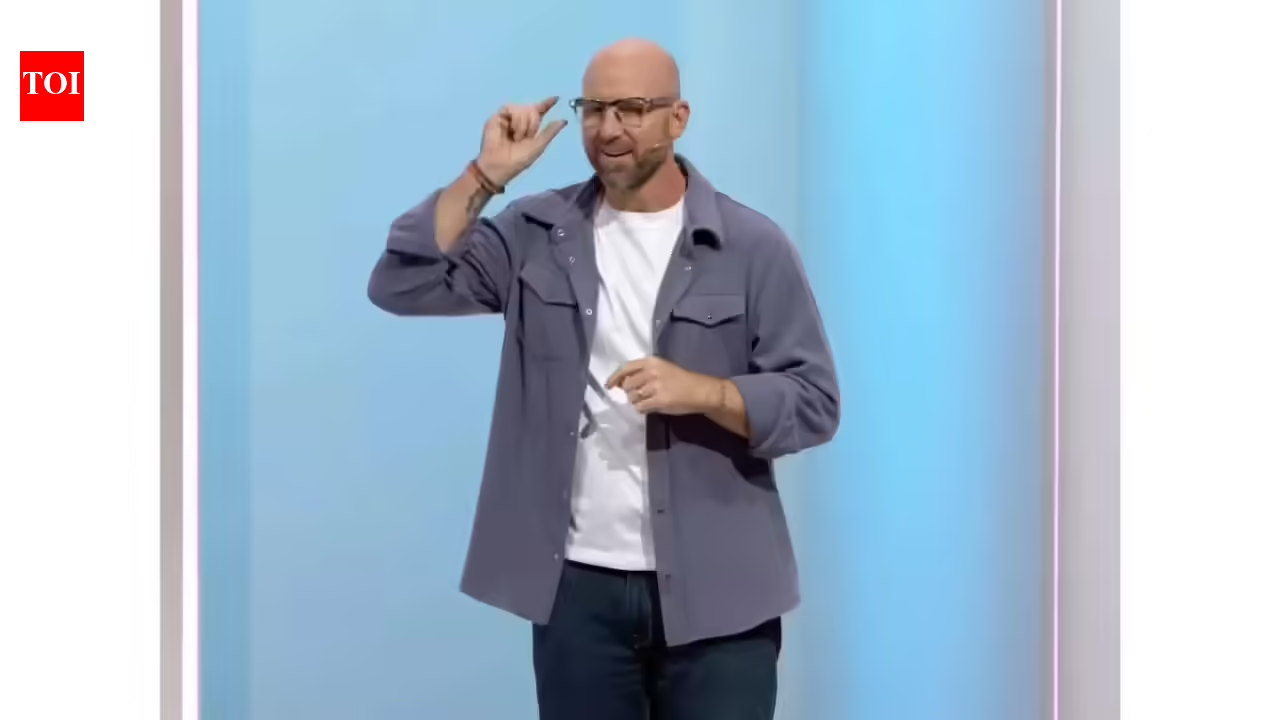
Meta’s chief technology officer Andrew Bosworth, who oversees the company’s Reality Labs division, says that stress is not something he encounters often, but when it surfaces, he treats it as a signal to reprioritise. According to a report by Business Insider, speaking during an Instagram ‘ask-me-anything’ session, Bosworth explained that he usually feels stressed only four or five times a year, and the trigger is almost always the same: being over-scheduled. Bosworth added that when he starts to feel stressed, it’s mainly because he worries he won’t have enough tome for the ‘important work’. He described busyness as the root cause, noting: “When I start to experience the stress, that’s a useful signal for me. What is the important work that, if you dedicated the time to it, you would be okay? And, how do we reprioritise the urgent stuff that’s being noisy?”
Meta CTO shared coping strategies for stress
Bosworth also talked about some coping mechanisms which help to get out of a stressful situation. He explained that in order to manage stress he relies on conventional methods such as deep breathing, exercise, and spending time with his wife and kids. He also talks about stress relief, often with his wife, which he says helps him to reset. While he doesn’t consider his strategies unique, he emphasized that they are effective in keeping him grounded.Executives across industries use different approaches to cope with high-pressure roles. Some CEOs practice yoga, take long walks, or spend time in nature. Meta’s CEO Mark Zuckerberg previously told podcaster Joe Rogan that waking up and checking his phone felt like being “punched in the stomach,” and he manages stress by exercising in the mornings.
Meta CTO to engineers looking to join technology industry
Recently, Meta’s chief technology officer Andrew Bosworth had a simple answer when a student asked how to enter the tech industry: stop waiting and start building. During an Instagram “Ask Me Anything” session this week, Bosworth was asked by a college freshman what it takes to break into technology. His response was direct and practical — focus less on theory and more on doing. “You just have to immerse yourself in it,” Bosworth said. “You should just constantly be building.”“That’s what’s going to give you the best chance of having the relevant skill set that is needed to make a difference in technology,” he said.