


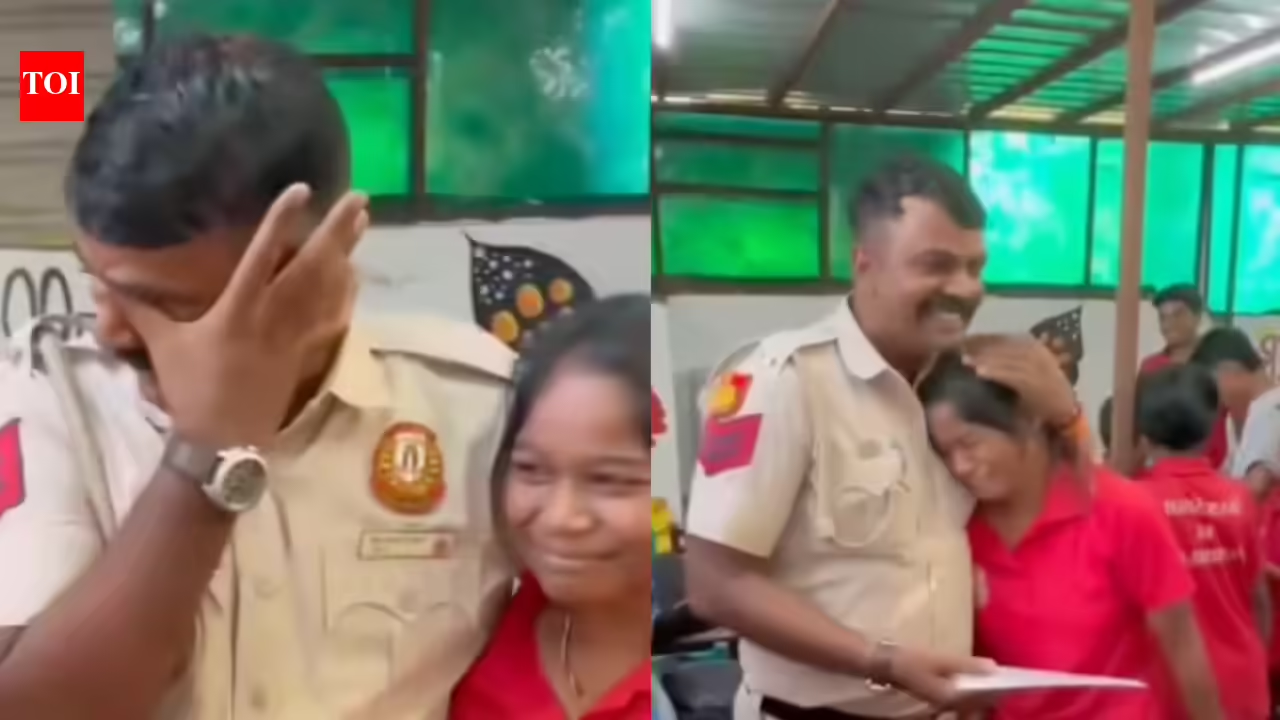
Just a few seconds after the Class 10 result came through, the atmosphere at Than Singh Ki Pathshala in Delhi turned unmistakeably emotional. A girl named Sakshi, the daughter of a migrant laborer from Madhya Pradesh, broke down as she called her mother and said, “Mummy, main pass ho gayi.“The moment, captured in a viral video and posted online, showed not just a student celebrating an exam result but a family edge-of-the-seat hope finally turning into relief. The officers and volunteers around her were visibly moved too, which is part of why the clip has resonated so widely. Scroll down to read more…
A result that carried years of struggle
For Sakshi, the pass certificate meant more than a grade sheet. According to the report, her schooling had stopped after Class 7, and her family’s uncertain migrant life had left education hanging in the balance. The same report says she was able to return to studies through the support of Than Singh Ki Pathshala and then clear Class 10, turning what had once looked like a closed door into an open one. In a city where many children fall out of school because work, migration and poverty interrupt the routine of learning, her result stood out as a hard-won correction to an unfair beginning.
The man behind the classroom
Than Singh Ki Pathshala is the creation of Delhi Police head constable Than Singh, posted at the Red Fort. Earlier reporting by says he started the initiative in 2015 with just four children at the ground parking area near the Red Fort after seeing children picking waste and living on the margins of the city. What began as a small effort has since grown into a steady support system for underprivileged children, with current coverage putting the number of children studying there at more than 80. The foundation’s own website says the initiative has supported 200-plus children, while others reported that 60 children had already been admitted to schools through the effort.
More than books and blackboards
What makes the pathshala unusual is that it does not stop at tuition. Reporting on the initiative says the children are provided books, notebooks and other essentials, and in some cases transport as well, including e-rickshaw arrangements for those who live further away. News reports also noted that the support extends to health check-ups and, at times, food and recreation. In a system where children from migrant and laboring families often need far more than classroom instruction to stay enrolled, the pathshala tries to solve the practical problems that usually force children out of education before they can take hold of it.
Why Sakshi’s moment matters
Sakshi’s tears struck a nerve because they carried a larger truth. In families living at the edge of the city’s economy, passing an exam is rarely only about marks. It is about staying in school long enough to believe in a different future. It is about a daughter who was once told marriage would decide her life instead proving that education can still redraw the map. And it is about the quiet work of an officer who used his own time, salary-linked stability and persistence to build a room where children who had been invisible could finally be seen. Than Singh’s line, as reported earlier, captures that spirit plainly: if these children move forward, that is success enough.
What this story leaves behind
In the end, the image that lingers is not just of one student passing an exam. It is of a girl reaching for her mother with trembling joy, of teachers and police officers fighting back tears, and of a modest learning center proving that a classroom does not need walls to change a life. Sakshi’s result is personal, but the lesson is public: when children are given continuity, attention and dignity, they often return the effort with something far larger than a pass percentage. They return it with possibility.