


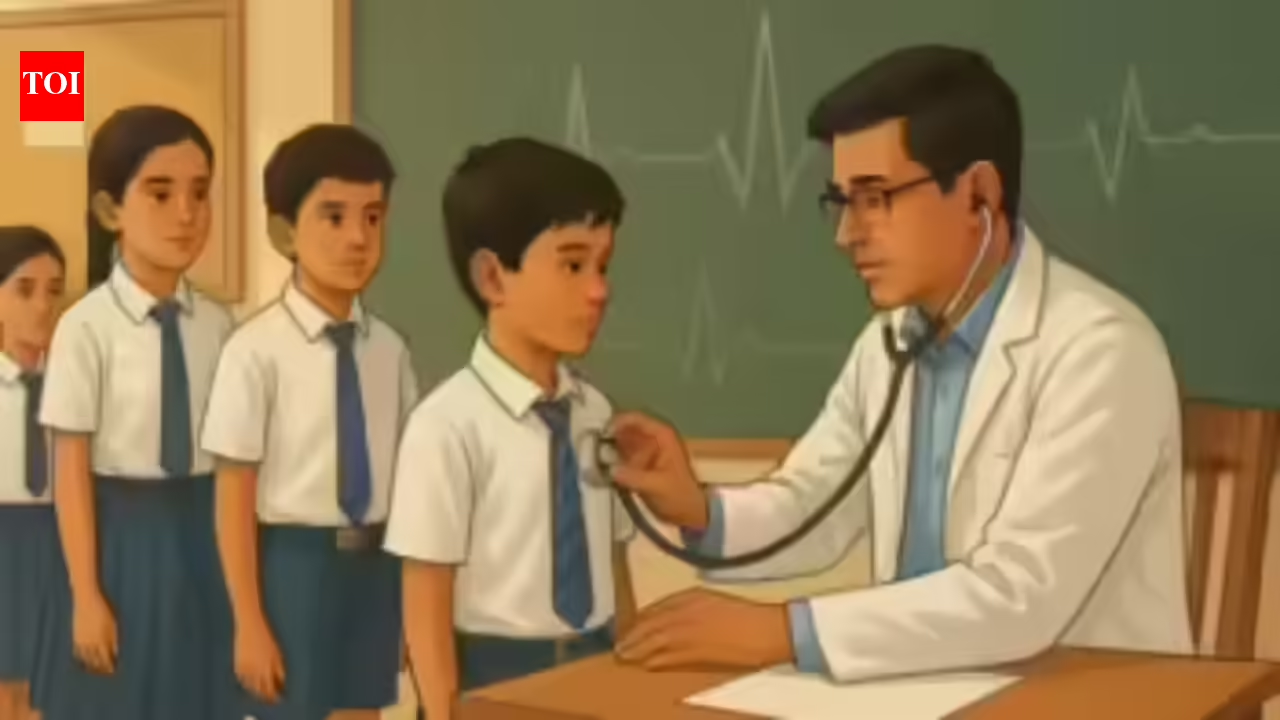
NEW DELHI: The Centre’s upgraded child health screening programme, RBSK 2.0, is facing criticism from a national collective of doctors with disabilities, who say it expands coverage but fails to address disability as a core priority—potentially leaving millions of children out of early diagnosis and care.In a representation to the Union health ministry, Doctors with Disabilities: Agents of Change, a collective of health professionals with disabilities, said the revised Rashtriya Bal Swasthya Karyakram (RBSK) does not meaningfully incorporate disability, despite legal mandates and global shifts towards rights-based health frameworks. The letter was signed by Prof. (Dr.) Satendra Singh on behalf of the collective.The program continues with the “4Ds” framework—Defects at birth, Deficiencies, Diseases and Developmental delays—but does not explicitly include disability. The 124-page guideline document does not mention the term “disability”, raising concerns over compliance with the Rights of Persons with Disabilities (RPwD) Act, 2016.Experts note that conditions recognized as disabilities under the law—such as thalassemia, sickle cell disease and haemophilia—are not integrated into the screening framework, despite contributing significantly to chronic illness and lifelong disability. India accounts for nearly 10% of the global thalassemia burden, with an estimated 1–1.5 lakh affected children.The omission marks a step back from RBSK 1.0, which had included haemoglobinopathy screening on an optional basis. Their removal comes even as the government runs parallel programs such as the National Sickle Cell Elimination Mission.The group also flagged the absence of disability indicators in program monitoring and lack of linkage with the Unique Disability ID (UDID), weakening accountability.Public health experts stress that early screening is critical. Globally, about one in ten children lives with a disability, and they are eight times more likely to die before the age of 17, underscoring the need for early identification and care.They argue that integrating disability into screening is feasible and low-cost. Point-of-care tests for conditions like sickle cell disease require minimal training and can be deployed in rural settings. Global bodies, including the World Health Assembly, have pushed for universal newborn screening.The collective has urged the government to expand the framework to explicitly include disability, integrate all specified disabilities under the RPwD Act, link with national registries, and involve persons with disabilities in program design and training.