

It is disturbing to see a snake in your backyard. In Australia though, it is the species that needs to be recognized rather than how it is reacted to.The red-bellied black snake is among the more commonly experienced snakes in the east coast especially around the suburbs in the proximity of bushlands or water bodies. The Australian Museum reported that it is not usually aggressive, but venomous and must never be approached.Being aware of how to identify it early enough can be the difference between how you react. It is not simply black in color and that is where people become confused
The snake is at first sight entirely black
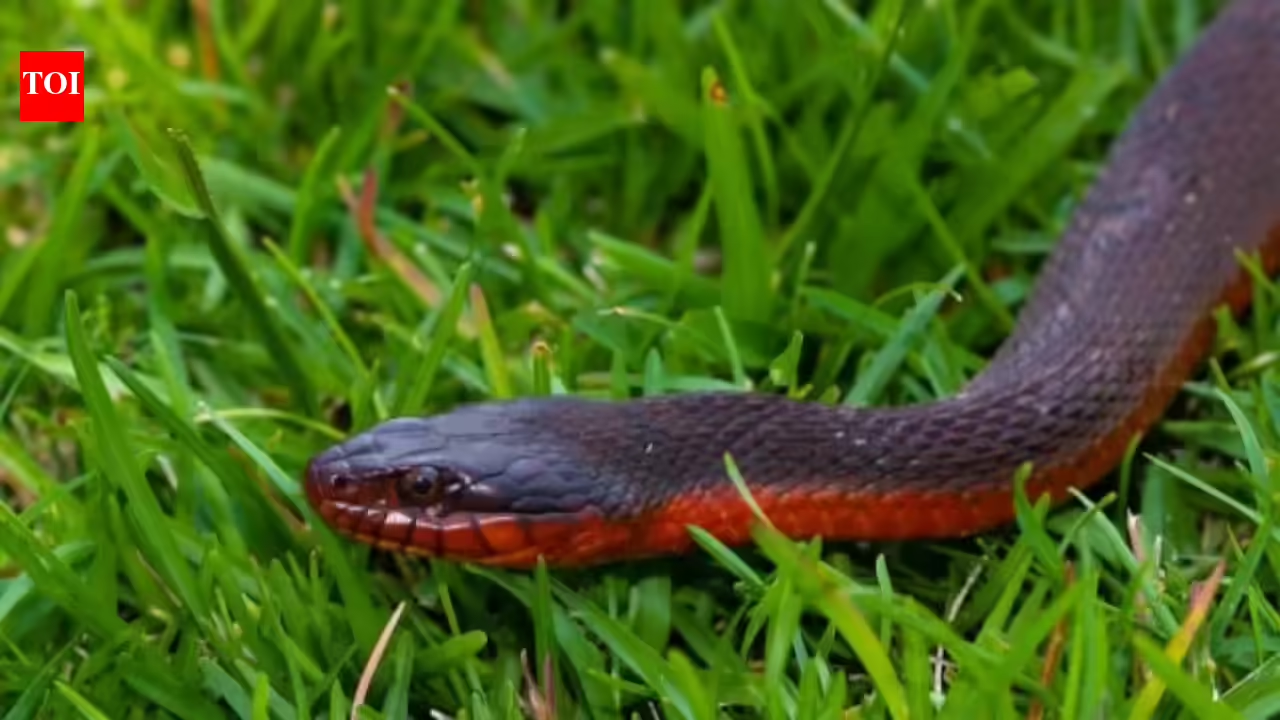
However, when in the light you will see a sharp difference. The belly and sides of the upper body are red or pinkish in color and glossy black. This red is not clearly visible in certain lighting, hence the confusion by people with other black snakes. This color contrast is among the surest ones.
It is not thin and sharp, but has a smooth, slightly bulky body
The red-bellied black snake has an average body thickness in comparison with most other species.Its structure is heavier and more firm, unlike the snakes that move fast and are slim. Its scales are smooth and make it look a bit shiny, particularly in the sunlight.The Queensland Government Department of Environment reports that the adult height is up to approximately 2 metres, although the majority are shorter. It is not usually found in dry open areas, but near water.
One of the biggest clues is location
This species is fond of humid places, creeks, wetlands and water-feature gardens. It preys on frogs and therefore is usually spotted after a rain or close to an outhouse pond.When the black snake is observed in a dry, open yard with a long distance to water, it becomes less probable that it will be this species.
It retreats rather than charges
A significant behavioral characteristic is its response to humans. The red-bellied black snake is reported to be a timid animal. Studies and observations in the field by Australian wildlife authorities indicate that it generally backs away when perturbed as opposed to charging.This is however not to be confused with safety. Handling or cornering it will bite, and its venom will need medical care.
Juveniles appear different thus making them difficult to identify.
Young red-bellied black snakes are not necessarily so deeply coloured. They can either be light or brown in color and they have less pronounced red on the sides. It is here that misidentification is prevalent particularly with other species.Researchers recommend that one should not attempt to distinguish juvenile snakes too closely because they are very similar.Recognizing a red-bellied black snake does not require scrutinizing the details, but rather the ability to identify the main patterns, color contrast, body structure, and the location of a snake.When in doubt, always assume the same. Keep away and assume that it is potentially dangerous.