

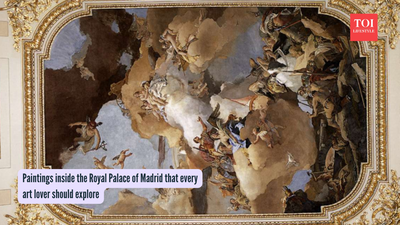
Old architectures are not just storehouse walls and paths that speak volumes of history; they are also rich treasures of art that represent cultures of the past.The Royal Palace of Madrid is also one such place, and more than just a royal residence built during the 18th century on the site of the old Alcázar.Every hall, ceiling, and chamber inside the palace tells a story through architecture, sculpture, and especially paintings. Visitors often admire the luxurious interiors, but the main attraction of the palace lies in the extraordinary artworks created by some of Europe’s finest painters and fresco artists.
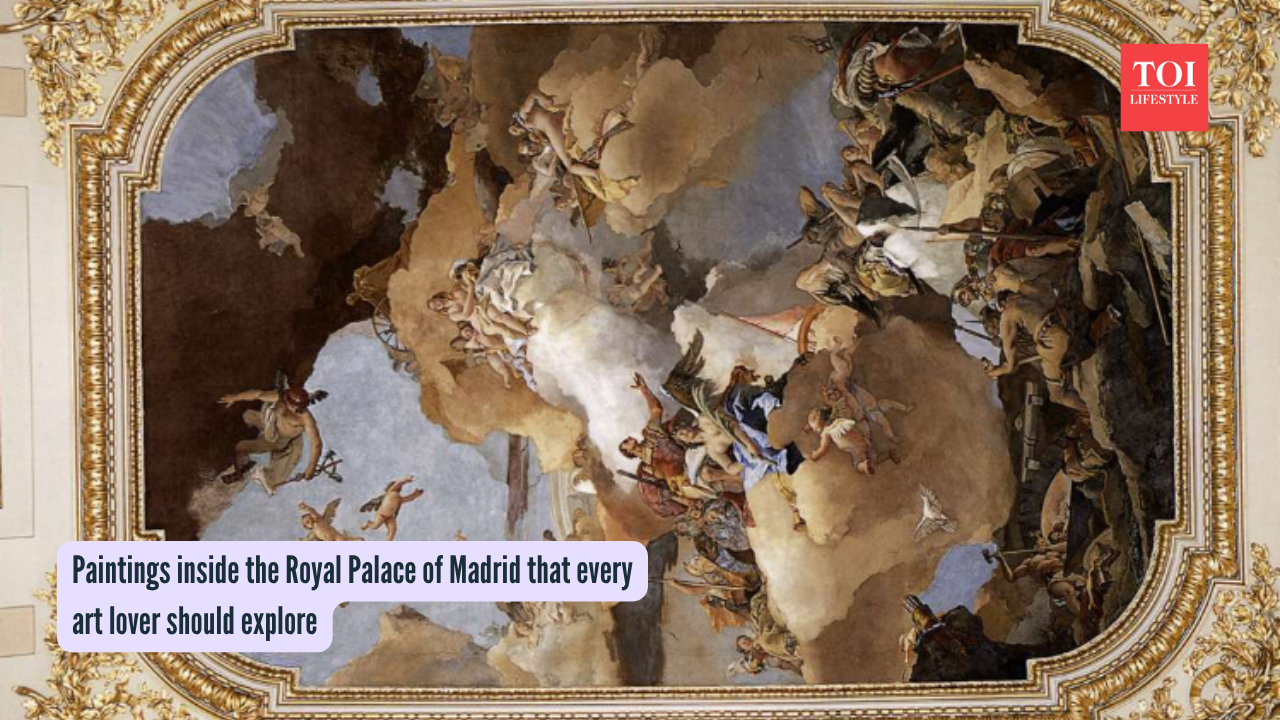
Venus, and Vulcan (Photo via Wikimedia Commons/ Web Gallery of Art)
The ceilings of the palace are particularly outstanding because they change ordinary rooms into eye-soothing experiences that seem to come alive.Italian artists such as Giovanni Battista Tiepolo and Corrado Giaquinto brought the rich traditions of Baroque and Rococo art into Spain, creating frescoes that speak emotions and seem to just move. These works continue to attract art lovers from around the world because they combine political meaning with artistic beauty.Here are some of the most outstanding paintings in the Royal Palace of Madrid
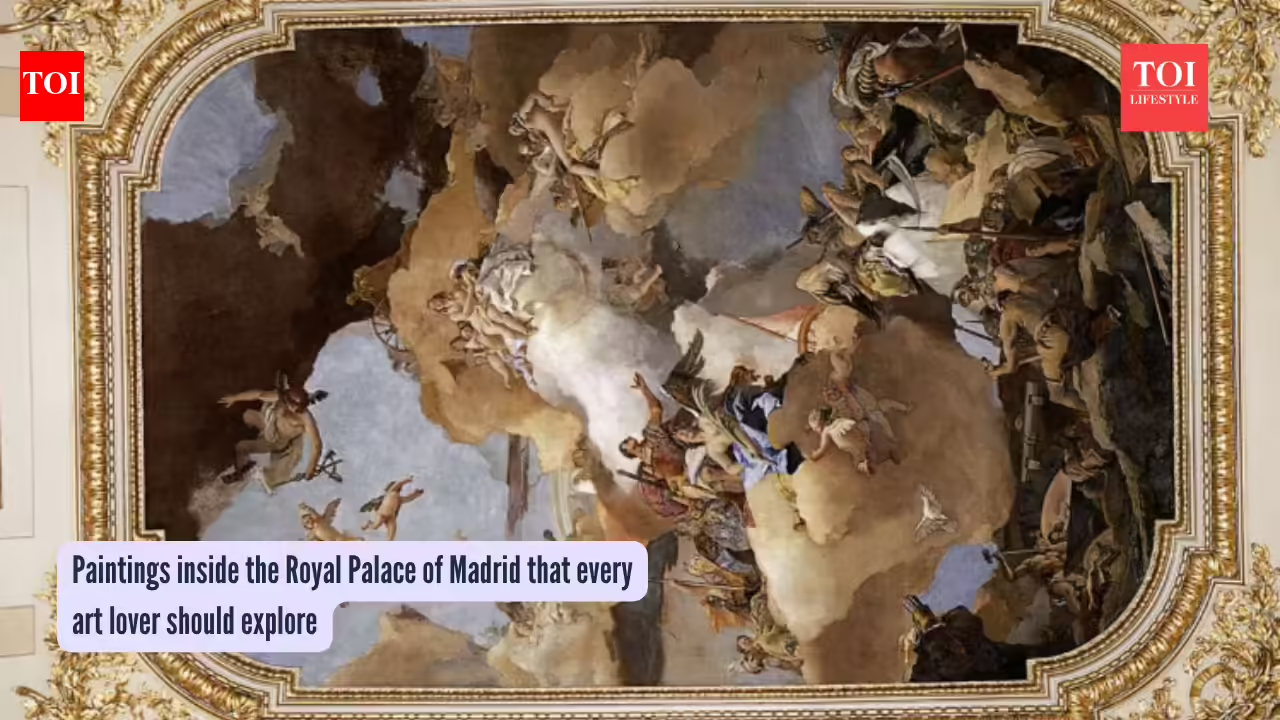
The triumph of Aeneas, Venus, and Vulcan
The Triumph of Aeneas, Venus, and Vulcan decorates the ceiling of the Halberdiers’ Hall in the Royal Palace of Madrid. It was painted by Italian artist Giovanni Battista Tiepolo between 1762 and 1764. The fresco is inspired by Roman mythology and presents heroic figures surrounded by dramatic clouds and bright colours.Tiepolo used movement and light to create a sense of grandeur that perfectly matched the royal setting. The artwork also shows a strong influence of Italian Rococo painting in Spain during the 18th century.
The Apotheosis of the Spanish Monarchy
The Apotheosis of the Spanish Monarchy is one of Tiepolo’s greatest achievements inside the Royal Palace. Painted on the ceiling of the Throne Room between 1764 and 1766, the fresco celebrates the glory and authority of the Spanish Crown. The painting includes figures representing continents, virtues, and divine power surrounding the monarchy. Rich gold tones and a creative take create a powerful illusion of an open sky above the room. The painting remains one of the finest examples of Baroque ceiling art in Europe.
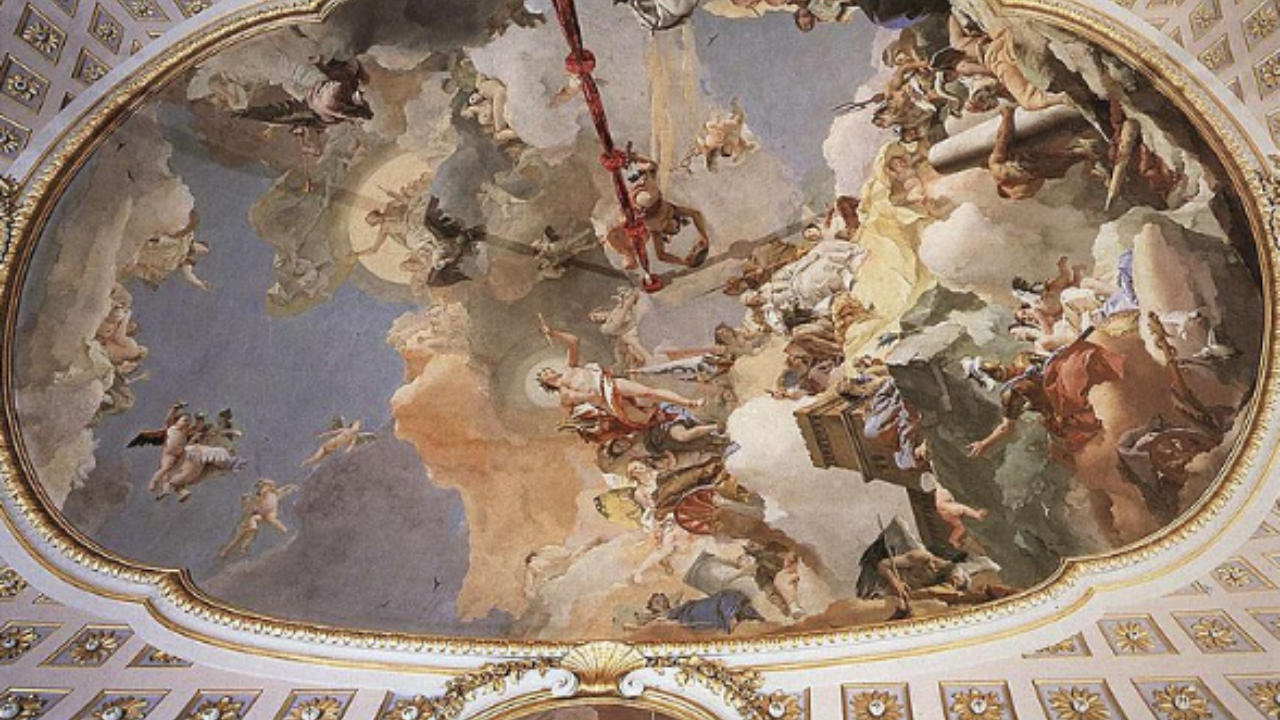
The Apotheosis of the Spanish Monarchy (Photo via Wikimedia Commons/ Web Gallery of Art)
The Birth of the Sun and the Triumph of Bacchus
This fresco by Corrado Giaquinto decorates one of the palace ceilings with scenes inspired by classical mythology. Giaquinto, an Italian painter invited to Spain by King Ferdinand VI. The artist used stories from ancient myths, filling the painting with soft colors, graceful figures, and lively scenes. The artwork shows how much people in 18th-century Europe admired Greek and Roman mythology.
Religion Protected by Spain
Religion Protected by Spain is another famous ceiling painting by Corrado Giaquinto in the Royal Palace of Madrid. The artwork shows Spain as a protector of the Catholic religion, which was an important idea during the rule of the Spanish monarchy. Using symbolic figures and heavenly scenes, Giaquinto linked religion with the power of the royal family. The fresco also shows how artists in the 18th century used art to express both political power and religious faith together.