


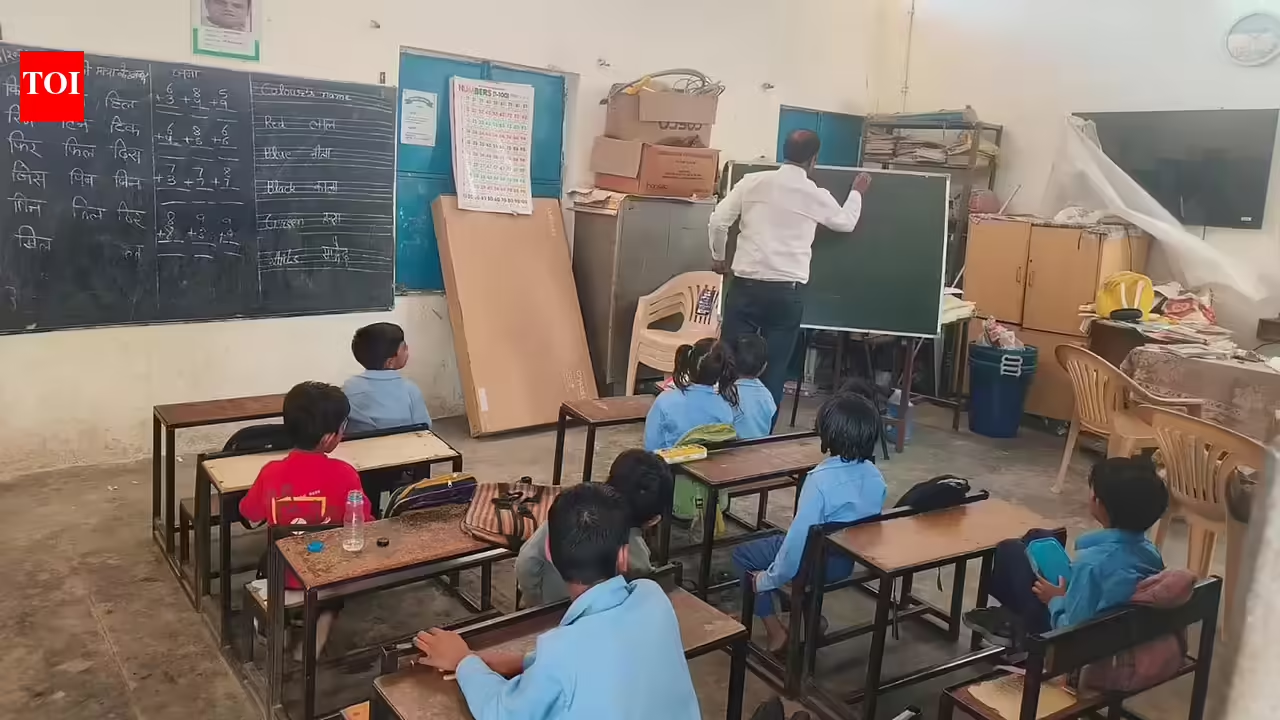
Gurgaon: Classrooms in several govt primary schools in the city are turning multi-grade, where one room often hosts students from two or even three different classes at the same time. Due to a shortage of teachers and space constraints, children from Grade 1 and Grade 2 — and in some cases even Grades 1, 2 and 3 — are being taught together by a single teacher, juggling different lessons simultaneously.The situation becomes more complex in some schools where two teachers share the same classroom, each handling a different subject — one teaching mathematics while the other conducts English lessons — for students of different grades sitting side by side. While this arrangement serves as a workaround for limited resources, teachers said it can affect foundational learning, as young students may struggle without dedicated attention tailored to their specific grade level.At Govt Primary School, Jai Hind Ki Dhani in Farrukhnagar, with only two sanctioned teaching posts catering to students from Bal Vatika to Class 5, teachers are forced to merge multiple grades into a single classroom. One teacher, Rajesh Kumar, who has been serving at the school for nearly a decade, described the daily challenge: “We have six hours and three classes to manage at once. While I assign work to the first graders, I have to attend to the second and third graders. Covering the syllabus effectively under these conditions is nearly impossible.” The challenge is both numerical and academic, as teachers simultaneously handle basic alphabet learning for younger students while teaching more advanced concepts such as ascending and descending order to older ones.Beyond academics, the burden on both students and teachers continues to grow. Most children come from migrant families where parents are engaged in daily wage labor and are unable to support studies at home. Teachers, on the other hand, are also handling administrative work, including maintaining online records for multiple subjects and classes, often amid poor internet connectivity in rural areas. Adding to this, both teachers at the school have been assigned census duties from May 2026, which, despite being scheduled after school hours, effectively extends their workload.
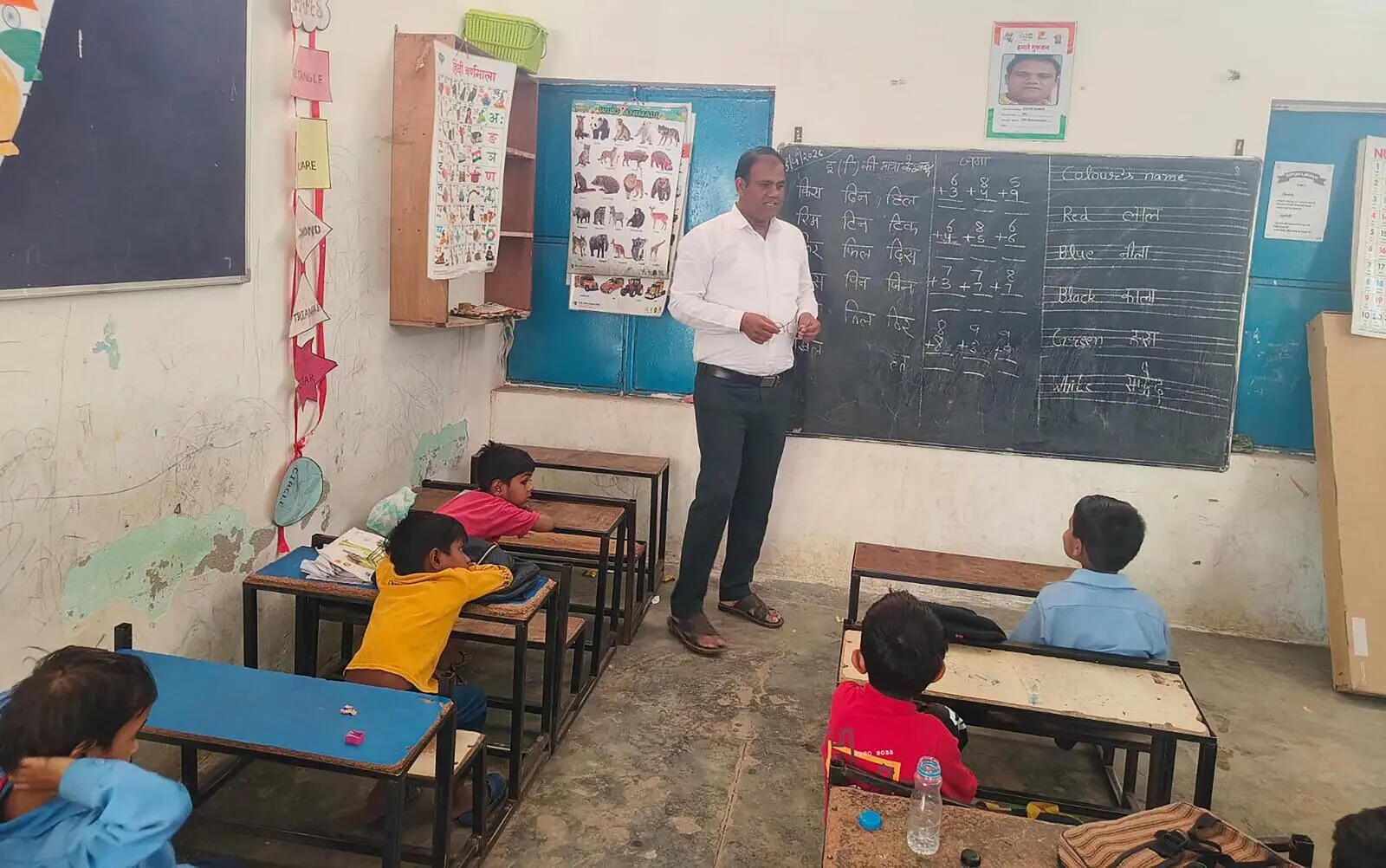
In a primary school in Farrukhnagar, a teacher was seen managing two classes simultaneously
In another primary school in Farrukhnagar, teacher Ashok Kumar was seen managing two classes simultaneously using separate boards in the same classroom. He assigns work to Bal Vatika students before shifting focus to Grade 1 students, constantly moving between groups to keep both engaged. In the next classroom, he teaches Grade 3 and Grade 4 together, further reflecting the strain on limited staff.Schools in the area are largely operating under a “combined classroom” model, where Grade 1 is paired with Bal Vatika, Grades 2 and 3 are taught together, and Grades 4 and 5 share the same learning space. To manage this, teachers often use a “split-board” strategy — writing different lessons for different classes on the same board while alternating their attention between groups. “I write the Grade 1 work on the board for them to copy, then move to the Bal Vatika children with activity-based tasks,” one teacher said. Another added, “You have to explain a concept to one group while keeping the other occupied. Younger children need constant attention and activity-based learning, which becomes difficult in such conditions.”
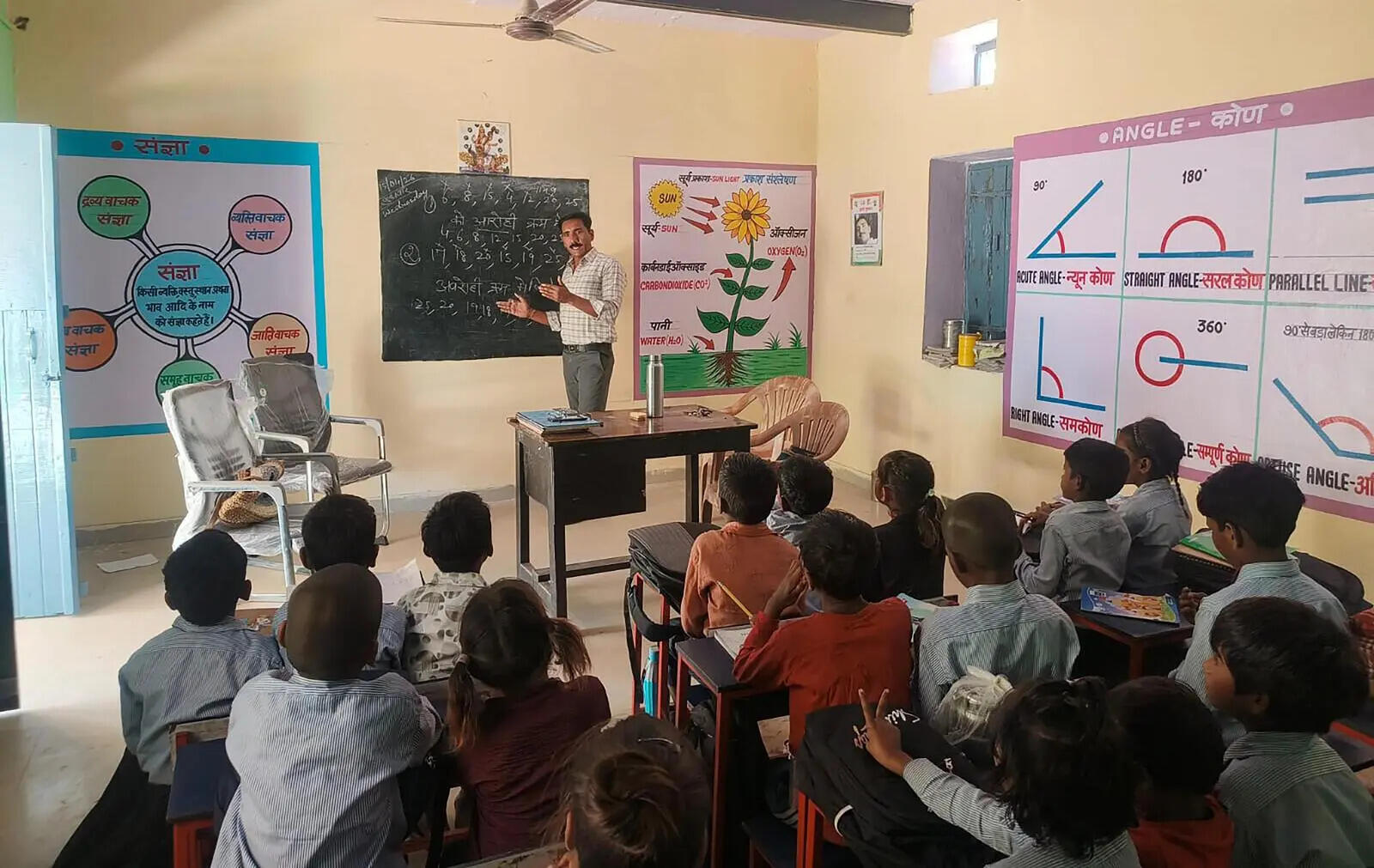
At Govt Primary School, Jai Hind Ki Dhani in Farrukhnagar, a teacher is seen teaching students of Grades 1, 2 and 3 simultaneously
While the Right to Education (RTE) Act advocates a “one class, one teacher” approach, the actual allocation of teachers is based on overall student strength rather than individual class requirements. According to the current norms, schools with up to 60 students receive only two teachers, with additional teachers sanctioned incrementally. While this meets prescribed teacher-student ratios on paper, it often results in teachers handling multiple grades simultaneously.A similar picture emerges from a primary school in Kadipur, where two teachers were conducting different classes in the same room — one teaching English and the other Hindi. Students from separate grades sat together, often struggling to follow the lessons. “Sometimes we don’t understand which lesson to follow because both teachers are speaking at the same time,” a student said. Another added, “When the teacher is busy with the other class, we just wait or copy from the board.“A senior education department official said several teachers from govt schools have been assigned census duties, but these are being carried out in designated slots to minimize disruption to school functioning. She said teachers currently on census duty are being replaced by other teachers, and others will be assigned duties in subsequent phases. “Schools are not vacant, and academic activities are continuing. The census is an essential exercise, and efforts are being made to balance both responsibilities,” she added.