



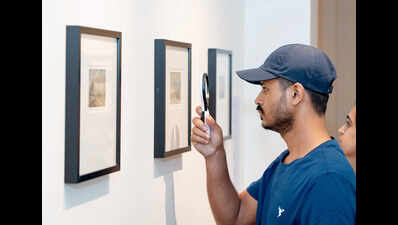
Gallery Dotwalk marked the opening of its second exhibition at its new Defense Colony space with The Architecture of the Void: Lines on a Postcolonial Skeleton.The well-attended preview brought together members of the art community, collectors, curators and patrons for an evening of dialogue around modern Indian art and works on paper. The exhibition, which is on view till May 30, signals an important step in Dotwalk’s evolving journey, expanding its dialogue between modern and contemporary Indian art.The exhibition brings together a significant selection of drawings, watercolours, etchings, and works on paper by major modern Indian artists, including Sadanand K. Bakre, FN Souza, Somnath Hore, Jogen Chowdhury, Badri Narayan, Bireswar Sen, G. R. Santosh, J. Swaminathan, Ram Kumar, Bhupen Khakhar, KK Hebbar, Piraji Sagara, Prabhakar Barwe and Meera Mukherjee. By focusing on paper, the exhibition highlights a medium often overlooked, yet central to how artists first explored ideas of form, memory, and identity.
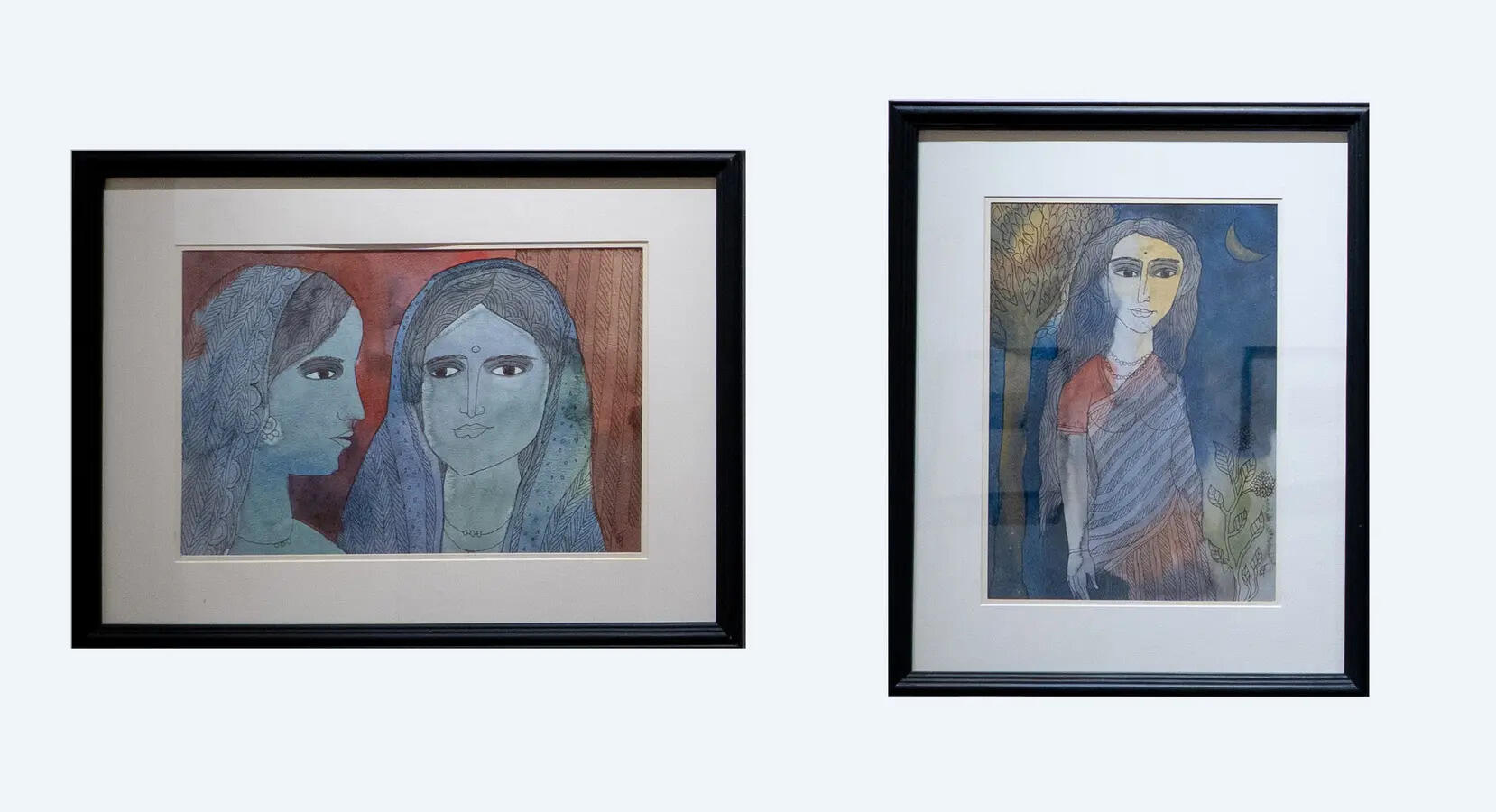
The exhibition brings together a significant selection of drawings, watercolours, etchings, and works on paper by major modern Indian artists.
Set against the historical backdrop of Independence and Partition, the exhibition reflects on a time when India was redefining itself politically, socially, and culturally. During this period, many artists turned to paper as an immediate and sensitive surface for experimentation. Unlike canvas, paper preserves hesitation, erasure, and fragility, making it a powerful space for expressing the anxieties, ruptures, and aspirations of a newly postcolonial nation.Rather than grouping works by region, school, or movement, the exhibition follows the path of the line itself. Across these works, lines become architectural, wounded, intimate, mythical, and expansive, creating unexpected dialogues between artists whose works are rarely seen together. In doing so, the exhibition reveals that postcolonial modernism was not one singular style, but a network of diverse artistic responses to a changing world.For Gallery Dotwalk, this exhibition also marks a new chapter. Known for its close engagement with contemporary artistic practices, residencies, and experimental formats, the gallery is now deepening its exploration of modern Indian art, creating stronger links between historical works and present-day curatorial research.“Moving into Defense Colony has allowed us to slow down and look again at how modernism in India first wrote itself into being,” says Sreejith CN, Founder-Director of Gallery Dotwalk. “With The Architecture of the Void, we wanted our second show in this space to honor the fragility and courage of those gestures on paper, lines drawn in the wake of Independence and Partition, on surfaces that could tear or vanish. Bringing these works into dialogue with our contemporary program is, for us, a way of acknowledging that the questions modern artists asked in the postcolonial moment are still alive in the room today.“The Architecture of the Void is not simply a retrospective look at the past. It is an active reflection on how these fragile modernist experiments on paper continue to influence artists, curators, and audiences today.