


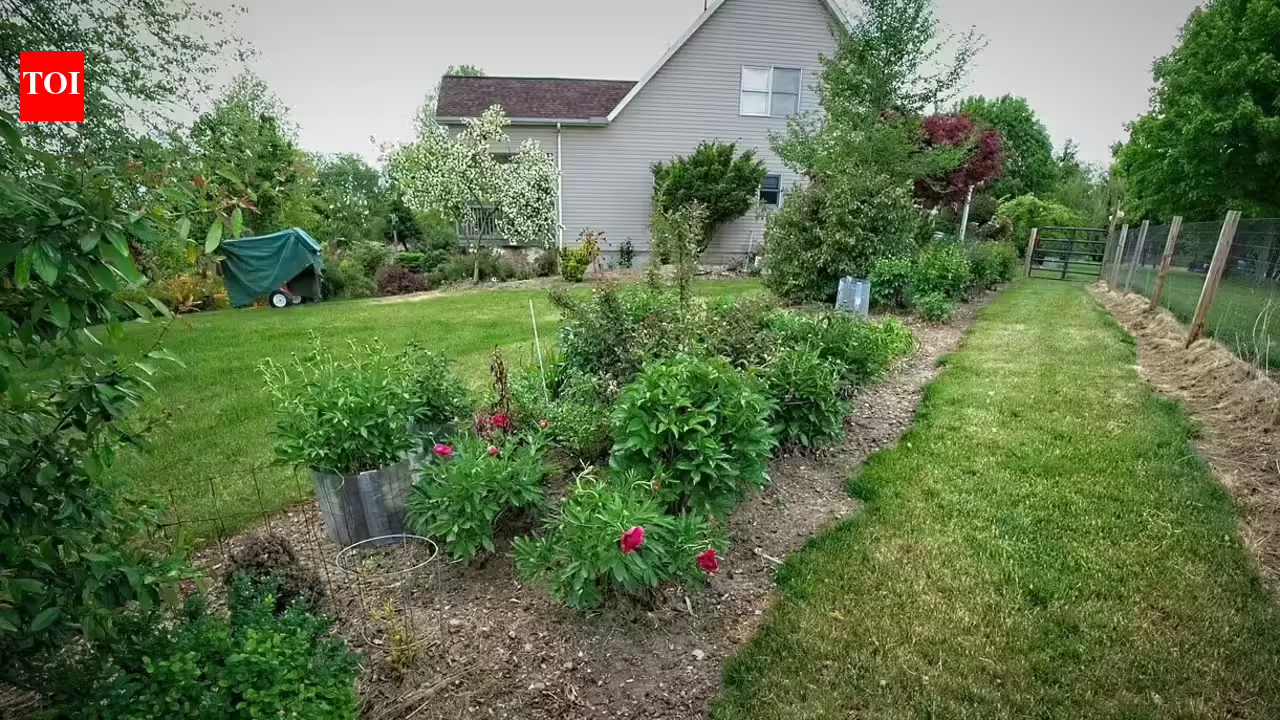
There is a special frustration with the narrow garden bed. It may be the narrow stretch of soil between your front pathway and the porch, or it might be the two-foot-wide patch of dirt near the side of your garage. As spring rolls around and you plant all new seedlings from your local nursery, they will seem neat and promising. However, by the time mid-summer rolls around, it turns into complete chaos. The branches of your shrubs will be banging against the sides of your home, while your flowers will be spilling over your pathway, creating obstacles for passage.The problem does not lie in not having tried hard enough but rather in not seeing things from the right perspective. The majority of homeowners approach a small flower bed as though it were a deep, wide border. They try to make it as deep as possible, trying to stuff in three layers of flowers into a narrow flowerbed that can only accommodate one layer. By overstressing a small bed, you will lose the simplicity that helps small flower beds thrive.This takes accepting that your garden has a specific physics. Your plants need to accommodate the space in which they’ll thrive. You cannot select a shrub on the basis of its beauty alone; rather, you have to ensure you have the exact width of the shrub in mind, three years from now. Designing with vertical plants, repetition, and enough space makes your narrow planting bed look high-end all through the year.Selecting plants that will work well with your spaceThe most frequent mistake with narrow beds involves the selection of plants that are “mounding”. While an ordinary hydrangea looks great when you see it online, in a three-foot-wide space, it can create problems. Mounding plants always try to spread outwards, and by doing so in such a limited space, they become a problem for you – either they restrict your way or have to be cut down unnaturally.According to a research guide on the Principles of Garden Design by Penn State Extension, the scale of your plants must match the scale of the environment. In a narrow space, you should prioritize “columnar” or “fastigiate” plants. These are species that have been bred to grow tall and slim, providing height without taking up floor space. By choosing plants that stay within their lane, you ensure that the bed looks full and lush without ever feeling cramped or overgrown.
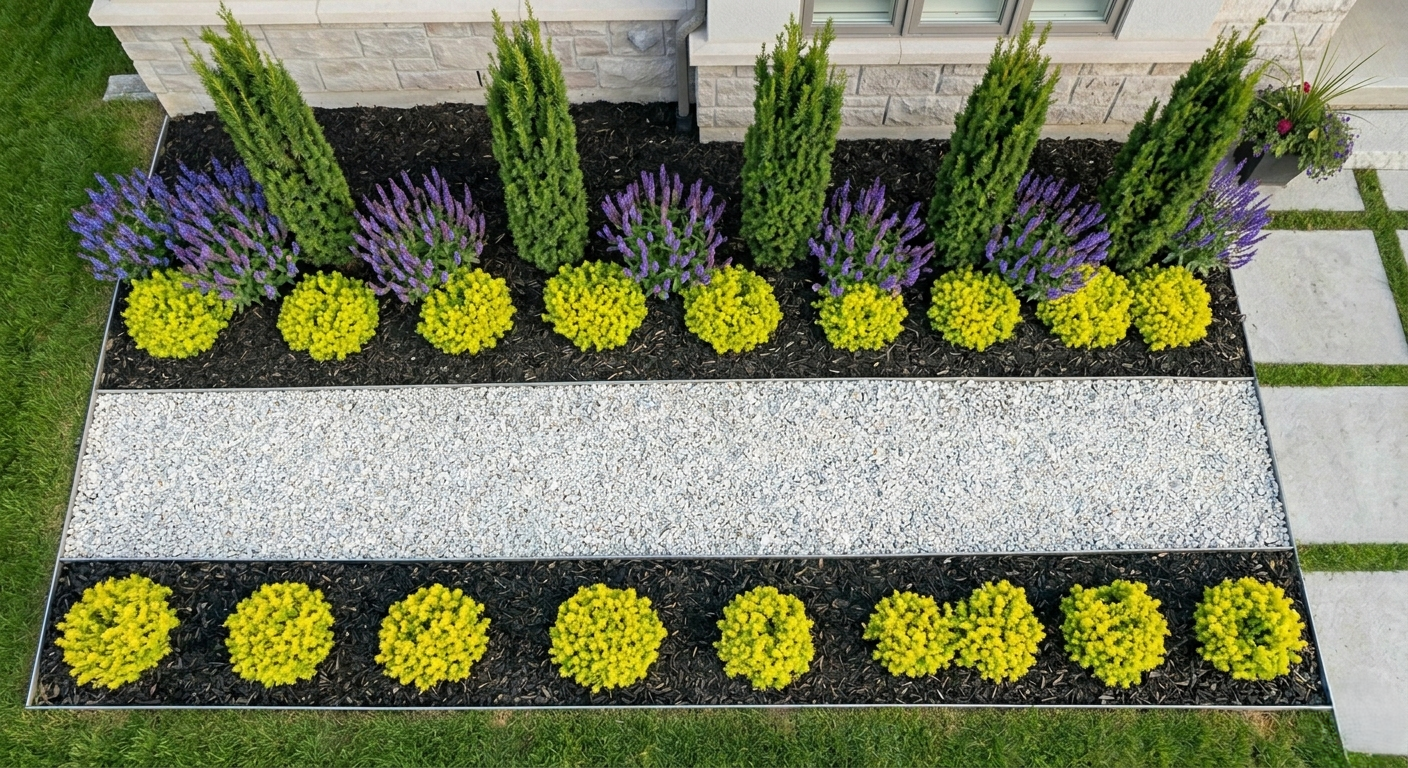
Opt for columnar shrubs and repeat compact, vertical perennials to create a structured, high-end look that thrives year-round, enhancing both aesthetics and home health. Image Credits: Google Gemini
Another aspect to remember is the necessity of repetition within a narrow border. As there is no room for diverse shapes, a repetitive pattern is needed to create rhythm. Rather than placing five kinds of perennials, use a line of one type of compact and vertical perennial instead. This way you’ll get a vivid “ribbon” of color that adds a professional touch to your design. You’ll convert the bare strip into an accent element that directs your guests straight to the front door.Choosing “pillar” shrubs and narrow foundationsA narrow flower bed can hardly look good all year round without having proper foundations. Most gardeners avoid shrubs because they are afraid they may turn the bed into a bulky piece. Still, a shrub gives the bed a certain “weight,” which prevents it from looking flimsy. The key here is to search for specially bred shrubs for narrow gardens.The title of one such study, Shrubs: small for year-round appeal interest, shows how today’s shrub cultivars are bred for their size constraints. Instead of planting a normal-sized boxwood, a dwarf variety can be planted that grows up to just twelve inches in width. These “pillar” shrubs create a backbone around which your entire garden design is held together, even as your summer flowers start to wilt away.When you select these smaller foundations, you also improve the health of your home. Narrow beds are often tucked right against a house’s siding. By choosing compact shrubs that leave a few inches of “air space” behind them, you prevent moisture from being trapped against your walls, which can lead to rot or pest issues. It is a rare moment when good design and good home maintenance go hand in hand.Remember that there is strength in having a clean edge. For a narrow bed, the line separating the soil from the walkway can be quite significant. Either a sharp, deeply cut edge or a shallow, repeatable border plant, such as a dwarf sedum, could serve as the “frame” of your planting. This will give your planting the appearance of being complete and thoughtful. By narrowing down your plant choices and concentrating on vertical and compact forms, you can transform your narrow space into the jewel of your garden.