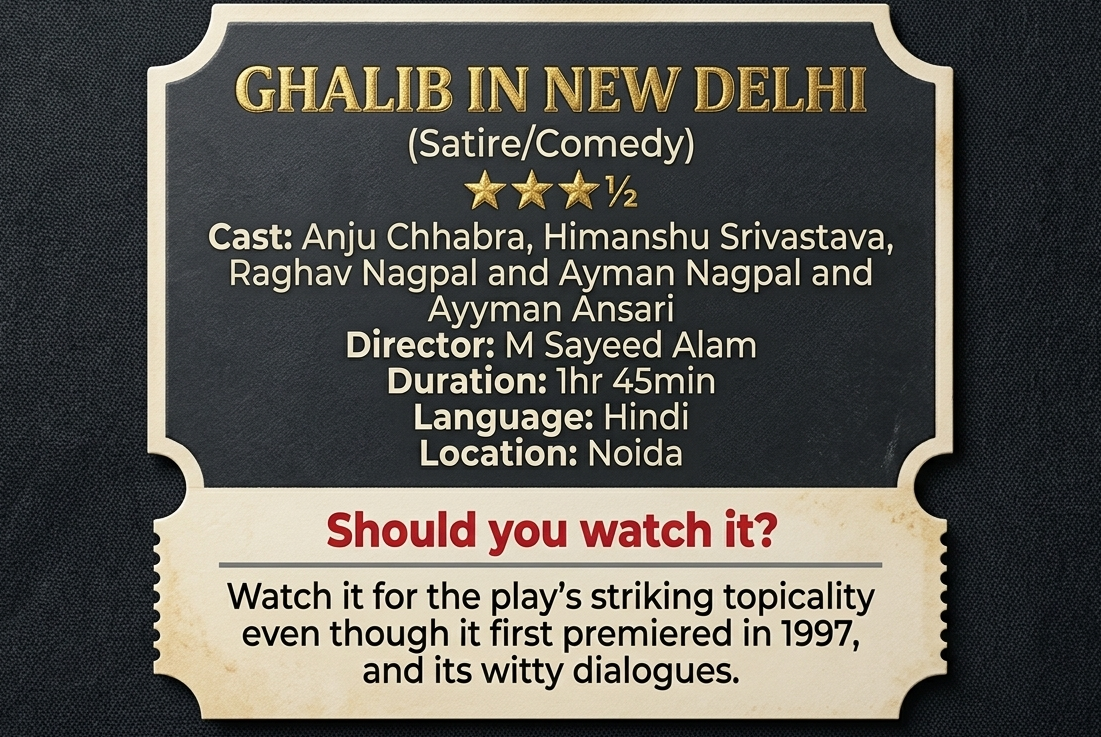


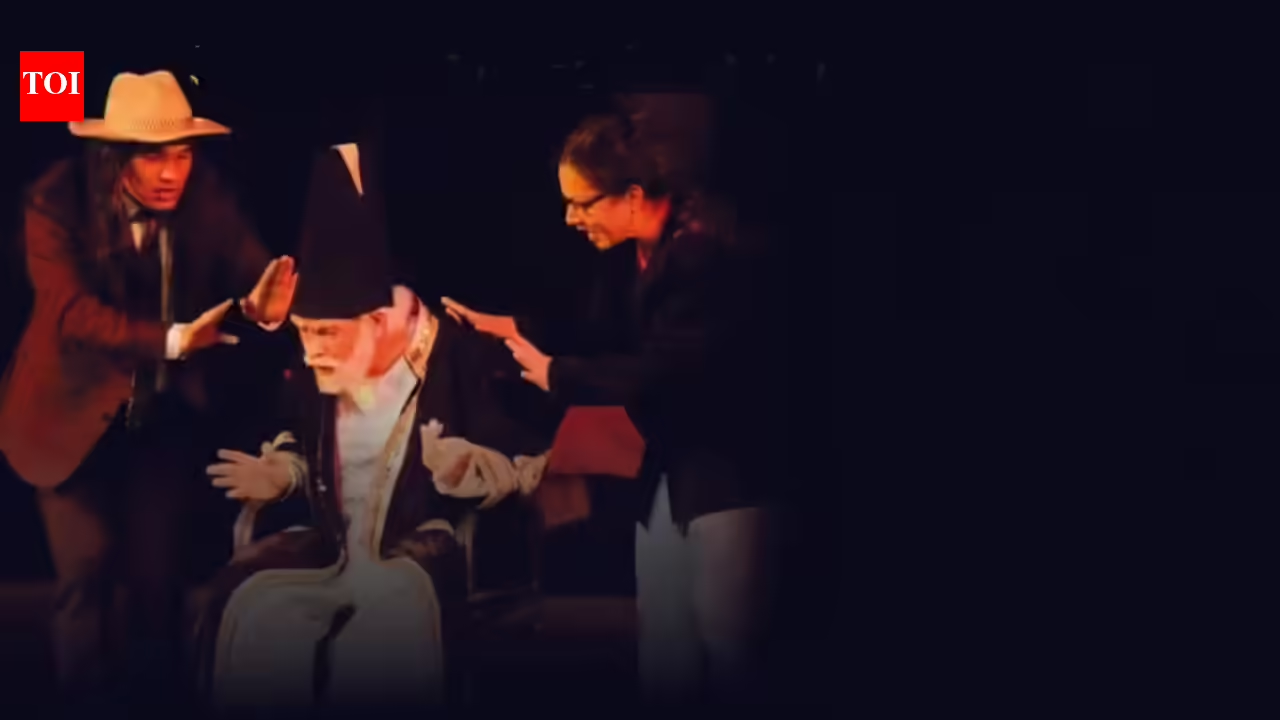
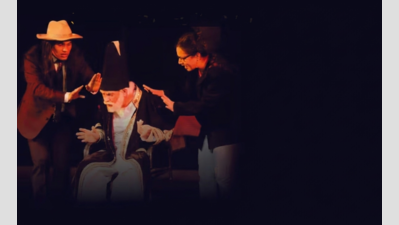
“Yeh duniya maano jism hai aur Dilli uski jaan,” a quote often attributed to the Mughal-era poet Mirza Asadullah Khan Ghalib, popularly known as Mirza Ghalib, captures his deep love for the city. When the celebrated poet is taken out of the walled city and the familiar narrow lanes of Ballimaran and placed amid the bustle of ISBT, Ghalib struggles to come to terms with the changing mores of his beloved city. Staged at a venue inside a Gurgaon mall, Ghalib in New Delhi opens with a delightfully absurd exchange between the 19th-century Urdu poet and a woman running a roadside paan ki dukaan in modern-day Delhi. Their banter sets the playful tone for what follows and gives the audience a clear hint of the chaos and comedy to come. Through a series of chance encounters with characters who mirror the city’s diverse social fabric, Ghalib’s chaste Urdu and old-world tehzeeb collide with the Haryanvi lingo of a corrupt cop, the street slang of a sharabi and rickshaw/taxi drivers, the Bihari dialect of an IAS aspirant from Laxmi Nagar named Jai Hind, the sharp tongue of his Punjabi landlady, Mrs Chadha, and the corporate jargon of ad-agency executives. Their comic exchanges, linguistic as well as cultural, are generously peppered with vishesh tippani on the current political climate, burning social issues and the general state of affairs. Nothing seems off-limits: everything from the Iran-Israel conflict to Delhi’s notoriously poor AQI finds its way into the script. All of this keeps the play topical and fresh, even though it first hit the stage in 1997– nearly three decades ago. The witty dialogues keep the humor flowing and the crowd cheering and clapping along. The play also breaks the fourth wall more than once, drawing the audience into the fun. At one point, Ghalib even invites audience members to finish a line or two of his sher-o-shayari, turning the performance into a lively, interactive mehfil. When, towards the end of the play, Ghalib sheds his signature beard, kurta and topi and is reimagined as a T-shirt-and-shorts-clad modern Delhiite, basking in his newfound Page 3 celebrity status, it feels almost symbolic of how the city itself has transformed over the years. As actor-director-playwright M Sayeed Alam effortlessly brings out Ghalib’s bewilderment at Delhi’s changing avatar, one is left wondering: What would disillusion Ghalib more, the post-1857 haunted streets of Delhi or the postmodern, post-AQI Delhi of today?