


Come summer, food spoilage is one of the major problems faced by many Indian households and that is where appliances like refrigerators come in handy to help prevent food wastage and spoilage. But, let us accept the fact that nothing comes free! The technology that helps reduce food wastage also leads to a high electricity bill and carbon footprints that impact the planet Earth. How about a cooling technology that could be as efficient as a fridge but save a lot in terms of electricity and money too? Well, there is a living solution in the state of Rajasthan that not only saves electricity but is also the epitome of sustainability. Scroll down to read the details.
What is a clay fridge?
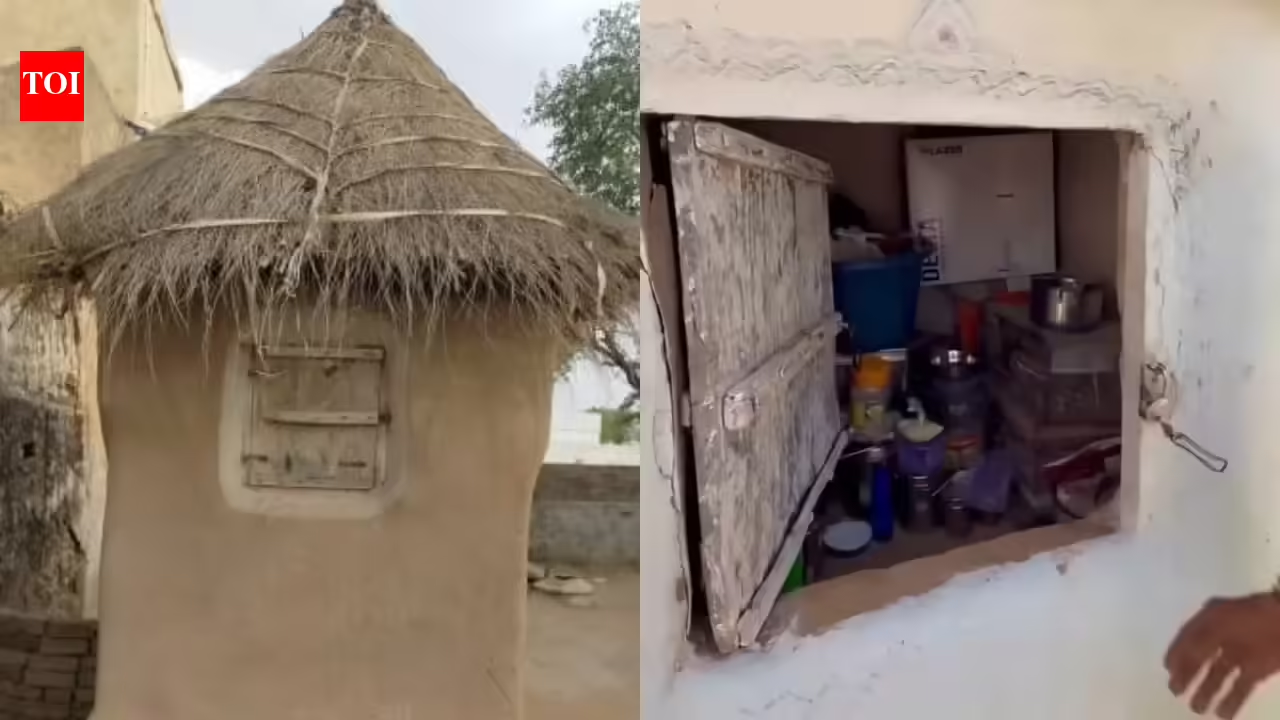
According to an Instagram post by the handle Raj Rajasthani (@raj_rajasthani21), there is a structure made with clay cow dung, and layers of khipra grass, which works exactly like a fridge to store perishable foods like milk, curd and freshly made roti, dal, sabzi and more. The humble-looking structure is a refrigerator, built completely without electricity.
How does this fridge work?
According to experts, it is pure science, where porous clay allows water to slowly evaporate and reduces the temperature inside the structure. The grass covering acts as insulation and protects the interiors from the harsh sun. Together, these elements create an electricity-free cooling chamber where food stays fresh for days.
Rooted in the past
While this looks like a unique concept to younger generations, experts say this mechanism has been deeply rooted in Indian homes. For generations, people in rural homes have been making such cooling spots by digging in the ground and keeping leftovers and dairy products like milk and curd to prevent spoilage—all without a single unit of electricity.
Can you make it at home?
While making such structures in urban homes is not an easy task, one can always look for similar alternatives to reduce electricity consumption, reduce carbon footprints, and also be close to nature. Using a matka (earthen pot) for cooling water and setting curd in an earthen pot are some of the ways to do so. One can even source khipra grass and create a mini-den-like structure to store fruits, veggies, and cooling drinks like shikanji and chaas, avoiding the practice of chilled (refrigerated) drinks.
What does it teach us?
Such practices not only help in moving towards sustainability but also help us understand the depth of life rooted in the past and how people used to live a simpler life around nature and its sources. It also motivates and guides the younger generations to live an eco-conscious life and learn the art of loving nature and its elements.