

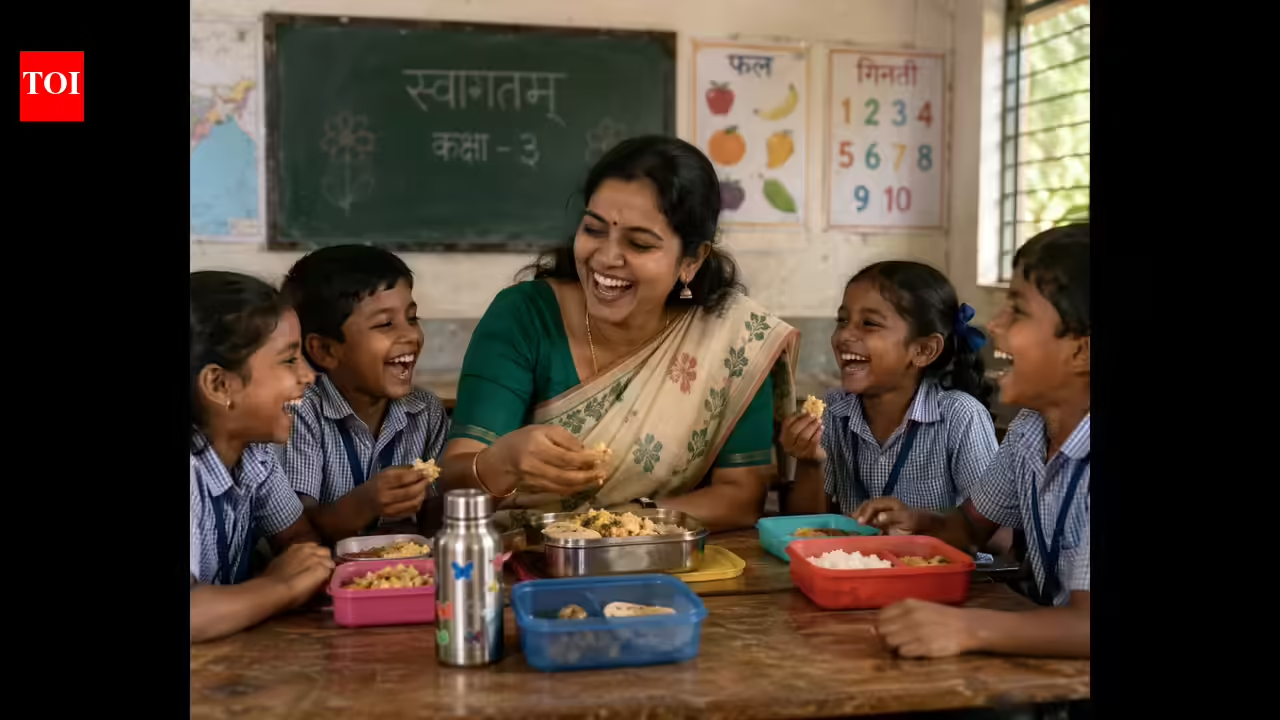
We have all watched this video by now. The video went viral a few days back. It’s a story about a lunchbox. This story has simplicity, decency and kindness. For a second, it may be perplexing to understand why this particular video went viral to the extent that it’s still grabbing headlines. But it is. Let’s decode to understand why. It’s a video of a child opening his tiffin box at lunch in a primary school. The lunchbox has roti-cheeni (bread and sugar). Simple food. The only food the little boy’s family could possibly afford. The teacher of her class was walking around when she noticed this simple lunch. She immediately said “what a beautiful lunch – roti-cheeni, who else likes roti-cheeni?” And the whole class responded. Me. Me. Me. The Instagram video of this one act of kindness has 23.4K comments as of now. And it’s increasing by the minute. People all over India are “shedding copious amounts of tears” as one comment said. With the way the world is going, this particular moment could have easily turned into embarrassment. This could easily have been a video of a student being humiliated by the teacher and/or his whole class. Because that’s the kind of reels and videos we are all used to watching. The negative rage-clickbait is easy. And it works. But the teacher here handled the situation with quiet dignity. The rarest of rare quality in a hostile, almost violent, world we inhabit these days. This video went viral because the world got a chance to pause for an act of kindness. There is a saying in Hindi: Doubt to think is enough ((a drowning man will clutch at a straw hoping to live). We are all drowning. The scroll never ends, it’s just bad news. Every swipe brings with it a fresh wave of anxiety: arguments, outrage, division, war, economic uncertainty, crime. It goes on and on. The algorithm doesn’t just show us the world; it amplifies its worst parts. It’s exhausting. But we can’t seem to escape it.Research shows that this habit of doom scrolling isn’t even accidental. Social media algorithms are purposely set to bring out our worst impulses. Because negativity holds our attention span – short or long. Because fear sustains engagement. Outrage spreads faster than nuance. And so, without realizing it, we consume a steady diet of distress. But what we often fail to acknowledge is this: our minds are not built for this volume of bad news. Not in the long run. There was a time when tragedy came in small doses. Not that long ago. A newspaper in the morning. A bulletin at night. And for the rest of the time, our minds were at peace. Now, bad news is ambient, persistent and inescapable. Psychologists call this the “mean world syndrome”. What is the Mean World Syndrome?
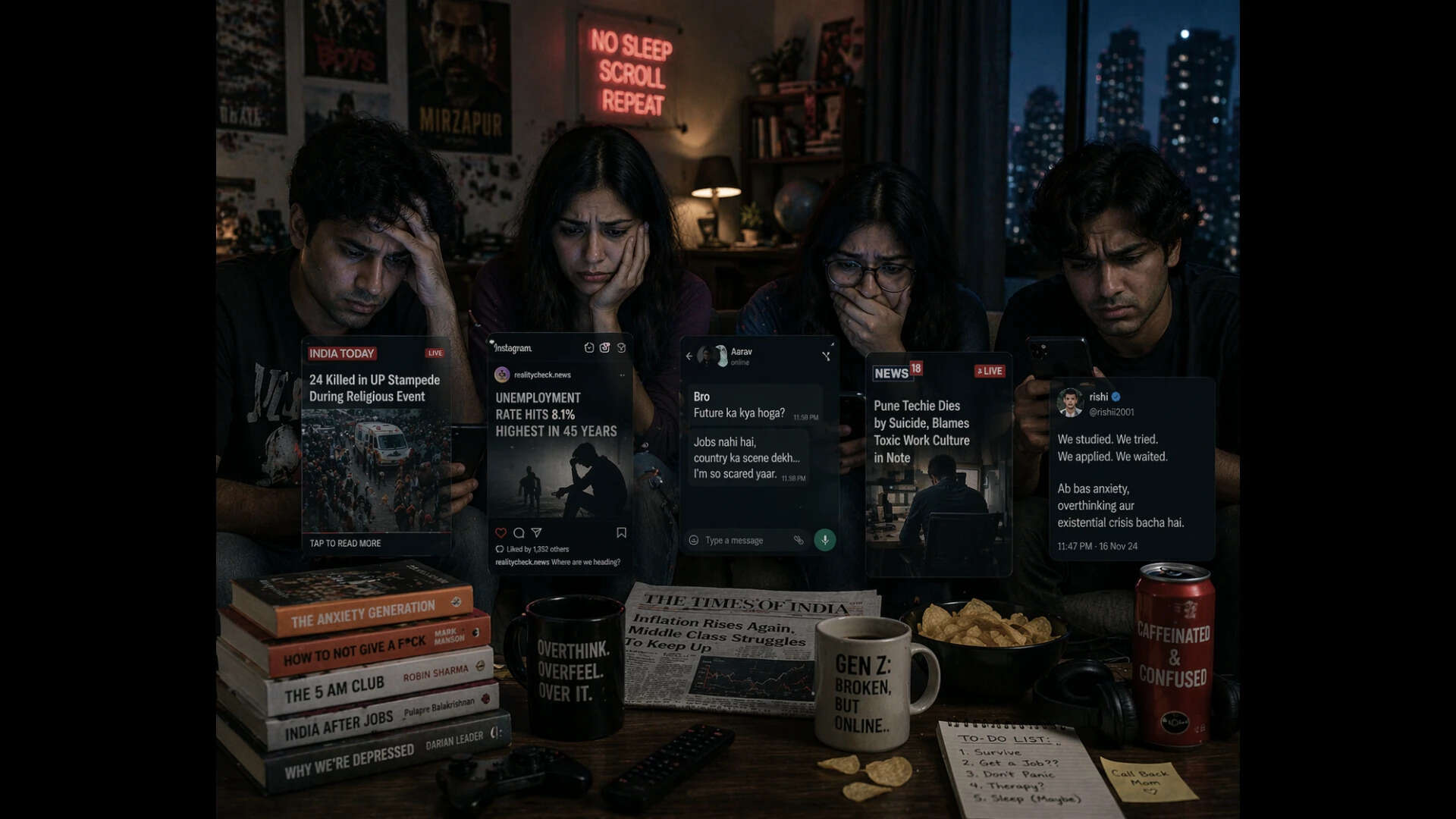
There was a time when tragedy came in small doses. Not that long ago. A newspaper in the morning. A bulletin at night. And for the rest of the time, our minds were at peace. Now, bad news is ambient, persistent and inescapable. Psychologists call this the “mean world syndrome”. (AI Generated)
It’s a cognitive bias where heavy exposure to media violence causes people to perceive the world as more dangerous, hostile, and fearful than it truly is. Coined by George Gerbner in the 1970s, it suggests that the world is far worse than it actually is, shaped not by lived experience but by mediated exposure. When every headline screams crisis, the brain begins to accept crisis as the default state of existence.And so, when we see a video of a simple act of kindness, it’s almost like we have been long searching for this light at the end of the doom scrolling tunnel; it just refused to come.Except, in this little boy’s life, it did. Because the teacher understood the value of empathy. Why this one story broke throughThere was no spectacle. No dramatic background score. No grand gesture. Just restraint. Just empathy. In a world that constantly rewards reaction, this moment stood out because it refused to react in the expected way. The teacher did not turn the situation into a moral lesson or a social media performance. She simply protected the child’s dignity.For us, this video is simultaneously balm and unsettling – because it revealed much more about us than the ones in that classroom. Our reactions showed just how much we crave for that one glimmer of hope. That one act of kindness that makes us believe again. Believe that there is hope still even as we are engulfed with that sinking feeling of doom – in everything, everywhere all at once.The story also triggered nostalgia. Many recalled their own childhood tiffin (see comments in video): simple meals packed with care rather than variety. Roti-cheeni was not always a symbol of lack. For many, it was comfort. Familiarity. Love. But somewhere along the way, the world changed, so did our definition of food. From a source of sustenance, it became a social status to flaunt. Food elitism in a country like India may seem like irony. But it is what it is. Over time, we began to associate value with excess. More variety, more options, more display. Even childhood became performative—lunchboxes began to be curated, compared, judged.In that context, this teacher’s response did more than comfort a child. It quietly rejected a culture of comparison. The real risk is not that the world lacks goodness. It is that we have stopped noticing it. Since we consume news only in extremes—either outrage or inspiration—we miss the everyday middle where most of humanity actually exists. This particular video is the balance we didn’t even know we were seeking.What the teacher did will not change policy. It will not solve poverty. It will not dismantle inequality. But it changed something immediate and tangible: a child’s experience that some good exists in this world. Perhaps, that is enough.