


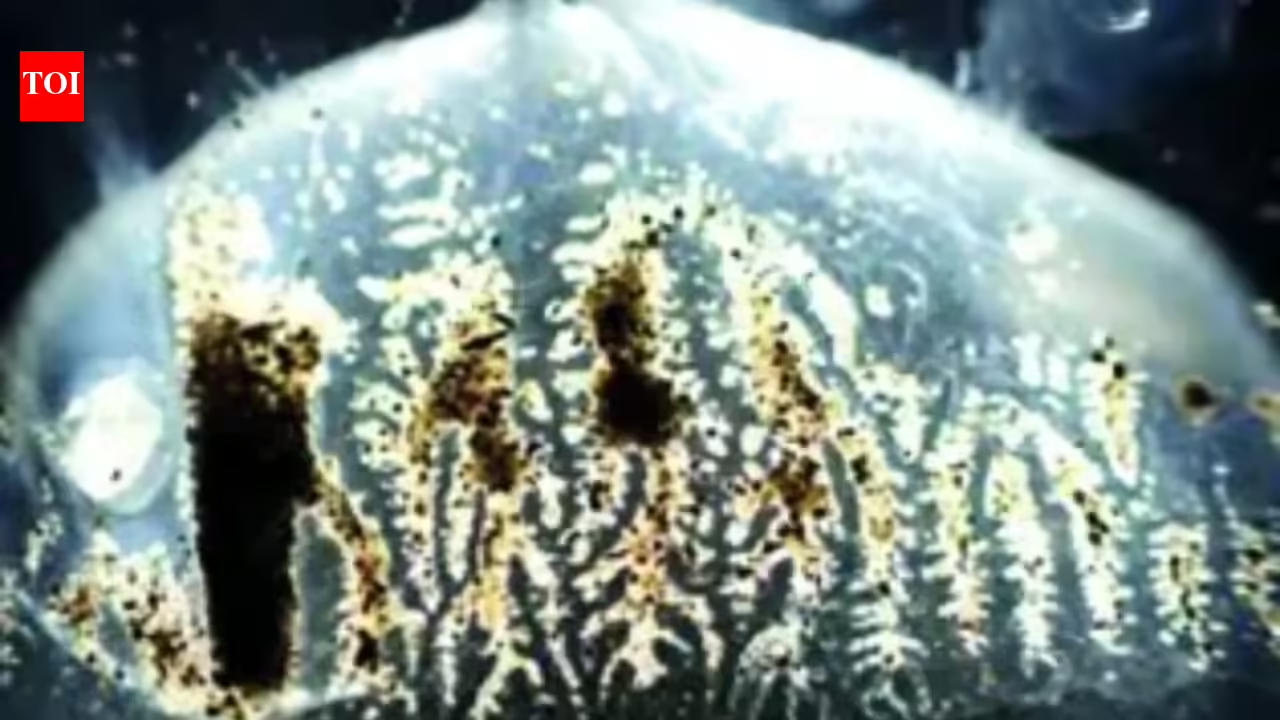
PANAJI: Scientists in Goa have reported the first-ever sighting of the highly venomous box jellyfish (Morbakka virulenta) in Indian waters.The species was discovered off the Caranzalem beach in Sept 2024, where five specimens were collected and confirmed using both morphological and molecular identification methods. This year, the findings have been published in Science Direct and the Astrophysics Data System, which is operated by the Smithsonian Astrophysical Observatory under NASA Cooperative Agreement.Given the potent venom of box jellyfish, researchers stress the need for continuous monitoring of the coastal waters for human risk management. In recent years, jellyfish stings have become more common along India’s coasts, affecting both fishermen and tourists.The scientists from NIO Goa carefully studied the marine animals’ shapes and tested their DNA. Both methods showed that the jellyfish were indeed Morbakka virulenta. “Throughout the survey period, only nine M virulenta species were identified. As the observations were from a beach seine, there is a high probability of their presence in the surrounding coastal waters,” they stated in a study titled ‘First report of the fiery box jellyfish Morbakka virulenta in Indian waters identified through integrative taxonomy’.Previously known from regions such as Japan, Thailand, Malaysia and the Philippines, this finding expands the species’ known range into the Indian Ocean. The broader genus, Morbakka, is also found in Australia, China and Singapore. In Japan, where it was first discovered more than 100 years ago, fishermen call it ‘fire jellyfish’ because of its painful sting.People who are stung by this jellyfish may also show symptoms like sweating, nausea and trouble breathing. “Some box jellyfish deliver a deadly venom that causes Irukandji syndrome, which is a severe clinical condition with multiple symptoms known to occur by stinging,” the study said.While Morbakka virulenta is not known to cause the most severe form of this illness, it’s important to understand where these jellyfish live and how often they appear.“The occurrence of the species in Indian waters may imply that the species was present here unexplored or that it came from the western Pacific to the Indian Ocean through the Malacca Strait or Indonesia. A ballast water source cannot be overruled. Nevertheless, continuous monitoring of coastal waters is required to determine their distribution and risk factors for humans,” the study stated.