


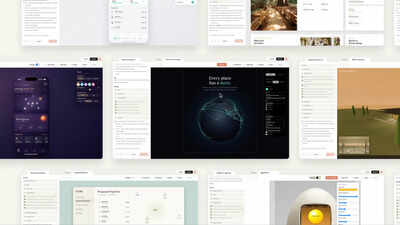
Anthropic has launched Claude Design, a standalone AI workspace that turns plain-text prompts into finished prototypes, slide decks, one-pagers, and marketing assets. No design background needed. The tool is live now in research preview for Pro, Max, Team, and Enterprise subscribers, included in existing plans at no extra cost.Claude Design is powered by Opus 4.7, Anthropic’s newest vision model, capable of processing images at up to 3.75 megapixels—more than three times the resolution of previous Claude models.Users describe what they want, Claude builds a first draft, and refinement happens through chat, inline comments, direct edits, or custom sliders that Claude generates on the fly for specific elements like color, spacing, and layout. The whole thing is designed to feel iterative—less like issuing commands to software, more like bouncing ideas off a fast colleague.
Claude Design is built for people who’ve never opened figure
The tool is deliberately aimed at people who aren’t designers. Founders, product managers, marketers—anyone who’s had an idea they couldn’t visualize fast enough.Anthropic has its own testimonials to tout, naturally. Brilliant, the education platform, claims pages that took 20-plus prompts in competing tools needed just two in Claude Design. Datadog says what used to be a week-long cycle of briefs, mockups, and review rounds now fits inside a single conversation.Finished work exports cleanly as a PDF, PPTX, standalone HTML, or goes straight to Canva for further editing. There’s also a one-click handoff to Claude Code, which converts a completed design into production-ready code—keeping the entire workflow inside Anthropic’s ecosystem.
How Claude Design learns your brand automatically
Claude Design’s onboarding has a neat trick: Point it at your company’s codebase and existing design files, and it builds a working design system from scratch—your actual colors, typography, and components—applied automatically to every project after that.Teams can maintain multiple design systems and refine them over time. A web capture tool also pulls elements directly from a live website, so prototypes resemble the real product from the very first draft rather than a generic placeholder.
Figma lost a board member three days before this launched—now its stock is down
Figma shares fell 7.5% on the news. Adobe dropped over 1%—smaller, but a signal nonetheless. The reason isn’t hard to find.Claude Design is a standalone product that generates complete, interactive prototypes from plain language—accessible to anyone who can type a sentence. That’s the part that stings. Both Figma and Adobe have always assumed a trained designer is somewhere in the loop. Anthropic’s tool doesn’t. It goes straight to the founder, the product manager, the marketer—the people who were never Figma’s customers to begin with, but whose companies were.Anthropic says Claude Design is meant to complement tools like Figma and Canva, not replace them. The Canva export and PPTX support seem to back that up. But then there’s this: Anthropic’s chief product officer Mike Krieger resigned from Figma’s board on April 14th, three days before launch, the same day reports surfaced that Anthropic was building design capabilities that competed directly with Figma’s core product.