


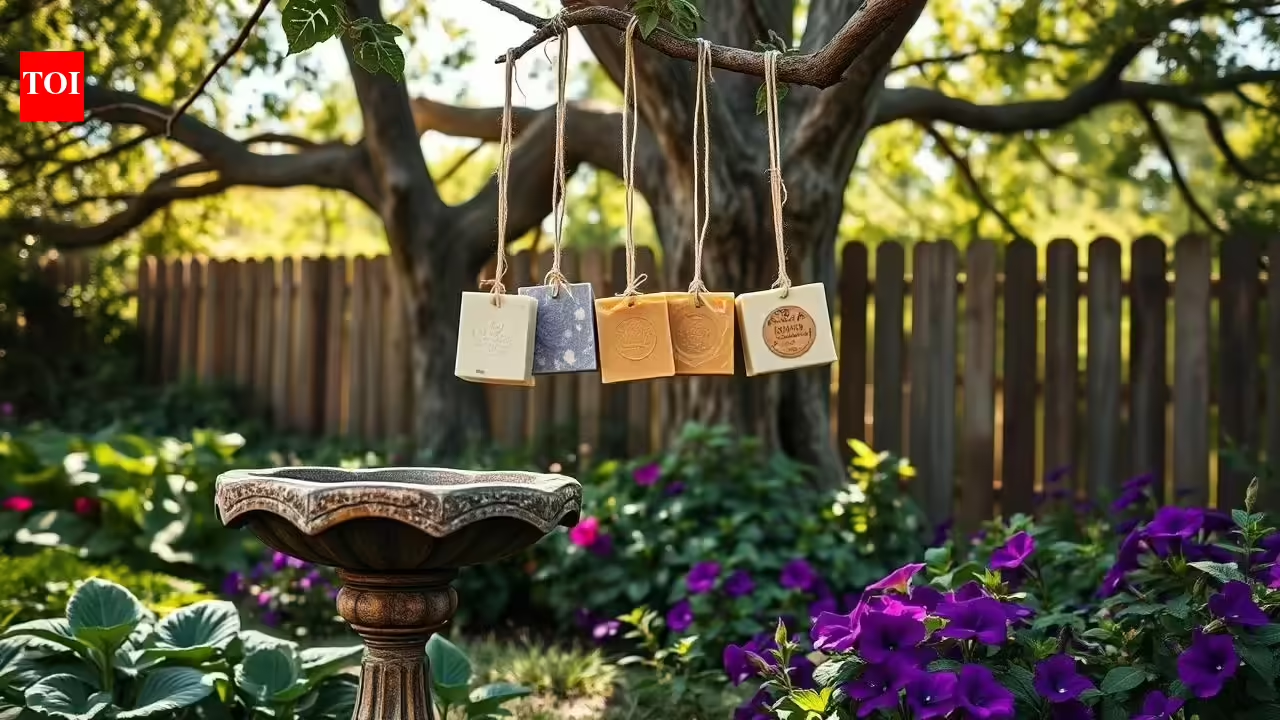
There is a silent battle taking place in backyard gardens. For many home gardeners, the bittersweet moment of seeing their favorite hostas partially eaten away and their lettuce crops chewed down is all too familiar.While we love the local wildlife, deer, rabbits, and rodents often view our carefully tended flowerbeds as an all-you-can-eat buffet. Instead of reaching for harsh synthetic sprays or expensive electronic deterrents, a growing number of green thumbs are heading to the bathroom cabinet for a surprisingly simple solution: a humble bar of strongly scented soap.This old-fashioned hack has enjoyed a major revival lately as families look for chemical-free ways to protect their landscape. The concept is straightforward.By hanging bars around tree branches or even hiding them inside mesh sacks near plant beds, gardeners are able to use soap to create an intangible “smell fence,” which confuses foragers’ finely tuned sense of smell into seeking other sources of food elsewhere.How scent leads to avoidanceThis technique is based on animals that have a good sense of smell, such as deer and rabbits. As demonstrated in The Effectiveness of Soap in Preventing Deer Browsing at the University of Nebraska-Lincoln, the use of soap, which consists primarily of tallow-based fat, has significantly reduced the browsing habit. Although the scent is important, it is the fatty acids in the animal tallow that make up the primary repellents.When an animal encounters these unfamiliar and intense aromas, it often triggers a natural avoidance behavior, encouraging them to find their snacks in a less fragrant environment.This olfactory tactic is more than just a folk remedy; it has been tested in rigorous agricultural settings. A study conducted by Connecticut Agricultural Experiment Station researchers, published in the journal Proceedings of the Eastern Wildlife Damage Control Conference under the title Reducing deer damage to yews and apple trees: testing Big Game Repellent, RO.PEL and soap as repellents confirmed that Ivory soap could reduce damage to Japanese yews by nearly 38%. The research noted that while soap is an effective deterrent, its “sphere of influence” is relatively small, usually protecting plants within a one-meter radius of the bar itself.Those who seek more security can rely on the added protection provided by soap. According to Colorado State University Extension, in the document titled Insect Control: Soaps and Detergents, Soap solutions used in diluted form can effectively control many insects, including aphids and spider mites. They act by destroying the protective covering of the insects and thereby causing dehydration. By including soap in your regimen, you ensure that you have a layer of protection for both your larger four-legged visitors and your tiny garden friends.Striking a balance between eco-friendliness and effectivenessOne key reason why this method has become popular is the adoption of sustainable methods of gardening. Unlike chemicals that may contaminate the soil and even leach into the groundwater, soap does not.A report by UConn College of Agriculture, Health & Natural Resources on Insecticidal Soaps indicates that pure soaps made out of vegetable material or castile soap are more environmentally friendly than detergents, whose ingredients are often extracted from petroleum and can cause phytotoxicity to tender leaf cells.However, like any DIY project, success often comes down to the details. The University of Vermont research on Deer Control Options suggests that while simple designs like soap bars are effective under light deer pressure, they should be moved or rotated to prevent animals from becoming habituated to the scent.In order to keep the local wildlife on its toes, it can be helpful to switch up the location of the soap bars periodically, or to use the soap along with something else that is not harmful as well.Furthermore, a study by Cornell Cooperative Extension titled Minimizing Deer Damage in Vegetable Crops points out that highly fragrant deodorant soaps can be particularly useful when combined with other low-cost portable designs. Most gardeners find that hanging the bars at “nose level” provides the best results, though heavy rains will slowly wash away the soap. This necessitates replacing the bars every few weeks to keep the scent barrier strong.In essence, the soap bar experiment is not merely a means to keep some of your plants safe. This represents an alternative that seeks to make gardening more instinctual by learning from animal behavior and responding to their movements through sensory clues.As such, this is an accessible, scent-based, and economical method of regaining control of your garden. Whether you have a rabbit or deer wreaking havoc in your garden, the soap bar may be the key to making it flourish once again.