


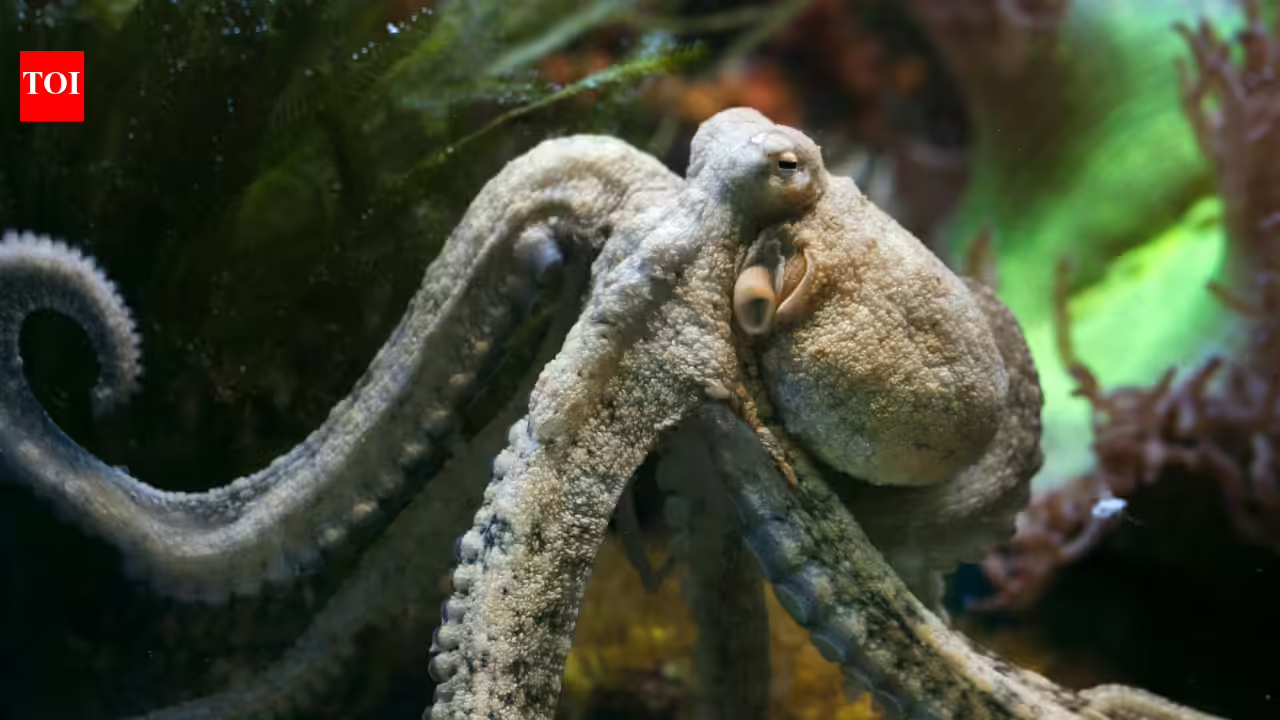
Marine life is indeed extremely interesting and unusual. Nevertheless, some animals in the oceans look really weird and almost alien. The octopus is one of such animals because it has eight appendages, an ability to change the color of its skin, and a rather high level of intelligence, which constantly surprises scientists. Nevertheless, the octopus is one of those animals which was created by natural processes and evolution on our planet. Several peculiar features make this animal one of the most alien-like creatures on our planet.
Octopus intelligence :A mind unlike ours
The most important aspect that causes an octopus to look alien-like is the animal’s intelligence level. While a human brain operates on a centralized principle, an octopus has a decentralized nervous system. Indeed, about half of an octopus’s neurons reside in its arms.As reported by research on “Defensive tool use in a coconut-carrying octopus,” “more than half of the neurons in an octopus are in the arms, making it possible for them to carry out complex activities independent of the brain.” It implies that each arm can act independently, exploring, tasting, and even making decisions without having any commands from the brain.Such an unusual feature contributes to the strange octopus behavior. For example, the creature can open boxes, solve problems, and memorize solutions.
Shape-shifting and camouflage abilities of octopus
One more aspect that contributes to the perception of octopuses as extraterrestrial creatures lies in their unique ability to alter their appearance.According to the article “Soft photonic skins with dynamic texture and color control,” octopuses have the ability to “quickly switch their skin color and texture to camouflage themselves or communicate.” In this way, an octopus can suddenly appear like a stone, a coral reef, or even sand. Certain species can even imitate the behavior of other animals. The high level of control over one’s body in such a manner is something very unusual among living creatures.
A body that breaks the rules of biology
The octopus’s body itself has some interesting features, too. First, it is boneless, enabling it to enter into the tiniest crevices, even as small as a coin. The lack of a bone structure, coupled with strong tentacles, gives the octopus the flexibility and strength necessary for survival.Another unique feature of the octopus’s physiology is the fact that it can regrow missing appendages. In case of injury, an octopus can recover and regrow a limb within a matter of weeks. The ability to regenerate missing body parts belongs to a select group of animals.Another physiological oddity of the octopus includes three hearts and blue blood, made possible by a special copper molecule called haemocyanin. The combination of hearts helps the octopus endure hypoxic conditions at the depths of the ocean.Research into the origin of such extraordinary traits is still ongoing. Scientists try to figure out why evolution made this creature so different from its relatives.Finally, it should be mentioned that the term “alien-like” is quite appropriate in this case, because many characteristics of the octopus contradict our understanding of intelligence, physiology and behaviour.