



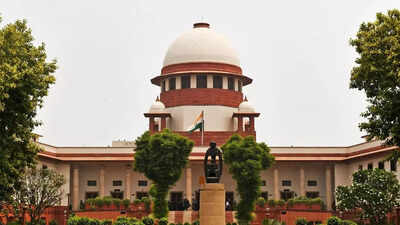
A bench comprising Chief Justice of India (CJI) Surya Kant and Justice Joymalya Bagchi refused to entertain the public interest litigation (PIL), observing that the Constitution permits special legal protections for women.
NEW DELHI: The Supreme Court on Monday dismissed a plea challenging a provision of the Hindu Marriage Act (HMA) that allows only wives — and not husbands — to seek divorce in certain circumstances linked to maintenance orders, as per a report by LiveLaw.A bench comprising Chief Justice of India (CJI) Surya Kant and Justice Joymalya Bagchi refused to entertain the public interest litigation (PIL), observing that the Constitution permits special legal protections for women.The petition challenged Section 13(2)(iii) of the Hindu Marriage Act, 1955, under which only a wife can seek divorce if there has been no resumption of cohabitation for one year or more after a maintenance decree has been passed against the husband.The petitioner, appearing in person, argued that the provision should be gender-neutral and available to both men and women.However, the Supreme Court questioned the basis of the challenge and noted that Article 15(3) of the Constitution specifically allows the State to make special provisions for women, according to a LiveLaw report.“You should have the Constitution amended. This is a special law,” Justice Bagchi remarked, referring to constitutional protection granted to women-centric legislation.During the hearing, the bench also observed that the plea appeared to stem from the petitioner’s personal matrimonial dispute rather than a genuine constitutional challenge. The court also warned against using Article 32 jurisdiction to settle personal grievances.“Don’t settle personal vendettas through Article 32,” the CJI said.CJI Surya Kant further told the petitioner that while the court may sympathize with his personal situation, it also had sympathy for his estranged wife. The bench noted that filing such plea does not send a good message, particularly when the petitioner himself was pursuing legal studies.The court eventually dismissed the PIL without issuing notice.What is Section 13(2) of Hindu Marriage Act 1955Section 13(2) of the Hindu Marriage Act, 1955 provides certain additional grounds exclusively available to wives for seeking divorce from their husbands. Unlike the general divorce grounds under Section 13(1), this provision was introduced as a protective measure recognizing the social and legal vulnerabilities faced by women in marital relationships.Under Section 13(2), a wife can seek divorce if the husband has married again before the commencement of the Act or has another living wife, if the husband is guilty of offenses such as rape, sodomy or bestiality, if there has been no resumption of cohabitation after a maintenance decree, or if her marriage was solemnised before she attained the age of fifteen years and she repudiates it after turning fifteen but before attaining the age of eighteen.
About the Author

Previous Post
Next Post