


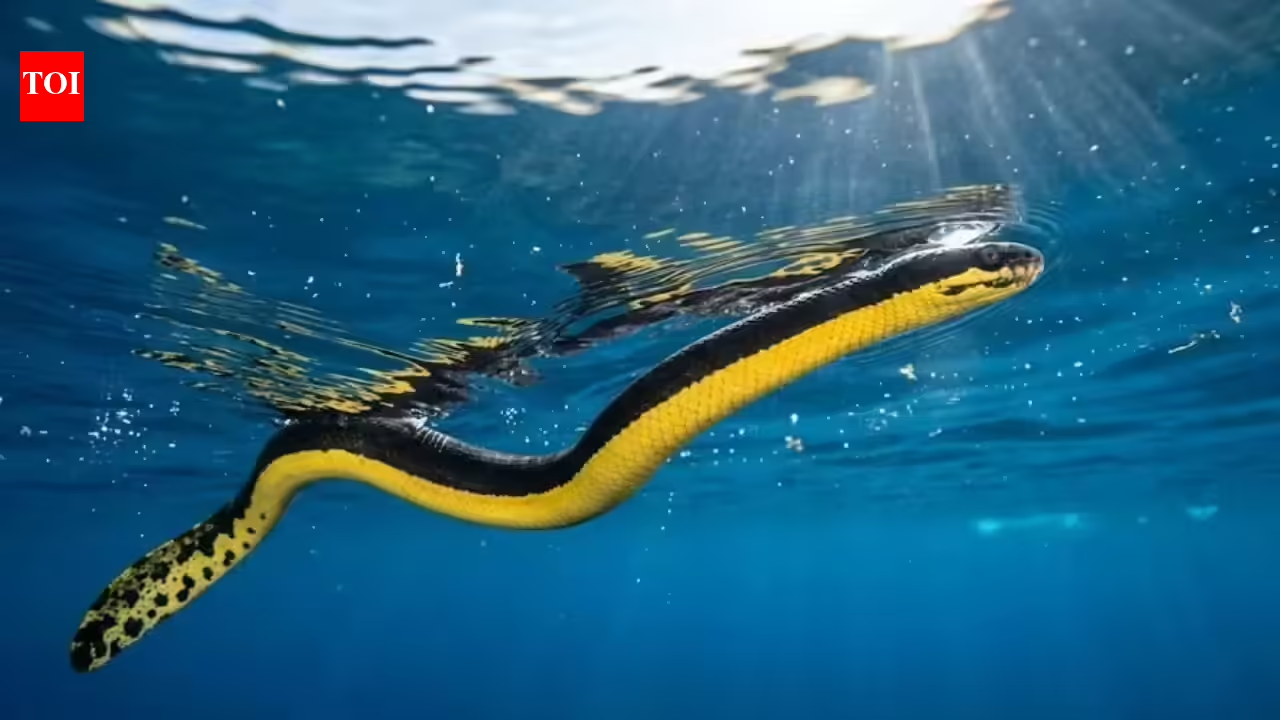
The Yellow-Bellied Sea Snake, or Hydrophis platurus, stands as a testament to marine life adaptation. It severed all terrestrial ties in its journey to dominate the open ocean. Originating from Australian elapids around 10 million years ago, this snake now holds the title of the most widespread snake worldwide, covering the vast Indo-Pacific region. Its unique two-toned look isn’t just for show; it warns of its deadly neurotoxic venom that can instantly immobilize its prey. Unlike sea snakes that stick to coastal waters, this one leads a truly oceanic life, riding the waves from birth through hunting and beyond. The evolution of this snake offers an impressive example of nature’s ingenuity, turning a land creature into a true master of ocean life.
How the Yellow-Bellied Sea Snake paralyses prey within minutes
The Yellow-Bellied Sea Snake has venom that’s highly potent in the reptile world. This venom paralyzes marine animals quickly. As noted in the National History Museumit specifically targets fish by inducing systemic neurotoxicity, leading to fast respiratory failure. Although its venom is highly toxic, people rarely die from bites. The snake isn’t usually aggressive, and its fangs are small. Nevertheless, a bite still needs immediate medical attention and specialized antivenom treatment.
Yellow-Bellied Sea Snake: Physical appearance and size
The yellow-bellied sea snake catches the eye with its two-toned look. It has a dark brown or black back and a bright yellow belly. Its body is squeezed from the sides, and it has a unique tail shaped like a paddle, helping it swim. Males usually grow to about 28 inches (720 millimeters), but females can reach up to 35 inches (880 millimeters).
Evolution of the Yellow-Bellied Sea Snake
The story of how Hydrophis platurus came to be is intertwined with the Elapidae family, which also includes cobras and kraits. A study published in the National Library of Science shows that its ancestral lineages lived on land before moving to the ocean during the late Miocene period. Once thought to be the only species in the Pelamis genus, recent advancements in genetic research have placed it under Hydrophis. This shift called for a radical physiological adaptation of its biology so it could thrive in salty waters.
The Yellow-Bellied Sea Snake has a global pelagic range
This sea snake is the only one that truly lives in the open ocean, not near reefs or coastlines. It has an unmatched range, reaching from the East African coast all the way across the Indian and Pacific Oceans to the Americas, as noted in research on ResearchGate. You often find them in ‘slicks,’ those narrow strips of calm water where currents meet. In these areas, debris collects along with thousands of snakes drifting together.
Yellow-Bellied Sea Snake hunting tactics are unique
The snake hunts with a unique method. It stays still on the water’s surface, mimicking floating flotsam. When small fish swim beneath for safety, it strikes them quickly from the side. What’s surprising is that these ocean-dwelling snakes often experience osmotic stress. They rely on tropical storms to create temporary, ephemeral freshwater lenses on the sea’s surface so they can drink.
Environmental survival risks of the Yellow-Bellied Sea Snake
The IUCN classifies them as ‘least concern’, but they face significant environmental challenges. When strong storms hit, these snakes often end up stranded on beaches and die because they can’t move on land. In the ecosystem, they play a crucial role as top predators of the surface slicks. Besides that, their bodies serve as ‘biological rafts.’ Barnacles and algae often find a home on their skin, which helps boost local biodiversity.