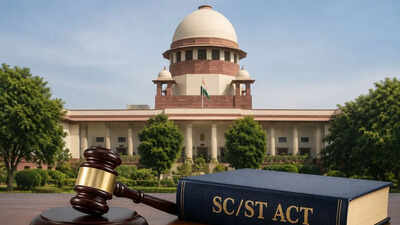
 A bench comprising Justice Prashant Kumar Mishra and Justice NV Anjaria observed that for an offense to be made out under Sections 3(1)(r) and 3(1)(s) of the SC/ST Act, the alleged insult or intimidation must take place “within public view”. The court held that incidents occurring inside a private residence, without the presence of members of the public, would not satisfy this legal requirement.“…to make out the offense under Section 3(1)(r) and/or Section 3(1)(s) of the SC/ST Act, the occurrence of the incident and the act and conduct of hurling of caste-based abuses must take place at ‘a place within public view’. It must be a place within the public gaze. Even if it happens to be a private place, then in such eventuality a public-eye must have an access to be able to notice what happens there or what is taking place that will only make the ‘place within public view’.“, observed the bench, as quoted by LiveLaw.The case arose out of an FIR in which it was alleged that the accused persons attempted to break open the complainant’s house lock and used casteist slurs against him and his wife. The complainant and two of the accused were real brothers belonging to a Scheduled Caste community, while the wives of the accused belonged to non-SC/ST communities. The trial court framed charges under the SC/ST Act, and the Delhi high court subsequently refused to interfere with that order, following which the matter came before the Supreme Court.Before the Supreme Court, the appellants argued that the FIR itself failed to disclose the essential ingredient that the alleged incident occurred “within public view,” as required under the SC/ST Act. Accepting this contention, the judgment authored by Justice Anjaria closely examined the FIR and found that the alleged incident had taken place inside the complainant’s residential premises, and not in a location exposed to public gaze or accessible to the public.The apex court further noted that the phrase “within public view” has a specific legal meaning and cannot be expanded to include incidents occurring in private spaces where outsiders are absent. Based on this reasoning, the court allowed the appeal and quashed the proceedings under the SC/ST Act against the accused.What do Section 3(1)(r) and Section 3(1)(s) of the SC/ST Act saysSection 3(1)(r) of the Scheduled Castes and Scheduled Tribes (Prevention of Atrocities) Act, 1989, makes it a punishable offense to intentionally insult or intimidate a member of a Scheduled Caste or Scheduled Tribe with intent to humiliate them in a place within public view. The provision is specifically designed to protect members of these communities from caste-based verbal abuse and humiliation that occurs openly, where others can witness it.Section 3(1)(s) of the same Act makes it an offense to abuse any member of a Scheduled Caste or Scheduled Tribe by caste name in public view. It targets the use of caste-based slurs and derogatory references to a person’s caste identity as a form of humiliation. Both sections share the critical requirement that the act must occur “in a place within public view” — meaning that incidents taking place entirely within a private space, away from public gaze, do not attract these provisions.
About the Author

Previous Post
Next Post
Leave a Reply
Latest News






Stay Connected
Categories
Tags
Bhubaneswar latest news Bhubaneswar news Bhubaneswar news live Bhubaneswar news today bjp Breaking news Chennai latest news Chennai news Chennai news live Chennai news today Donald Trump Goa latest news Goa news Goa news live Goa news today Google news Guwahati latest news Guwahati news Guwahati news live Guwahati news today India India News India news today ipl IPL 2026 Lucknow Mumbai Indians Patna latest news Patna news Patna news live Patna news today Rajasthan Royals Ranchi latest news Ranchi news Ranchi news live Ranchi news today Royal Challengers Bengaluru Today news Today news Bhubaneswar Today news Chennai Today news Goa Today news Guwahati Today news Patna Today news Ranchi Uttar Pradesh
About the Author

AF themes
Easy WordPress Websites Builder: Versatile Demos for Blogs, News, eCommerce and More – One-Click Import, No Coding! 1000+ Ready-made Templates for Stunning Newspaper, Magazine, Blog, and Publishing Websites.

Search the Archives
Access over the years of investigative journalism and breaking reports
You May Have Missed