

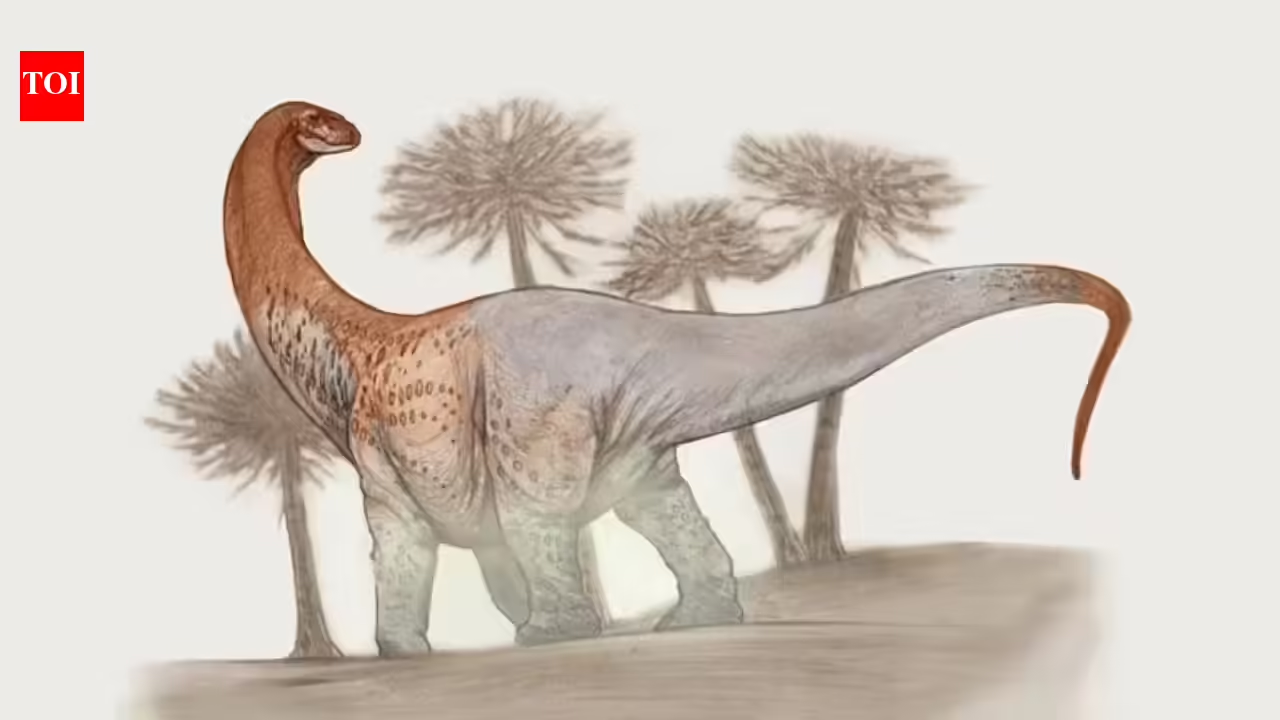
Patagonia, a region in southern South America has been extremely influential in revealing information about titanosaur dinosaurs to the world. It has hosted some of the largest dinosaurs ever found on the planet.Recently, one more titanosaur dinosaur, Chucarosaurus, was discovered in the region and has left scientists and archaeologists shocked with the impressive dimensions of the animal. As per articles published in the journal Nature and palaeontology journals, titanosaurs have rarely left behind fully preserved specimens. However, this one is one of a kind, truly.
Who was the Chicarosaurus?
Lead researcher Fernando E. Novas of the Bernardino Rivadavia Natural Sciences Museum in Buenos Aires and CONICET said the partial skeleton came from Rio Negro province and includes limb and hip elements.The dinosaur stretched about 100 feet and lived around 90 million years ago. Its fossils were so heavy that they damaged the road during transport. “The weight destabilized the vehicle and caused an accident,” said Novas. No one was seriously hurt, and the bones survived the impact thanks to their density. As a titanosaur, a Cretaceous long-necked plant-eating dinosaur group, Chucarosaurus would have browsed on high vegetation.
The world to know more about Titanosaurs
A titanosaur specimen, whether large or small, increases the information available about the group through the comparison process. Thus, the newly found specimen will significantly contribute to the information as it will facilitate comparative studies in palaeontology.Although Chucarosaurus is not one of the biggest titanosaurs ever found, it helps achieve better evidence. When analyzing body structures and establishing evolutionary relations between species, these fragmented fossils will allow us to note the differences in limb structures and vertebrae, changing everything we know about evolution.
Patagonia: The dinosaur center of the world
The territory of Patagonia has emerged as one of the most prominent places where scientists conduct research on the discovery of huge dinosaurs. The continuous exploration of the area has led to the expenditure of information available about the existence of diverse sauropods and Chucarosaurus is one such example. The geographical conditions of the area help palaeontologists discover multiple large titanosaurs to conduct a comparison of various dinosaurs found in the same place.