


The belief that handwashing is primarily a mealtime habit is one of the more consequential misconceptions in everyday health practice. Washing hands before eating addresses one transmission route for one category of pathogen, and leaves the bulk of daily contamination exposure entirely unmanaged.
What hands pick up between meals
The surfaces people interact with most frequently, including door handles, lift buttons, shared keyboards, mobile phones, staircase railings, and currency notes, carry a significant microbial load. Respiratory viruses including influenza and adenovirus survive on hard surfaces for several hours. Bacteria such as Staphylococcus aureus and E. coli transfer readily from contaminated surfaces to hands and from hands to mucous membranes. The average person touches their face multiple times an hour without registering it, and each contact between a contaminated hand and the eyes, nose, or mouth is a potential transmission event.
When handwashing actually needs to happen
The moments that carry the highest transmission risk have little to do with meals. After using a shared bathroom, after handling waste, after contact with a person who is unwell, after traveling on public transport, after handling animals, after coughing or sneezing into the hand, and after returning home from any public space, each of these represents a point at which the hand carries a meaningful pathogen load that washing would remove. In clinical settings, healthcare workers are trained to wash hands before and after every patient contact. The same logic applies in daily life, scaled to the exposures that ordinary routines create.
What proper handwashing requires
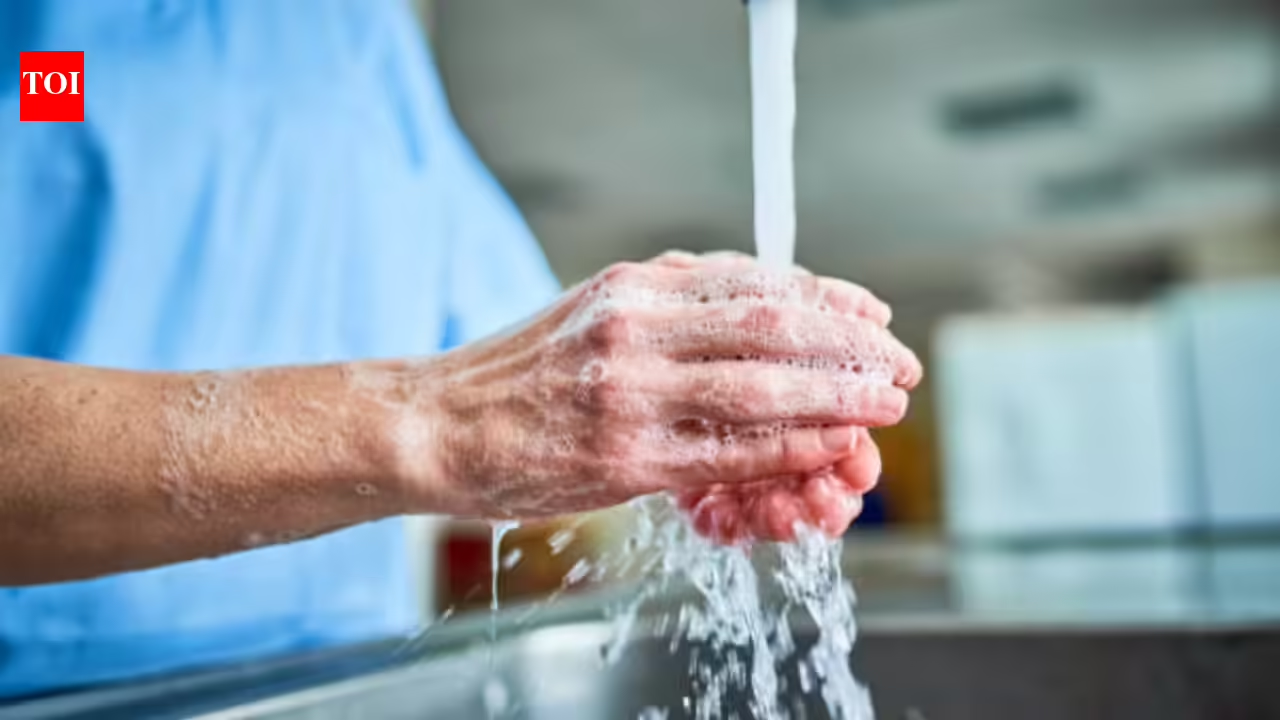
A quick rinse of hands with running water is not considered sufficient hand washing. According to the WHO guideline, it requires the application of soap on all hand surfaces, front and back, and between fingers, and around nails for at least 20 seconds before rinsing off. Hand sanitizers that contain at least 60 percent alcohol are good alternatives to soap and water when they are not available, except against some pathogens such as Clostridioides difficile and norovirus.
Why the habit gap matters
Among other preventable illnesses, diarrhea, pneumonia, and healthcare-associated infections are some of the most common. In studies conducted so far, it has always been shown that good hand washing during the appropriate times prevents infection spread considerably. However, the problem arises due to the underestimate of high-risk opportunities outside meal times and the buildup of germs throughout the course of a normal day.Dr. Saswata Chatterjee, Gastroenterologist – CK Birla Hospitals, CMRI