




Indians love gold but more than the precious metal, what we truly survive on and definitely could not live without is the yellow gold: turmeric. Healing wounds, making skincare, cooking food and even doing religious rituals, turmeric is the star of the subcontinent’s world.But did you know there was a time when India was about to lose the right to this healthy keg to the US? If the American attempt had succeeded, India would be paying royalties to US corporations every time turmeric was used on a wound or in the kitchen.But then emerged a silent warrior, who fought a brave and legendary patent war bringing the country’s prized possession back to its homeland. This was Dr Raghunath Mashelkar, then Director General of Council of Scientific & Industrial Research (CSIR).
A tussle for turmeric
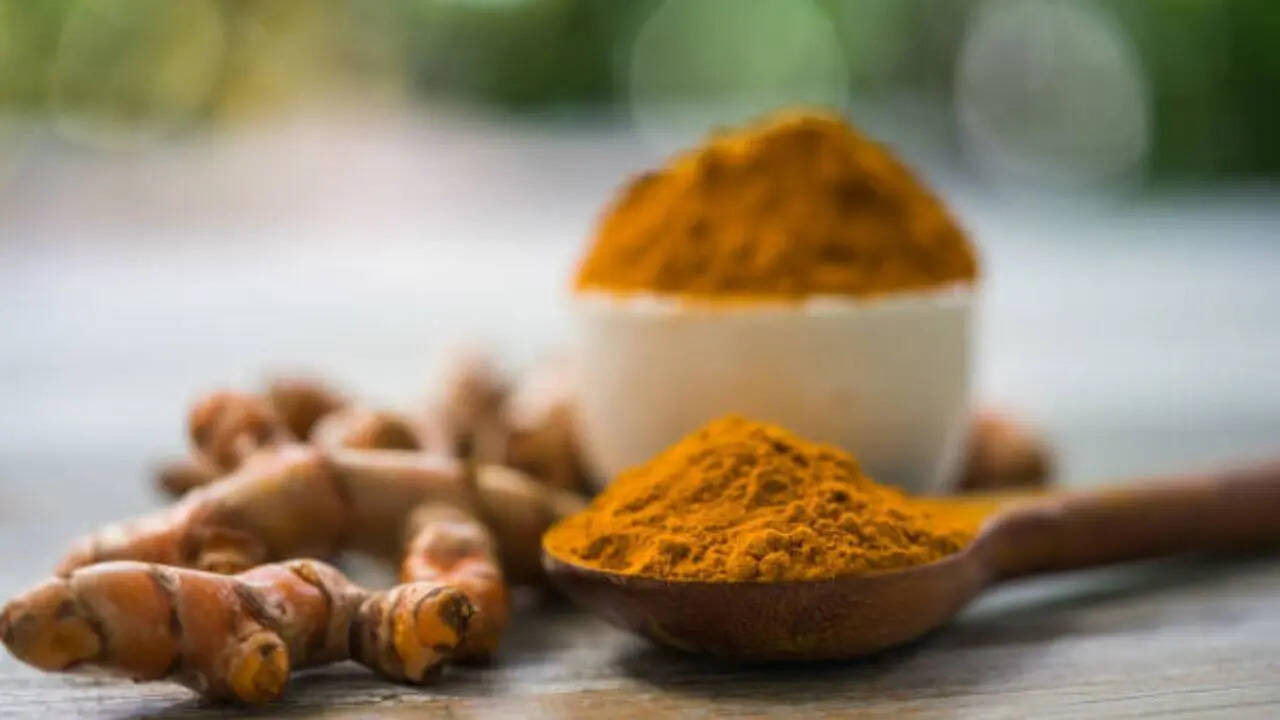
The year was 1993, and Raghunath Mashelkar was the Director of the National Chemical Laboratory. He and his family were enjoying an evening on their terrace in Pune when a bird suddenly fell in front of them. Seeing that one of its wings was broken, his mother quickly ran and brought some turmeric powder, made a paste out of it and applied it to the bird. While the poor bird died within a few hours and the family hosted its burial in their garden, the incident remained etched in his memory forever.Two years later, Mashelkar moved to Delhi as Director General of the Council of Scientific & Industrial Research (CSIR) in 1995. Later in 1997, he was reading a Time of India report written by N Suresh revealing that the US Patent Office had granted a patent on the wound-healing properties of turmeric.In his report, he wrote how the patent surprised him since patents were granted on the conditions of novelty, non-obviousness and usefulness. He decided to challenge the patent on the grounds that the use of turmeric was well known in India.CSIR submitted all the evidence to the USPTO, including texts from ancient Sanskrit literature, showing that the wound-healing properties of turmeric were known to Indians all along. After fourteen months, the USPTO accepted the evidence and revoked the patent.“This was the first time that the Third World had fought for its legitimate rights to its traditional knowledge and had actually won,” wrote the expert.
The greater war
Turmeric wasn’t the only Indian product being patented wrongly across the world. When CSIR dived deeper, they found that about 2,000 patents were being granted annually internationally, which were linked to traditional knowledge systems.Thus, Mashelkar headed to the World Intellectual Property Organization in Geneva in 1999 as chair of the Standing Committee on Information Technology (SCIT). He informed 170-plus member countries about the issues of misappropriation of traditional knowledge.He later went on a trip to Washington to show the USPTO the number of wrong patents that had been granted on the basis of wrong novelty, presenting Sanskrit verses where the products and their uses had already been mentioned. However, the agency used an electronic database to scan for prior art and the knowledge of the old texts was not mentioned in their databases.Thus, in consultation with VK Gupta, the idea of creating a Traditional Knowledge Digital Library was formed.
Traditional Knowledge Digital Library

CSIR and the Department of Indian System of Medicine and Homeopathy (now Department of AYUSH) worked to create the TKDL. The team comprised scientists, Sanskrit scholars, Ayurveda experts, IT experts, intellectual property experts and others.At the same time, WIPO was reevaluating its International Patent Classification (IPC) system, which is used by national patent offices globally to classify subject matter contained in patent documents. A new ‘Traditional Knowledge Resource Classification’ was integrated into the new IPC system.Now, over a quarter of a million Indian formulations were protected by TKDL and available in five international languages including English, Japanese, French, German and Spanish. Thus, any international patent office could now utilize TKDL for patent research. India now holds a powerful mechanism that prevents the grant of a wrong patent within a few weeks at zero cost.Over the years, patents over rice, ashwagandha, pista and many other Indian products have been defeated with the help of the knowledge presented in TKDL’s database. Today, before an officer grants a patent, they run a scan on TKDL and if they find the herb or method in the library, the patent is rejected instantly. All because Dr Raghunath Mashelkar proved that knowledge received from the ‘laboratories in life’ is as valid as knowledge gained from research experiments in the laboratories of science.