


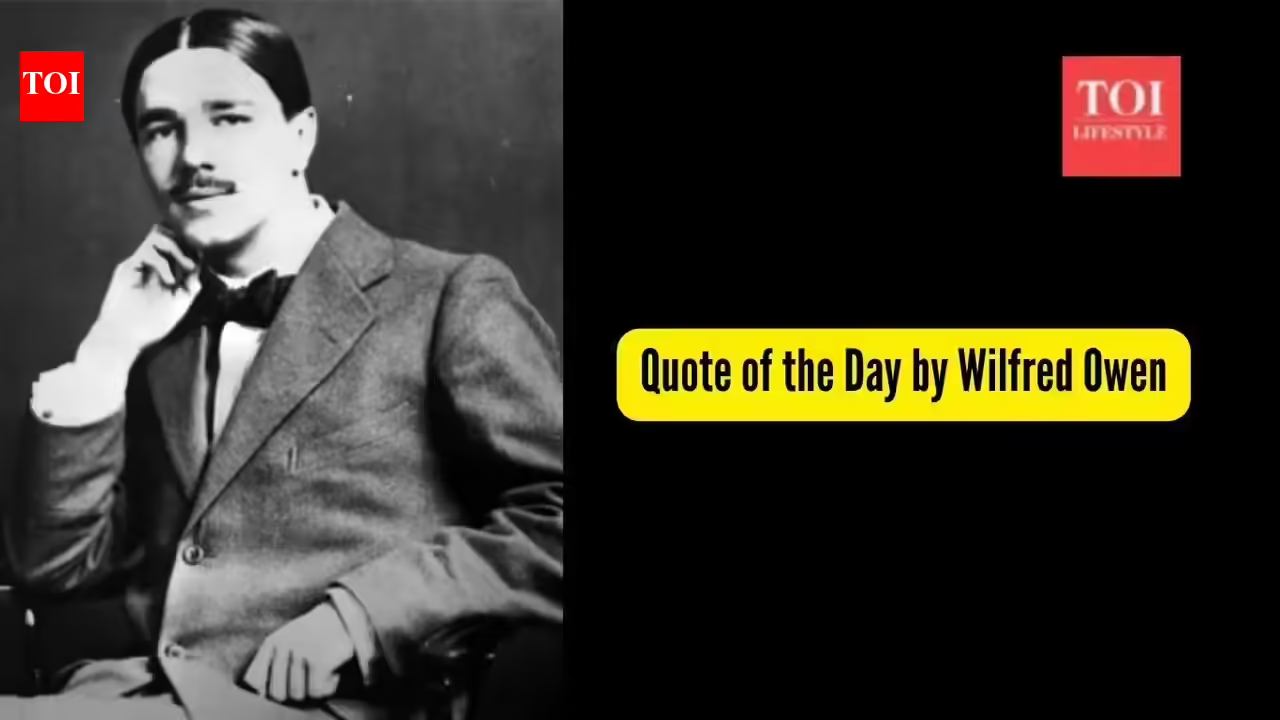
Wilfred Owen was one of the most important English poets of the early 1900s. His poems about the horrors of war were some of the most powerful and realistic of the time. He was born on March 18, 1893, in the English town of Oswestry. Even though he didn’t live long, he made a huge and lasting contribution to English literature, especially war poetry. His writing is very emotional and paints a clear picture of the pain and loss that soldiers went through during World War I.Wilfred Owen’s family was not very wealthy. His father worked on the railroads, and his mother was very religious. These things had a big impact on his early life. Owen was very interested in poetry and literature when he was a child. He was influenced by well-known poets such as John Keats and Percy Bysshe Shelley. But he couldn’t go to college because he didn’t have enough money, so he worked as a teacher and tutor instead.Owen worked as a language tutor in France for a while before the war. He started taking poetry writing more seriously during this time.His early poems were romantic and used old-fashioned styles. Everything shifted for him when World War I erupted in 1914. He enlisted in the British Army in 1915, as so many young men did, driven by a sense of obligation to his nation. Owen’s experiences during the war profoundly altered him. He fought in France, a soldier caught in the turmoil, bearing witness to the war’s violence, its losses, and the suffering it inflicted. The grim experience of trench warfare took a serious toll on his mind and emotions. He developed shell shock, now recognized as post-traumatic stress disorder, and was subsequently hospitalized for treatment. Owen met another famous war poet, Siegfried Sassoon, while he was getting better. Sassoon had a big influence on Owen’s writing style and pushed him to be honest about what he had been through. Owen showed how ugly and painful war really is, which is different from other war poets who often praised it. Dulce et Decorum Est, one of his most famous poems, talks about a gas attack and criticizes the idea that it is honorable and sweet to die for one’s country. Owen used poems like these to show how soldiers were suffering and to question the patriotic propaganda of the time.Owen’s poetry is also notable for its use of simple but strong language. He used real-life experiences and details from the battlefield a lot, which made his poems more realistic and relatable. His works show themes of loss, fear, pity, and how pointless war is. He showed his sense of duty and bravery by making this choice. He was killed in action on November 4, 1918, just one week before the end of World War I. He was 25 years old. His death was a big loss for literature because he had so much more to give. People didn’t know much about Wilfred Owen’s poetry when he was alive. His friends and supporters, including Siegfried Sassoon, worked hard to get most of his poems published after he died. As time went on, people began to appreciate his work, and it is now thought to be some of the best war poetry ever written. Owen made a big difference in literature by changing how poetry talked about war. He didn’t praise heroism; instead, he talked about how hard it was for soldiers. Many poets and writers who came after him were inspired by how honest and realistic he was. People all over the world still read his poems and study them in schools and universities. In conclusion, Wilfred Owen was an amazing poet whose life and work were greatly affected by World War I. His poetry gives a voice to the soldiers who suffered in silence and is a strong reminder of how much war costs. His life was short, but his legacy is still strong, and his poems still move and inspire people of all ages.Quote of the DayThe lines “Children are not meant to be studied, but enjoyed. Only by studying to be pleased do we understand them” by Wilfred Owen shows a very thoughtful and caring way to understand kids. It says that kids shouldn’t be treated like things to be closely watched or studied, but as people who bring happiness, curiosity, and innocence into our lives.Adults often try to “study” kids in a strict or scientific way by constantly judging their actions, correcting them, or expecting them to act a certain way. This way of doing things can make interactions seem formal and distant. The quote says that this way of thinking is wrong. It stresses that kids are not things to be looked at or controlled, but people who should be valued for who they are. You should enjoy their laughter, creativity, and spontaneity instead of always judging or evaluating them.The second part of the quote, “Only by studying to be pleased do we understand them,” adds more meaning. It doesn’t completely turn down the idea of understanding kids; it just changes how we do it. We shouldn’t study them with harsh criticism or high expectations. Instead, we should watch them with joy, patience, and openness. When we care about kids and are interested in them, we start to understand how they feel, what they think, and how they act more easily.Kids show who they are in different ways, like through play, asking questions, being creative, and even being naughty. Adults who are too focused on discipline or analysis might miss how beautiful these expressions are. But when we interact with kids because we want to have fun with them, we are more aware and caring. The quote also makes us remember that childhood is a special and short time in our lives. We shouldn’t push kids to grow up or act like grown-ups. We should instead value their uniqueness and innocence. Being around them makes their childhoods better and our own lives better. In short, the quote says that we don’t learn about kids by watching them closely or controlling them; we learn about them by loving, being patient, and having fun with them. We learn more about kids’ world when we like them for who they are and have fun with them.