


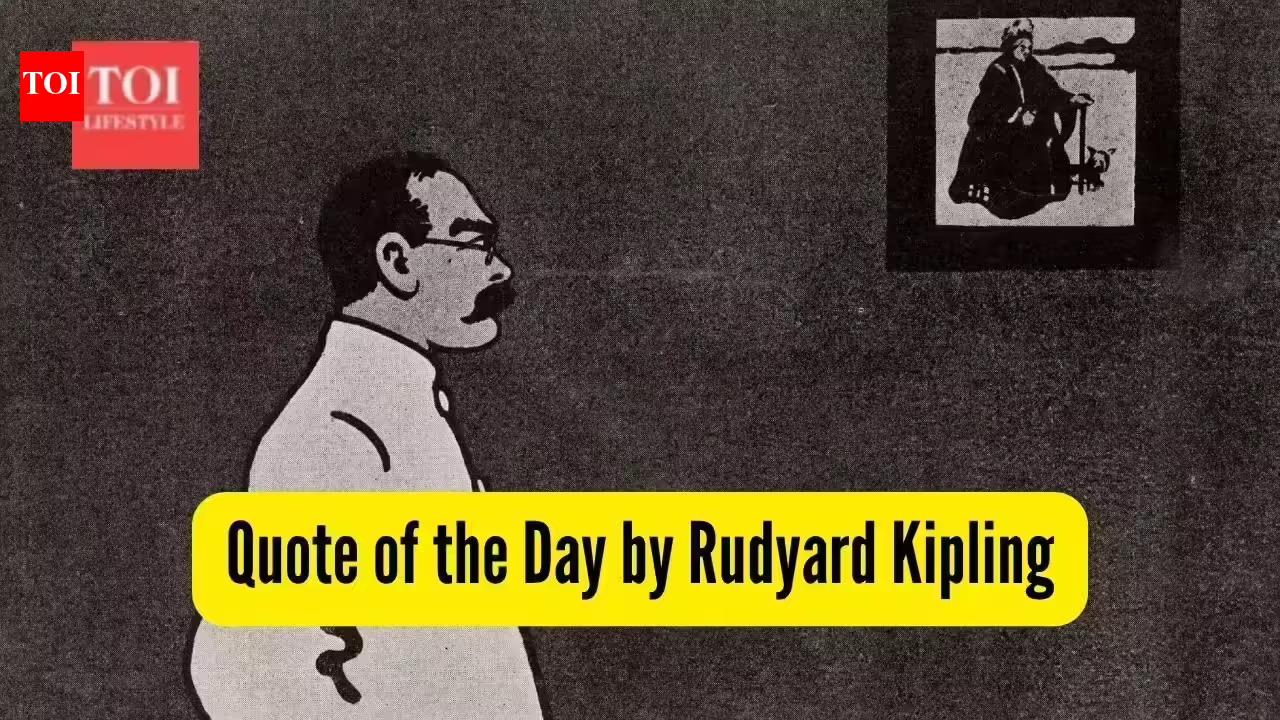
Rudyard Kipling was one of the most important authors from the 1800s to the early 1900s. He was well-known for his poems, stories, and detailed accounts of life in the British Empire, especially in India. His life, writing, and influence show how smart he was as a writer and how hard it was to live in his time.Kipling was born on December 30, 1865, in Bombay (now Mumbai), India, when the British were in charge. His time in India as a child had a big impact on his writing and imagination later on. As a child, he was surrounded by Indian culture, languages, and landscapes. This gave his writing a depth and authenticity that set him apart from other British writers. A lot of British families in India sent their kids to school in England, but he was only six years old when he was sent. He had a hard time during this time because he was alone and had to follow strict rules. Later on, this changed the emotional depth of his stories. After finishing school, Kipling went back to India in his late teens and got a job as a journalist. This time had a big impact on how he wrote. He learned how to pay attention, write clearly, and remember real-life details from being a journalist. During this time, he wrote poems and short stories about his time in India. These early books became very popular very quickly because they had interesting stories and clear pictures.When Kipling moved to England in 1889, he really started to make a name for himself as a writer. He became famous for his books, like The Jungle Book and Kim, and his many poems, like “If—” and “The White Man’s Burden.” The Jungle Book is likely his best-known work. It tells stories about animals that live in the Indian jungle, like Mowgli, Baloo, and Shere Khan. People often think of the book as a kids’ book, but it also talks about identity, belonging, and survival.Another important work by him is the novel Kim. The story takes place in colonial India and follows a young boy as he learns about different cultures and who he is. People like it because it talks a lot about Indian life and friendship and loyalty. A lot of people like Kipling’s poetry, especially “If—,” because it gives moral advice and teaches a stoic philosophy that values strength, self-control, and honesty.In 1907, Kipling became the first English-speaking writer to win the Nobel Prize in Literature. But Kipling’s work has caused some trouble. He liked the British Empire a lot, and some of his writing shows that he was an imperialist. For example, “The White Man’s Burden” says that it was the job of Western countries to make other parts of the world more civilised. Kipling had a hard life outside of work too. He married Caroline Balestier and they had children. During World War I, he lost a lot of people close to him, including his daughter and then his son. These tragedies changed the way he saw the world and the way he wrote, making his later works sad and thoughtful.Kipling’s impact on literature is clear, even with all the problems. He helped make short stories popular and had an impact on many writers who came after him. Many people could understand his work because he could tell interesting stories in simple words. People still relate to his ideas of courage, duty, and identity.Kipling’s books have also had a long-lasting impact on culture. There have been a lot of films, plays, and TV shows based on The Jungle Book. This has helped his stories reach new people. “If—” is still one of the most famous poems in English. People often look to it as a way to build character and strength.In short, Rudyard Kipling was a complicated and important person whose life and work show both the good and bad things about his time. He was a great storyteller who brought India and the rest of the world to life with his words. People still read and enjoy his writing, even though some of his ideas are now thought to be old-fashioned or wrong. His legacy is in the great stories he told, the memorable characters he created, and the impact he had on world literature.Quote of the DayRudyard Kipling’s quotee, “I keep six honest serving men (they taught me all I knew); Their names are What and Why and When And How and Where and Who,” Shows how important it is to be curious and ask questions in order to learn and understand the world. They don’t lie or trick you; instead, they help you find out the truth, the reasons, and the deeper meanings behind things.Each of these six questions helps us understand a situation in a different way. “What” helps you figure out what the subject or event is. “Why” looks into the reason or purpose behind something, which often leads to a better understanding. “When” puts things in order and helps us understand how they fit together. “How” tells you how something works or happens by explaining the process or method. “Where” tells you where something is, putting events in space. Lastly, “Who” is about the people who are involved. These questions, when put together, make up a complete framework for inquiry.Kipling is stressing that you have to work for knowledge; it doesn’t just come to you. When we ask these six questions, we think more deeply about the world. A curious person, for example, will not just take information at face value; they will ask: What is going on? Why is this happening? Who is taking part? How did it happen? Where is it happening? When did it begin? This process helps you understand things more deeply and accurately. The quote also talks about the idea of learning for the rest of your life. Kipling says that these six “serving men” taught him everything he knew. This suggests that even though he was a great writer, he learned and grew by being curious. It reminds us that no matter how smart or experienced we are, we should always ask questions.Another way to look at it is that these questions make you think critically. Not everything we hear is true or complete in a world full of information. We can look at situations more closely, avoid confusion, and make better choices by asking ourselves these six questions. They help us remember important things by acting as a mental checklist. Also, the quote can be seen as advice for telling stories and talking to people. These six things will help you make sure that your writing is clear and complete, whether you’re writing an essay, telling a story, or explaining an idea. That’s why reporters, researchers, and students often use these same questions. In the end, Kipling’s quote says that curiosity is the key to knowledge. The six “honest serving men” are simple but powerful tools that help us learn about, question, and explore the world around us. Using them often makes us more thoughtful, knowledgeable, and aware people.