



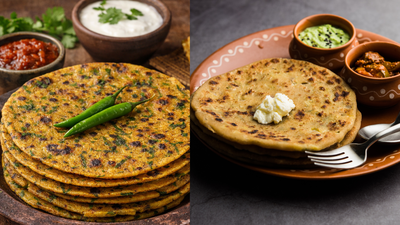
At first glance, thepla and paratha look like close cousins. Both are flatbreads, both are comforting, and both can disappear quickly from the breakfast plate when served hot with curd, pickle, or a spoonful of butter. But nutritionally, they are not quite the same story. One is often designed to be lighter, spiced, and travel-friendly; the other is usually richer, softer, and more indulgent. That difference matters, especially when breakfast is being judged through the lens of health and weight loss. Scroll down to read more…
What makes them different
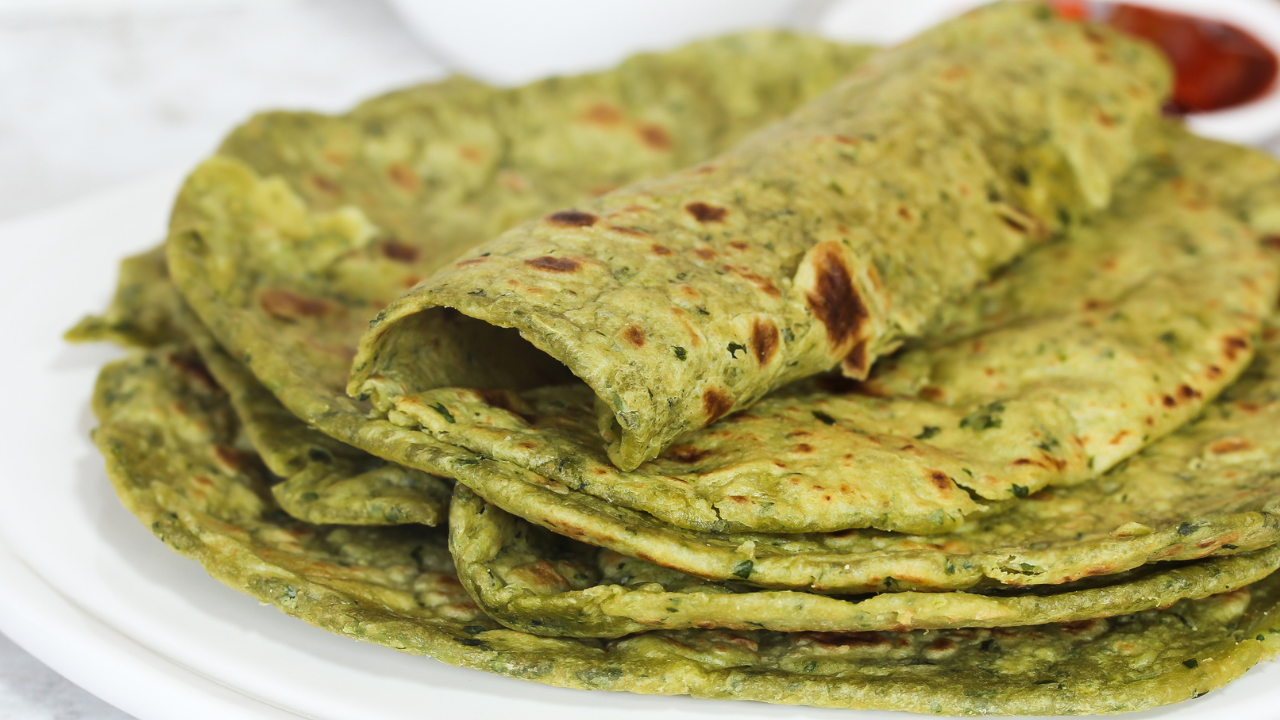
Thepla is most closely associated with Gujarati kitchens, and it is usually made with whole wheat flour, sometimes mixed with besan, millet flour, fenugreek leaves, spices, yogurt, and a modest amount of oil. Paratha, on the other hand, is a broader category. It can be plain, stuffed, layered, or pan-fried with a generous hand. A simple homemade paratha can be wholesome, but many versions rely on more oil, ghee, or butter, which changes the calorie count fast.
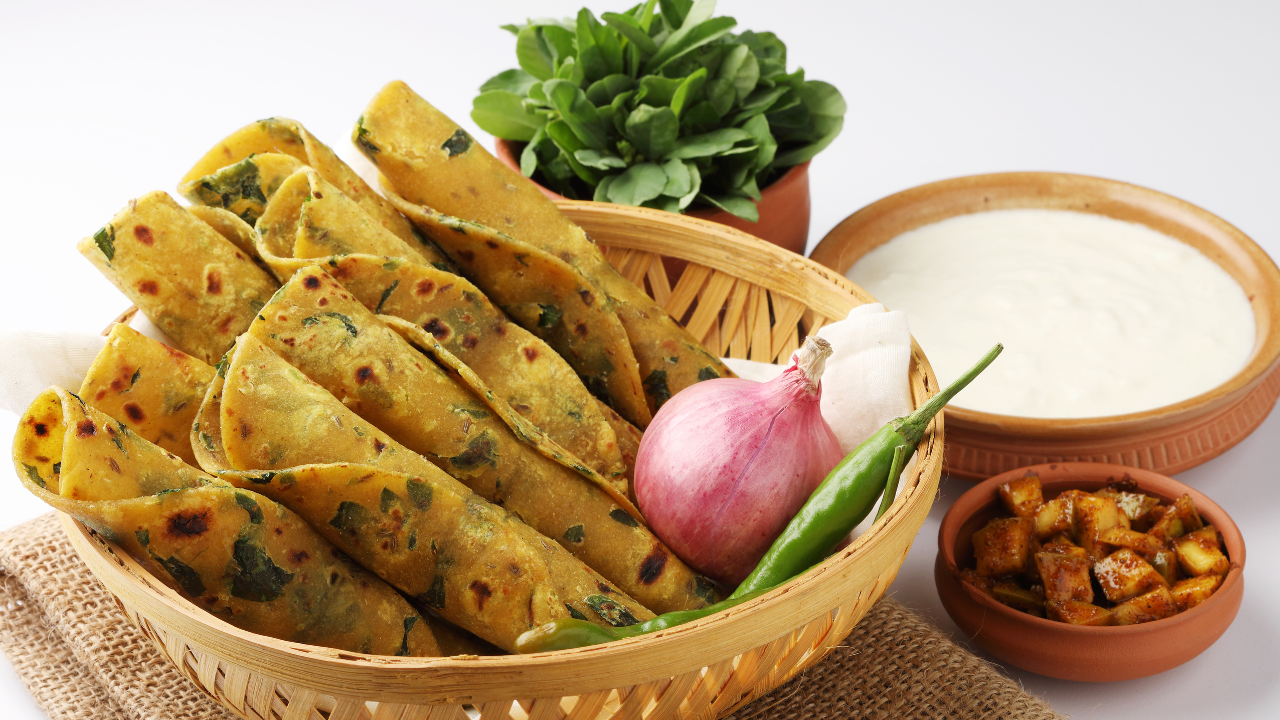
That is the first big difference: thepla is often built to be lighter and more balanced, while paratha is often built to be richer and more filling.
Calories, fiber, and satiety
For weight loss, the real question is not just which food is “healthy”, but which keeps you full without quietly pushing calories too high. Thepla often has an advantage because it can include fenugreek leaves or other greens that add fiber and volume. A medium methi thepla usually contains 110–130 calories, with about 18–20 g carbohydrates, 3–4 g protein, 3–4 g fat, and 2–3 g fiber. The added greens increase fiber and micronutrients like iron and folate, helping digestion and satiety.
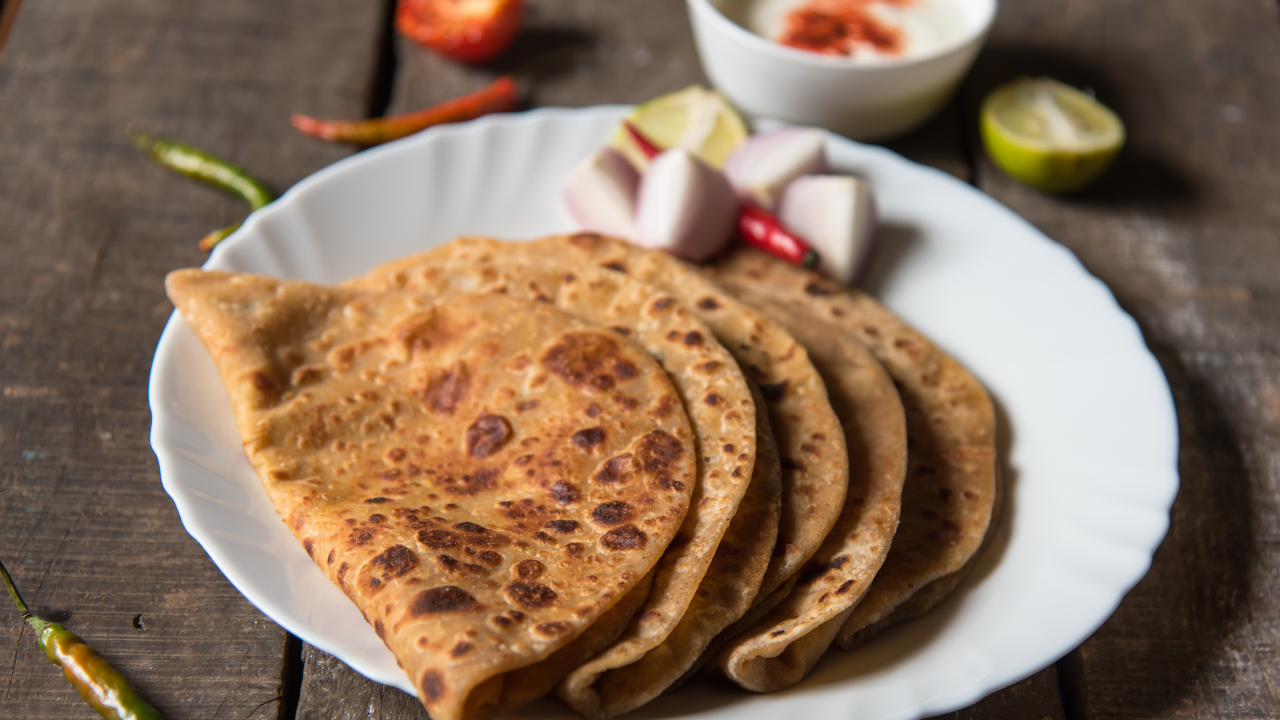
Paratha can still be healthy, but only when prepared carefully. A plain whole-wheat paratha cooked with about a teaspoon of oil or ghee typically contains 180–210 calories, with roughly 26–30 g carbohydrates, 4–5 g protein, 7–10 g fat, and 3–4 g fiber. Stuffed or heavily greased versions can exceed 250–300 calories. That higher fat content is what often makes paratha more calorie-dense than a lightly cooked thepla.In practical terms, one thepla may be easier to fit into a calorie-controlled diet than one rich paratha, especially if you are eating two or three pieces at breakfast.
blood sugar and energy
For anyone trying to lose weight, stable energy matters as much as fewer calories. Foods that cause a sharper blood sugar rise can leave you hungry again sooner. Here, thepla can again have a slight advantage, especially when made with methi, besan, millet flour or served with protein-rich curd. The added fiber and extra ingredients can make the meal more balanced.Paratha, especially if it is made from refined flour or paired with high-fat accompaniments, may feel heavier than steady. But a well-made paratha with whole wheat, a protein-rich stuffing like paneer or moong, and controlled oil can absolutely be part of a smart breakfast. The issue is not the paratha itself; it is how it is prepared and what it is served with.
Which is better for weight loss?
If the question is strictly about weight loss, thepla usually has the edge. It is more often made with less oil, more fiber, and ingredients that support fullness without making the meal too dense. A methi thepla with curd is a solid breakfast choice because it brings together carbohydrates, some protein, and better digestive balance.But paratha does not lose by default. A simple, small, homemade whole wheat paratha cooked with minimal oil can also work. The real trap is portion size. Two large stuffed parathas with butter can easily become a calorie-heavy meal, while two medium theplas may feel lighter and easier to manage.
The healthier choice depends on the plate, not just the bread
There is no universal winner here. Thepla is usually the better everyday breakfast for someone watching weight because it is often lighter and more fiber-rich. Paratha can still be healthy, but it needs more discipline in preparation and serving size.
The smarter way to think about it is this: choose the one that is made with less fat, more whole grains, and enough protein on the side. A breakfast of thepla with curd, or a modest paratha with a bowl of yogurt and vegetables, is far better than either bread eaten in isolation.
The bottom line for weight loss
For most people trying to eat better or lose weight, thepla is the safer bet. It is easier to keep light, easier to digest, and easier to pair with healthy sides. The dough often includes whole wheat flour and spices like turmeric, ajwain, or fenugreek, which add flavor without piling on excess fat. It also tends to be cooked with minimal oil, keeping the overall meal balanced.Paratha can still belong on the table, but it asks for more restraint. In the end, the healthiest breakfast is not the one with the better reputation. It is the one that leaves you full, energized, and not reaching for a snack an hour later.