



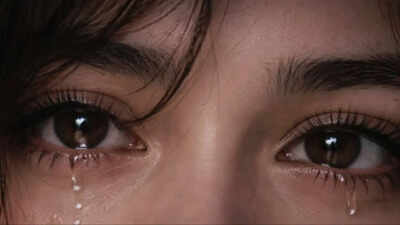
Growing up as ardent readers, we were encouraged by Charles Dickens in Great Expectations“Heaven knows we need never be ashamed of our tears, for they are rain upon the blinding dust of earth, overlying our hard hearts. I was better after I had cried, than before–more sorry, more aware of my own ingratitude, more gentle.“So treating tears as a sign of weakness, vulnerability or emotional overload was never an option and now, emerging research and evolutionary biology insights suggest that crying may be one of the most sophisticated social tools humans possess. At a time when conversations around mental health and emotional expression are gaining momentum globally, scientists are revisiting a deceptively simple question: why do humans cry at all?
Crying: Not just emotion but a built-in communication system?
Did you know humans are the only species known to shed emotional tears? Yes, that’s true and that alone has puzzled scientists for decades. While animals vocalise distress, visible tears appear to be uniquely human and it is not accidental.According to a 2026 dataset study on emotional crying, published in NIH / PubMed Central“Emotional crying… serves as a strong signal in social communication.” The research shows that tears are not just internal reactions, they are external signals designed to be seen. People who shed tears easily are more likely to respond with empathy, support and care.

New Study Reveals Why Humans Cry and Why You Shouldn’t Hold It Back
In other words, crying is not just about feeling. It’s about being understood.
The evolutionary advantage of tears
From an evolutionary standpoint, crying may have helped humans survive, not individually but socially. Another scientific paper examining emotional tears explains that crying likely evolved as a non-verbal signal of need:A 2025/2026 indexed research in ScienceDirect found, “Tears had adaptive functions… to protect and maintain the eye.” While early tears served biological purposes (like lubrication and protection), researchers now believe that emotional crying evolved later, transforming into a social survival mechanism.It has been found that by crying, early humans could signal distress without aggression, strengthen group bonds and increase chances of receiving help. As per the evolutionary theories, emotions themselves evolved to improve cooperation and group living.
Crying literally changes how others see you
The latest behavioral science studies reveal a whole new aspect that is tears are a kind of signal which tell others how to perceive us. There is a mounting evidence from research that crying raises the level of sincerity that is perceived, activates brain areas related to empathy and stimulates the helping behavior of others.one 2026 analysis on emotional signaling published in Behavioral science synthesis explained, “Emotional crying developed as an evolutionary advantage for social bonding.” This suggests that crying functions almost like a biological language, a silent but powerful way of saying, “I need support.”
More than a signal: Crying as a physical reset
Apart from being a mode of communication, crying may penetrate one’s own soul even more deeply. Neurobiological studies have indicated that production of tears due to emotional outpour release stressful hormones and increase the production of comforting neurotransmitters such as oxytocin and in fact turn on parasympathetic nervous system (or “rest and digest” system) of the body.In layman’s terms, crying is not a mere reaction to one’s feelings but a regulating mechanism at a biological level. The reason is that when people state that they feel more peaceful or lucid after a cry, it is not merely a cognitive unburdening but a physical restoration as well.
So why do humans cry?
The emerging scientific consensus is surprisingly clear. Crying is not a flaw. Originally evolving as a non-verbal way of expressing distress, the feature of crying is also a means of deepening human bonds, eliciting empathy and support and bringing about emotional equilibrium from within.
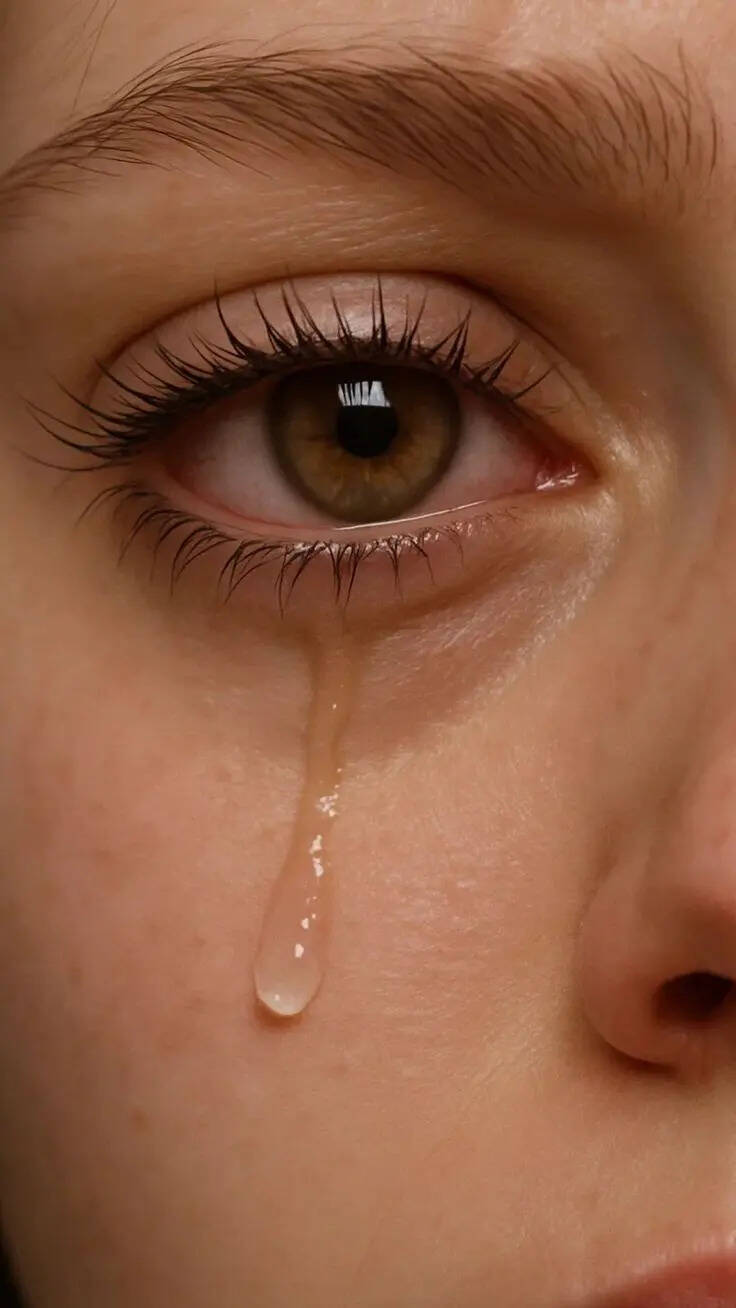
Why Humans Cry Could Be the Key to Stronger Relationships
In a world that values output and the maintenance of a calm exterior, the studies present that tears not as something to be hidden or stopped but rather as a powerful marker of humanity, function and even the very essence of life.Although a person may cry behind closed doors, the reason for it is very much a social one. What seems like a major emotional collapse is in fact a hidden mechanism for social contact, self-preservation and healing – one that has been subtly influencing human interactions over millennia. Far from being a clear signal that things have gone awry, tears should be seen as the signing of a natural, perfectly functioning state.