

In India, a saree is way more than just fabric. It’s history, tradition, and craft rolled up together. But today, when every store shelf is loaded with lookalikes, a big question comes up every time you shop: Is this saree really handloom, or is it powerloom?It’s not always easy to tell. They can look nearly identical: same colors, same designs, and price won’t always clue you in. But underneath, the difference couldn’t be bigger. One is slow, personal, and artisanal. The other? Quick, mechanical, built for mass production.A lot of buyers end up paying more for something that isn’t what it claims to be. If you know what to look for — really pay attention with your hands and eyes — you can spot the difference without being a textile guru.Let’s break it down.
How the saree is made is everything
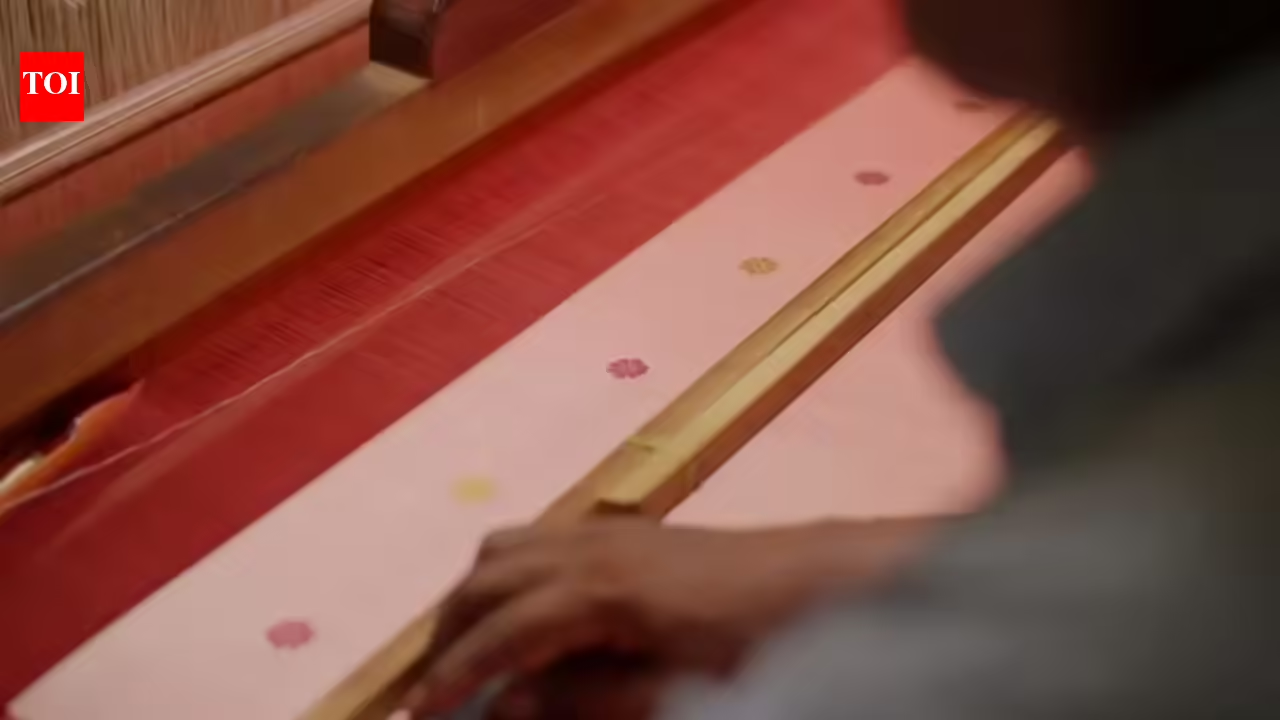
Handloom sarees are woven by people, not machines. The weaver sits at the loom, guiding threads with hands and feet. The tension, rhythm, and pattern change with every movement; it’s a living process.Meanwhile, powerloom sarees are made on electric machines that spit out patterns fast and with crazy precision.That gap in how they’re made leaves real clues in the saree itself.
The biggest hint: Tiny and human errors
Ironically — and perhaps, in the most grounded way — the surest way to spot a handloom saree is to look for small imperfections. When a person weaves, the fabric can’t be perfectly uniform. Threads might wander, motifs can slip a little, and patterns may not space out exactly the same every time. These aren’t flaws; they’re the proof of human hands.On the other hand, powerloom sarees look almost too perfect. Every pattern repeats with robotic exactness. If it’s flawless in a copy-paste kind of way, it’s probably machine-made.
Flip it over, and check the back
Most people only look at the front, which is only common, but the back holds the truth. With handloom, the reverse side often has loose threads, small knots, slight unevenness — all of which are the marks of manual weaving. It’s not messy, just… unflinchingly human.However, powerloom sarees look tidy front and back. Machines don’t leave traces behind.
Touch tells you more than the eyes see
Here’s the truth about picking up sarees: experienced buyers and saree connoisseurs don’t just look; they run their fingers over the fabric. Handloom sarees feel softer, more airy, with a hint of texture. They drape naturally, almost blending into movement.As for powerloom fabric, it’s usually smoother, but kind of stiff — like it holds its shape. Machine tension makes it uniform and less alive. If you try both side by side, and make it a habit to do so every time you buy a saree, you’ll feel the difference.
Look closely at patterns
Take a motif, maybe a flower or a geometric shape, and trace it across the saree. In handloom, you’ll see small variations between repeats. In powerloom, every motif looks cloned: perfect, identical, no subtle shifts.Once you notice, it’s pretty hard to forget.
Making speed matters
This is one of the biggest traits and tells: handloom sarees take days, sometimes even weeks or months, depending on how complex they are. Because art, especially when it’s wearable art, takes time. Meanwhile, Powerloom cranks out fabric fast, in big batches.The slow work shows in the final product. Handloom sarees carry the rhythm of hands; powerloom is all efficiency. This is also why you can’t just trust the price tag. Handlooms do cost more, but some powerlooms pretend to be handlooms and still get marked up.
Certifications: Useful, but not the ultimate tag
Some handloom sarees come with official marks: Handloom Mark, GI tags, and cooperative society labels. These add credibility. But not every real handloom has a tag, and not every tagged saree is perfect. Learning to recognize the clues beats yourself relying on labels.
Handloom vs powerloom sarees: Why the difference matters
This isn’t just about telling fabrics apart, or pitting one against another. It’s about knowing what you’re picking and paying for. Handloom means skill, time, tradition, and it supports artisans. Powerloom means fashion for the masses, more accessible and affordable.Both have their place. It only gets tricky when one pretends to be the other.You don’t need expert training to spot a handloom saree. Just slow down, pay attention: find little imperfections, check the back, feel the fabric, trace the patterns. What you’re really doing is learning to see the difference between machine-made and human-made. Once you get it, it changes forever how you see and buy sarees.