

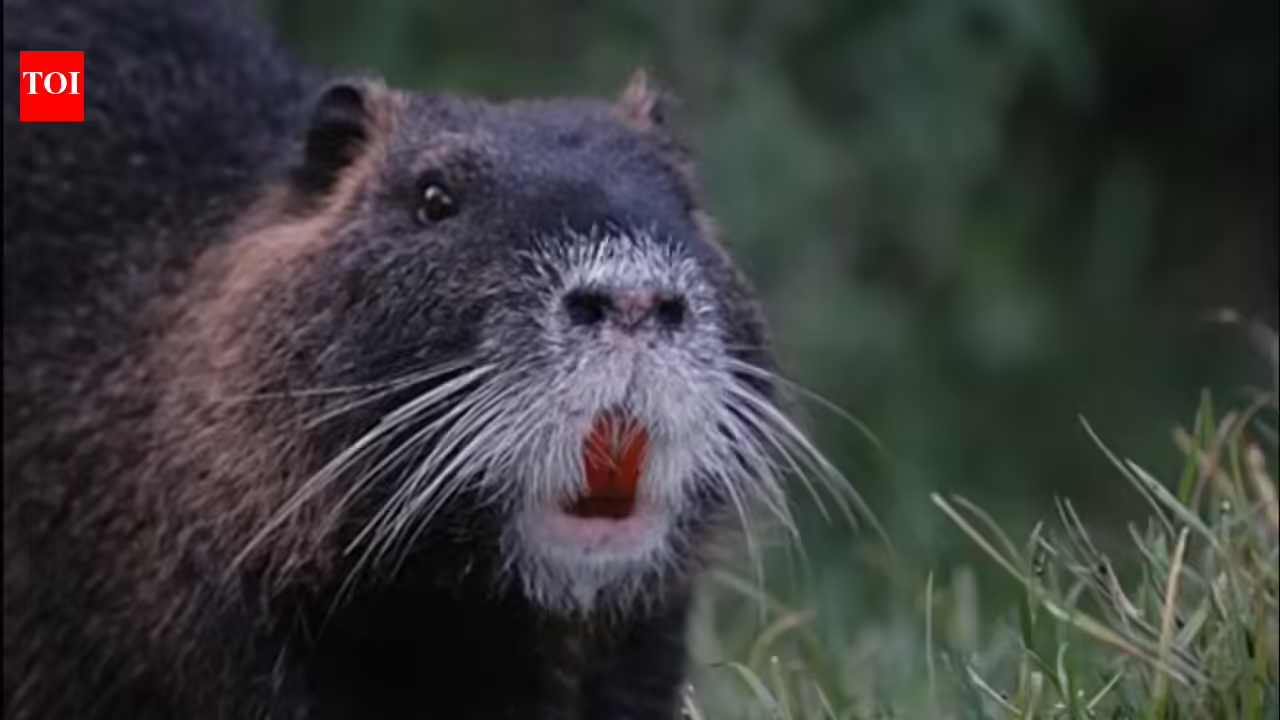
For years, nutria were treated as a strange but distant problem in parts of the American South, where the large semi-aquatic rodents had already carved up wetlands and irrigation systems. Their arrival in California drew less attention at first. A few sightings here and there. Then the burrows appeared along levees and waterways, followed by damaged marsh vegetation and widening concern among wildlife officials. The animal itself is difficult to miss, heavy-bodied, dark-furred, with blunt whiskers and unusually bright orange teeth caused by iron-rich enamel. What has unsettled researchers more recently is not simply the spread of nutria through California’s Delta region, but the growing suspicion that their appearance there may not have been accidental at all.
Why are orange-toothed nutria difficult to remove from South America
Nutria, also called coypu, are native to South America but were introduced to several countries during the fur trade boom of the twentieth century. Escapes from breeding facilities helped establish wild populations in wetlands across the United States, especially in warmer southern states where the animals adapted quickly to marsh environments.Unlike smaller rodents, nutria consume large quantities of aquatic vegetation and often tear plants out by the roots rather than feeding selectively. According to the United States Department of Agriculture’s Animal and Plant Health Inspection Service, a single nutria can eat close to a quarter of its body weight every day, leaving behind damaged marshland and exposed soil vulnerable to erosion. The agency has also linked nutria burrowing to weakened flood-control structures, irrigation banks, and drainage systems.Their reproductive cycle adds to the difficulty. Female nutria can breed several times a year and produce large litters, allowing populations to recover quickly even after trapping campaigns.
California nutria arrived through natural migration; study reveals
California’s current nutria problem differs from earlier outbreaks in one important way. State officials had previously declared the nutria eradicated in the 1970s after a lengthy removal effort. Their sudden reappearance in the San Joaquin Delta puzzled researchers almost immediately.As reported by Local News Matters, a recent genetic study examining nutria populations in California suggested the rodents may have been deliberately introduced rather than naturally dispersed over time. Researchers compared DNA samples from California nutria with populations in neighboring states and found close similarities with animals from Oregon.That finding raised new questions because the distances involved would have made gradual migration unlikely. Scientists involved in the study pointed to the possibility that small groups of nutria were intentionally transported and released, although no direct evidence identifying who may have done so has emerged. The study also noted how quickly the animals established themselves once introduced into the Delta waterways. Wetland environments provide easy access to food, cover, and soft banks suitable for burrowing.
Environmental impact of invasive nutria on wetland habitats
Much of the environmental concern surrounding nutria comes from the way they alter marsh ecosystems over time rather than through sudden visible destruction. Areas heavily grazed by nutria can lose dense root systems that normally help stabilize wetland soil. Once vegetation disappears, erosion tends to accelerate. Federal wildlife agencies have previously documented severe marsh losses along the Gulf Coast connected to long-term nutria feeding. In some regions, large patches of wetlands were converted into open water after root systems failed and shorelines collapsed.California officials worry about similar patterns developing in Delta habitats already under pressure from drought, salinity shifts, and infrastructure strain. Nutria burrows are particularly concerning around levees because the tunnels can weaken embankments from within. Even relatively small structural failures can create expensive repair problems in flood-prone areas. Farmers have also reported damage to crops and irrigation channels in regions where nutria populations spread into agricultural land. Removing nutria once populations become established is expensive and labor-intensive. The animals are mostly nocturnal, spend much of their time near water, and reproduce quickly enough to offset incomplete trapping efforts.According to USDA APHIS guidance documentseradication campaigns usually require years of coordinated monitoring, trapping, and habitat surveillance before populations begin to decline consistently. Small surviving groups can repopulate wetlands surprisingly fast if detection efforts weaken too early. Cold weather occasionally limits nutria expansion in northern climates, though milder winters in some regions have allowed populations to persist farther north than expected. California’s climate creates fewer natural barriers.Wildlife teams working in affected areas have relied on trapping networks, thermal imaging surveys, and public sighting reports to monitor movement through waterways and marshland. Officials continue urging residents not to relocate or release captured nutria into different habitats, partly because even isolated introductions can restart infestations.
How delayed action allows invasive nutria populations to expand
Invasive species management often follows a predictable cycle: early sightings are dismissed, populations expand quietly, and only later does large-scale containment begin. Nutria fit that pattern closely. They are not particularly elusive animals, yet their environmental impact tends to build gradually beneath the surface of wetlands and levees before becoming fully visible.The recent California research has shifted attention away from the rodents alone and toward the question of how invasive species move in the first place. If deliberate releases did occur, even on a small scale, they may have reshaped parts of the Delta ecosystem for years to come.