


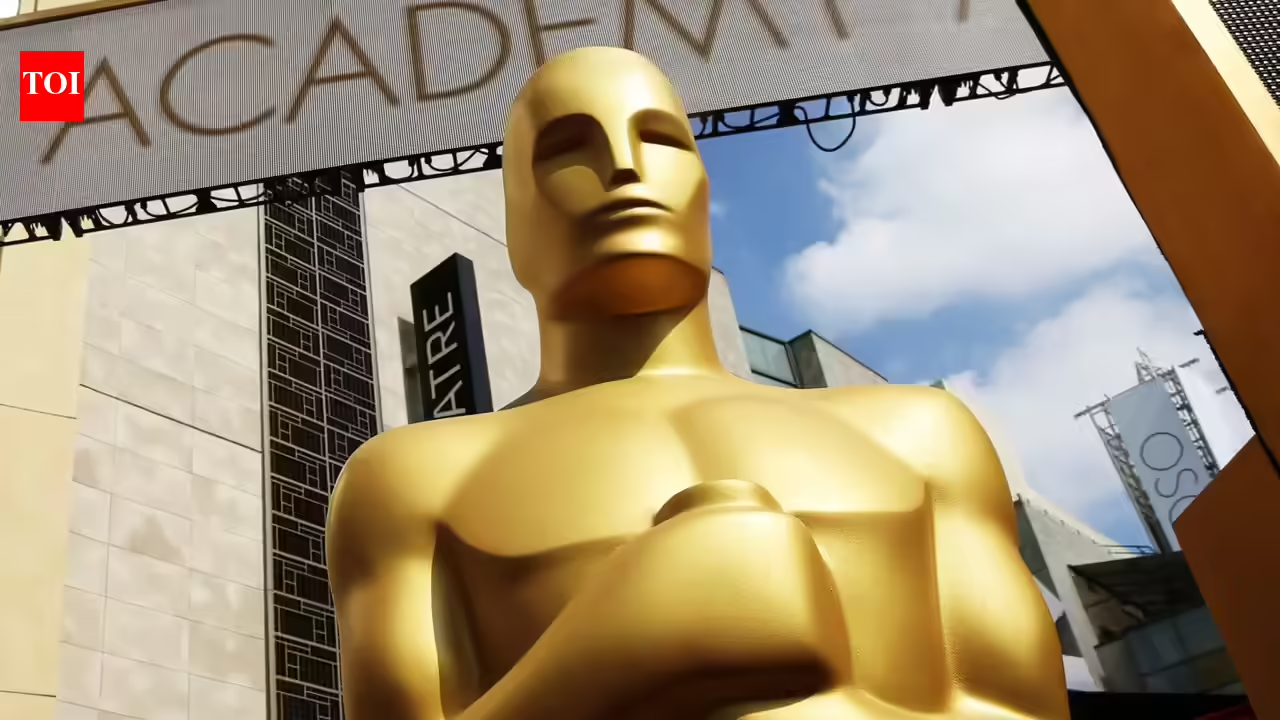
At a time when artificial intelligence (AI) is transforming the making of movies, the Academy of Motion Picture Arts and Sciences has officially drawn a line when it comes to using the technology in production. The organization behind the Oscars released updated rules for the 97th Academy Awards, making it clear that AI-generated “performances” and “authors” will not be taking home any gold statues.
What the Oscars new rules say
The new regulations essentially address growing concerns in Hollywood about the rapid advancement of generative AI technology and its role in filmmaking. With the new rules, the Academy is setting a strict criteria for what qualifies as an award-worthy performance or script.“In the Acting category, only roles credited in the film’s legal billing and demonstrably performed by humans with their consent will be considered eligible,” the new rules said.“Under Eligibility regarding Generative Artificial Intelligence, the Academy reserves the right to request more information about the nature of the use and human authorship,” they added.The performer must be credited in the film’s official legal billing, and the human actor must have provided their consent for the performance. Screenplays must be “human-authored” to compete in the writing categories.To ensure these rules are followed, the Academy has reserved the right to demand more details from filmmakers regarding their use of AI and to verify that the work is truly human-authored.
Why the change matters
These updates come at a time when AI is increasingly being used into the production process. Recently, reports suggested that there have been various high-profile AI projects, such as an independent film currently in development featuring an AI-generated version of Val Kilmer.Furthermore, the release of new AI video models has had some filmmakers worried about the future of the industry. The move also follows the Hollywood strikes of 2023, where actors and writers fought for protections against AI replacement.