


Ancient wonders like mysterious stone formations or hidden cities have long sparked our imagination. They are like treasures of forgotten societies and their clever ways of life.In Peru’s rugged Andes, one such enigma has stood silent for centuries, defying easy answers. These sites remind us how past cultures ingeniously solved daily life’s challenges, from farming to trade, using landscapes as tools. Recent studies peel back layers of speculation, revealing practical genius behind what seemed ritualistic or odd.
What secrets has Monte Sierpe ‘s been hiding since so long
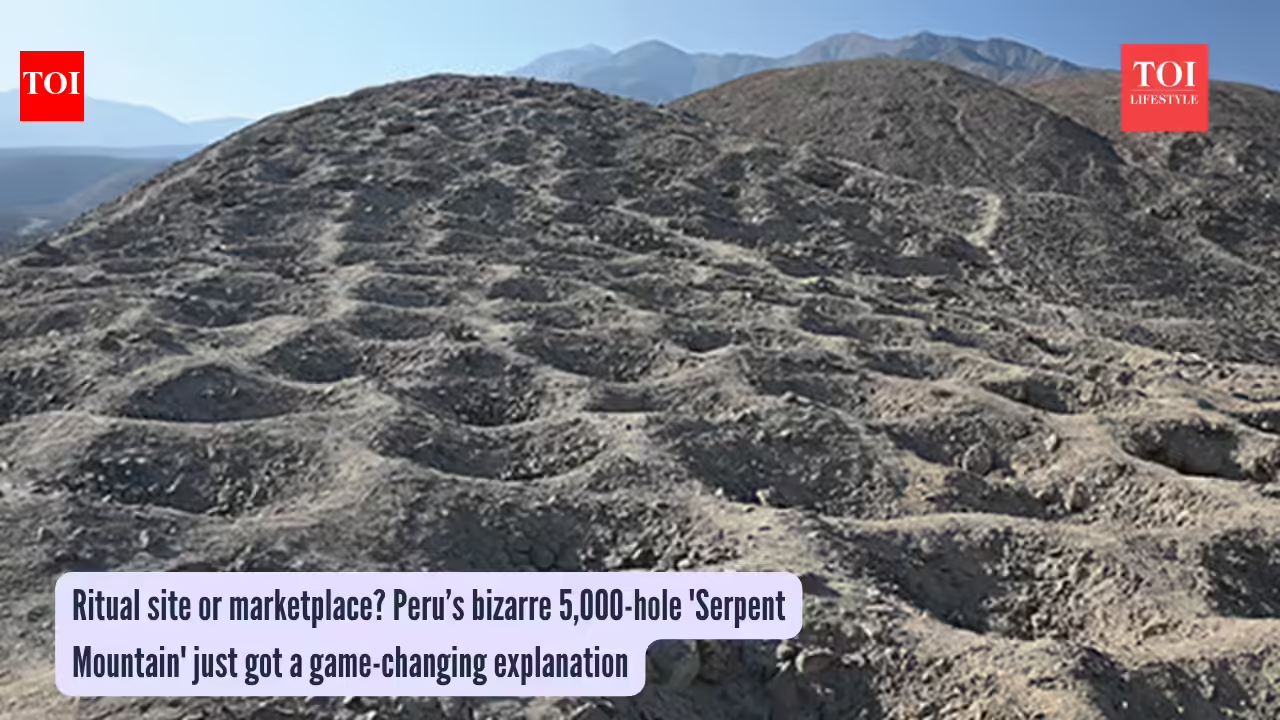
For nearly 100 years, the “Band of Holes” at Monte Sierpe, also called Serpent Mountain, in Peru’s Pisco Valley puzzled experts. This mile-long ridge holds about 5,200 shallow pits, each 3-6.5 feet wide and 1.5-3 feet deep, arranged in deliberate blocks with walkable gaps. According to a study published in Antiquity, high-resolution drone mapping revealed numerical patterns, like repeated rows and sequences, suggesting a purpose instead of decoration.Dr. Jacob Bongers, lead researcher of the studyfrom the University of Sydney, noted, “Why would ancient peoples dig more than 5,000 holes into the foothills of southern Peru?” He added, “We don’t yet have all the answers, but we now have promising new data that support innovative theories about how the site was used.”
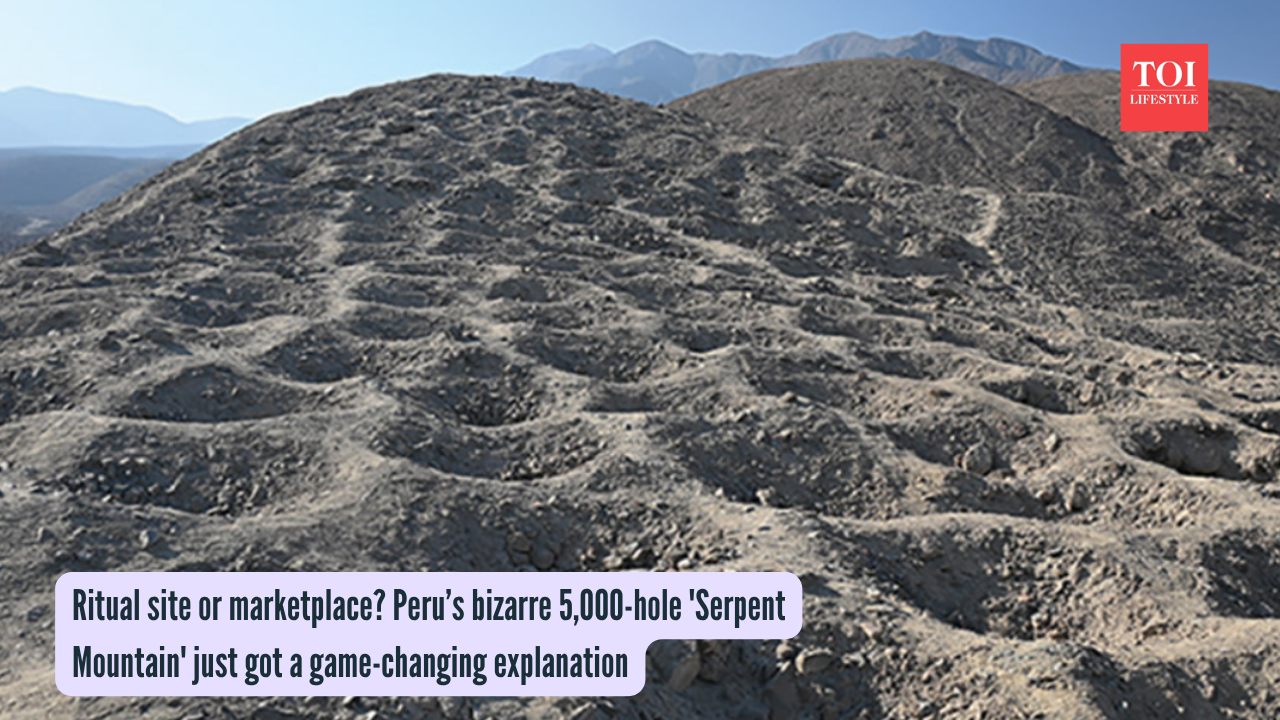
Photo: Antiquity via Cambridge.org
Holes that stored traded goods!
Soil samples from the pits contained pollen from maize, bulrush reeds for basketry, squash, amaranth, cotton, chili peppers, crops not grown on the arid hillside. Science News reports these low-pollen plants likely arrived via human transport in baskets, not wind. This points to the holes storing trade goods, visible from afar for bartering.
It was a Pre-Inca marketplace
Radiocarbon dating ties use to the 14th-century Late Intermediate Period under the Chincha Kingdom, master traders before Inca arrival. Monte Sierpe’s spot at ecological crossroads near pre-Hispanic roads made it perfect for exchange. Bongers suggested, “Perhaps it was a pre-Inca marketplace,” noting the area’s 100,000 people—traders, farmers, fishermen—swapping staples like maize and cotton.
Study names it as a place of Inca accounting
The pitted layout mirrors a local khipu, a knotted-string Inca record-keeper for censuses and tribute. The study proposes Monte Sierpe as a “landscape khipu,” tracking mit’a labor taxes post-Inca conquest around 1470.Bongers called it, “This is an extraordinary discovery that expands our understanding of the origins and diversity of Indigenous accounting practices within and beyond the Andes.” Kin groups likely dug and filled pits by social unit, per the Antiquity paper.First photographed in 1933 by National Geographic, theories ranged from defenses to water traps, now grounded in evidence of barter and tallies. Bongers acknowledged, “There are still many questions,” like its uniqueness and exact khipu ties.